Farmers Helping Farmers
 Print This Post
By Felicia Bell, Gulf States Regional Coordinator
Farmers in the Gulf States don’t lack information—they’re surrounded by it. University recommendations, agency programs, online videos, input suppliers, social media groups… everyone seems to have an answer.
But when the rain doesn’t come, or it comes all at once, or when input costs spike, or when a crop fails despite doing everything right, the question becomes: who do you trust when the going gets tough? For many small to mid-sized farmers across the Southeast, the most reliable answers aren’t coming from a textbook or a webinar; they’re coming from someone who has dirt under their nails and has already lived through the same challenge.
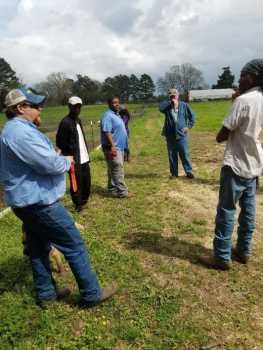
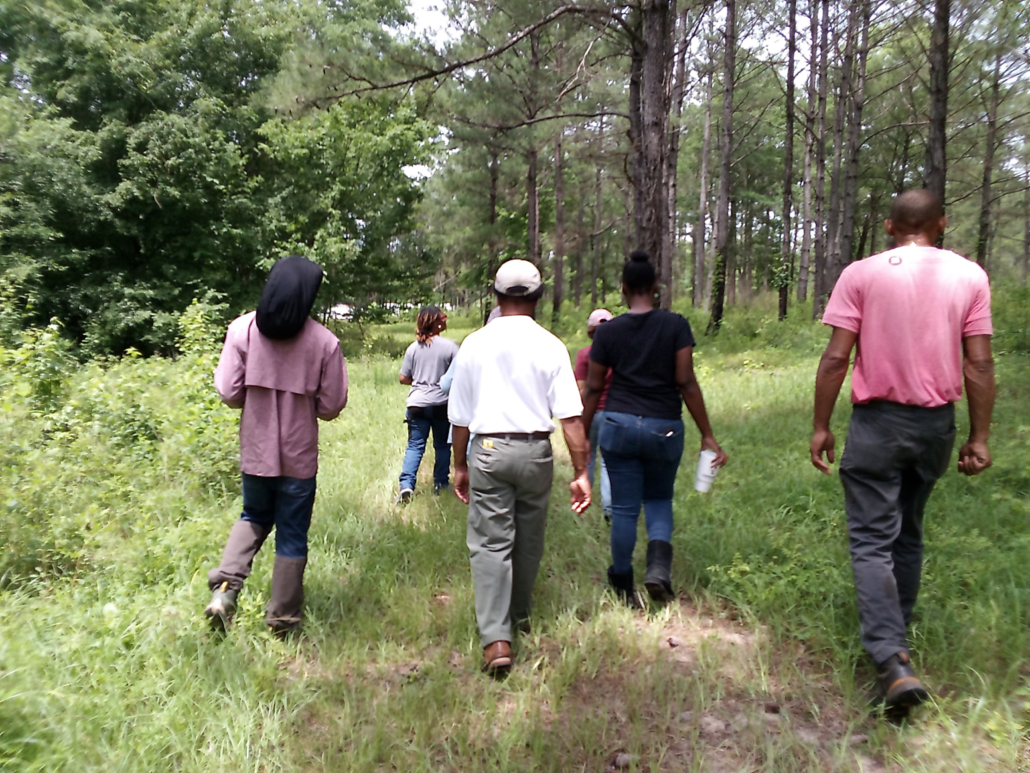
Workshop participants learning from Mississippi farmer Jody Reyer at an NCAT workshop. Photo: NCAT
Take a row crop and livestock producer in South Georgia who was struggling with repeated soil compaction and declining yields after heavy rains. Extension bulletins offered solid guidance, but it wasn’t until he connected with a regional farmer network through a local field day that things shifted for him. Another farmer just a few counties over had been experimenting with cover crops and managed grazing for years. Not perfectly or without setbacks, but successfully enough to share what worked on similar soils and under similar weather patterns. That connection turned into farm visits, phone calls, and shared troubleshooting. Within a season, the struggling farmer wasn’t just trying new practices—he understood why they worked and how to adapt them.
That’s the power of peer-to-peer learning. Farmer networks, formal or informal, cut through theory and get straight to application. They create space for honest conversations about failures (not just successes) which are often where the real learning happens. Networks help farmers adapt practices to local conditions rather than trying to replicate something that worked hundreds of miles away. And equally important, they reduce isolation. Farming can be a solitary profession, especially for smaller operations. Being part of a network builds confidence, sparks innovation, and often leads to new opportunities like shared equipment, joint marketing, or collaborative problem-solving.
If you’re not already connected to a farmer network, start close to home. Look for field days, workshops, or producer-led groups hosted by Extension, conservation districts, or nonprofit organizations (like NCAT!). Ask other farmers at your local feed store or market who they’re learning from. Pay attention to those trying something different, and ask questions. The strongest networks don’t need to look formal. Sometimes they start with a conversation at the edge of a field.
Related ATTRA Resources:
Regenerative Grazing in the South: Case Studies from Mississippi
 NCAT
NCAT