
Organic Certification and Farmer Resiliency: How Can Farmers Overcome Transition Barriers and Remain Organic?
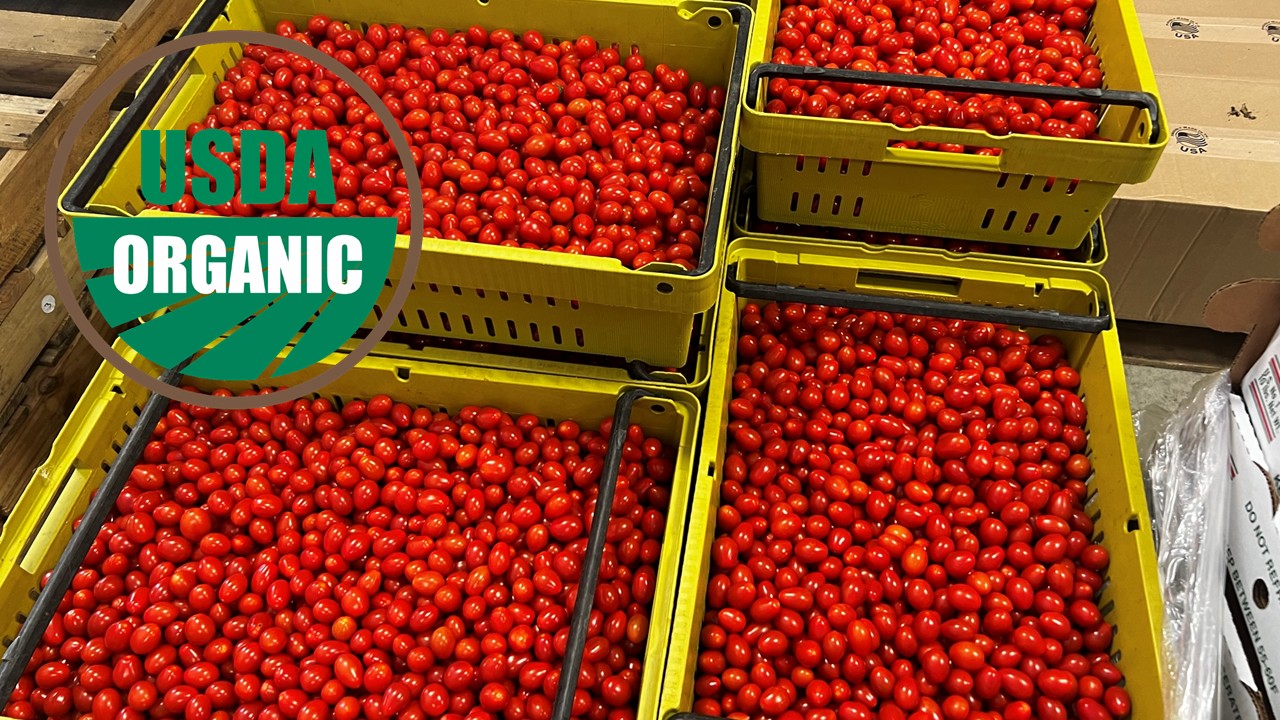
Certified organic tomatoes from Spiral Path Farm are marketed to Wegmans stores throughout the mid-Atlantic. Photo: Lee Rinehart, NCAT
By Carolyn Dimitri, Professor of Nutrition and Food Studies, New York University,
Andy Pressman, NCAT Director of Agriculture, and
Lydia Oberholtzer, Independent Research & Evaluation Consultant
Abstract
In the thirty years since the passage of the Organic Foods Production Act of 1990, the organic sector has dramatically changed in size and scope, yet organic products remain a small portion of the U.S. food system. Challenges such as supply issues, questions about organic standards, concerns about organic integrity, and growing interest in alternate labels have been increasing. In a time when information on how to grow organically is becoming more accessible, more applied economic research that addresses the needs of farmers is needed. Understanding the key economic problems faced by certified organic farmers and processors, along with the decisions they need to make in the future, may provide insight into answering important questions. This work relies on a comprehensive review of the literature as well as data collected by the authors from organic farmers and buyers on what they need to remain viable in the organic sector, and what farmers are doing to address economic issues. We present this information to assist organic farmers in reflecting on their own needs and identifying what types of organized support would help them maintain and improve their livelihood.
Contents
Introduction
What does the literature say about the economic sustainability of organic farms?
Farmer voices: Key findings from discussions
Strategies farmers may employ to certify or remain certified organic
Conclusion
References
Further Resources
Appendix: Risk Assessment for Organic Farmers: Four Key Questions
Introduction
In the thirty years since the passage of the Organic Foods Production Act of 1990, the domestic organic sector has dramatically changed in size and scope.
Retail sales of organic food approached $64 billion a year in 2023 (OTA, 2024). Organic foods are currently available in nearly every product category, from lettuce to milk to snack foods, and are widely available across the country (Carlson et al., 2023). The expansion of organic foods was made possible by the entry of new certified organic firms that process and distribute organic products, which increased in number from 2,700 in 2004 to more than 10,000 in 2024 (Dimitri and Oberholtzer, 2008; USDA AMS, undated). Despite this dramatic growth at all levels of the organic food system, organic products remain a small portion of the food system and comprised just 5.5% of overall food sales in 2021 and 3% of farm gate crop and livestock receipts in 2019 (Carlson et al., 2023).
As the industry continues to mature, new challenges face the organic sector. Domestic organic farm production lags for some sectors, such as grains, while organic dairy farmers struggle to remain in business (Donley, 2019; Held, 2019). And, organic food companies, referred to as handlers in the organic regulation, report difficulties with securing certified organic ingredients (Dimitri and Baron, 2019; Baron and Dimitri, 2019; Dimitri and Oberholtzer, 2009).
What does the literature say about the economic sustainability of organic farms?
In a broad literature search on economics related to organic farm economic sustainability, we focused on research related to organic farming published between 2014 and 2023. Excluded were studies that focused on managing on-farm production issues, such as weed management and pest control, along with those examining aquaculture and hydroponic systems, because our focus was on business and management issues. The topic areas we looked at included how organic farms are distributed across the country, how organic products are procured by buyers, and how the supply chain functions. We looked at research on how farmers transition to organic production, how organic farm performance and technical efficiency relates to sustainability, the integrity of the organic label, and how farmers manage risk.
Spatial patterns of organic farms
The spatial distribution of organic farms and processors is important, since farms need to be able to sell their products as well as purchase needed inputs. Farmer to farmer communication, furthermore, is an important way for farmers to share information about best practices. The location of certified organic farms and processors has been examined by several researchers.
One of the first papers examining spatial distribution of organic farms found evidence of hotspots of organic businesses in the West, Midwest, and the Northeast (Marasteanu and Jaenicke, 2016a). One implication of this work is that policies supporting organic are more likely to have an impact in areas where organic agriculture is already present. A related paper by Marasteanu and Jaenicke (2016b) found that locations with organic certifying agents have a higher probability of being located in a hotspot. The third paper on this topic by Marasteanu and Jaenicke (2019) found that regions with an organic hotspot have a lower county-level poverty rate and a higher median household income.
Kuo and Peters (2017) also found that organic agriculture is concentrated in the West, Northeast, Northern Great Lakes, and the Mountain West. They identified that regions with high levels of organic tend to have high levels of social capital as measured by the Penn State Social Capital Index (Kuo and Peters, 2017).
Herrera and Dimitri (2019) studied where new organic dairy farm operations tended to develop in the U.S. between 2002 and 2015 and found that new organic dairy operations were clustered around existing ones, reflecting the role of networks in the conversion into organic production.
Organic buyers, organic producers, and thin markets
The processing of organic food products is now mostly in the hands of large companies. This raises questions about whether imperfect competition exists in the organic sector and the potential price impacts on organic farmers. The organic market, despite tremendous growth, remains relatively small in comparison to the conventional market. Thus, buyers (processors, etc.) of organic products may incur high costs and farmers may similarly struggle to find buyers. Organic markets are frequently described as thin markets, characterized by a small number of buyers and sellers and little price transparency. The lack of transparency about prices in thin markets suggests that buyers may be able to pay farmers prices below the competitive market price (Raszap Skorbiansky and Adjemian, 2021).
Organic farmers may be somewhat protected from the negative impacts of thin markets by participating in long-term relationships that met the needs of both buyers and farmers.(Hadachek et al., 2022).
Until approximately 2015, organic dairy farmers and processors developed effective long-term relationships, likely mitigating the impacts of thin markets, but entry of new processors and dairies into the organic sector introduced instability into the relationships (Hadacheck et al., 2022; Dimitri and Nehring, 2022). Indeed, opportunity for relationship building might be a positive by-product of thin markets. But when industries grow, efficiency becomes the goal, further isolating small and medium size organic farms.
Supply chain relationships
Three concepts characterize the relationships between processors and their farmer suppliers: closeness, support, and commitment (Baron and Dimitri, 2019). Buyer-seller relationships tend to follow a spectrum of intensity, where the least engaged processors provide little support and commitment and the most engaged provide support and commitment through a long-term relationship or contract. In related work, Dimitri and Baron (2020) found that organic processors provide different types of support to their suppliers, most often focused on reducing technical barriers to organic farming, assisting with transition to organic production, and providing advice on organic standards and organic farming practices.
Growth in domestic production of organic grain may be hampered by a generalized lack of processor support to farmers, and as such has historically been slow to respond to growing market demands, even with increased profit potential made possible by organic price premiums (Greene et al., 2017). A major barrier to entry into the organic grain market for producers is their inability to locate buyers (Torres et al., 2020). Lack of clarity about what buyers seek from their farmer suppliers may be an obstacle to growth at the farm level. Important differences exist between groups of organic buyers in terms of values and commitments to building relationships, where some prefer contracts while others prefer relationships and flexibility (Torres et al., 2020).
Table 1: Type of support provided to farmer suppliers
| Type of support | Percent of handlers |
|---|---|
| Technical assistance | 41 |
| Pay some certification costs | 14 |
| Help with standards | 37 |
| Encouraged production increase | 37 |
| Encouraged introduction new varieties | 33 |
| Helped with transition (N+78) | 37 |
Notes: N= 78 for helped with transition, and N= 51 for the other types of support. Source: Author analysis of data from “Economic Issues in the Organic Handling Sector” survey.
Transitioning to or giving up organic production
One of the more puzzling features of the U.S. organic farming landscape is the slow pace of transition to organic production of grain and oilseed production, despite overall growth in organic production. According to USDA estimates, certified organic farm acreage tripled between 2000 and 2019 (Carlson et al., 2023). Growth in organic field crops and oilseed production, particularly for feed, has historically lagged. Researchers often point to the profit potential of organic grain and oilseeds, and question why domestic grain and oilseed producers seem unwilling to adopt organic systems, particularly given the needs of the growing organic dairy, eggs, and meat sectors. Many researchers have pointed out that transition rates should be higher than what is observed (see for example Delbridge et al., 2017; McBride and Greene, 2015). The observation led to a large body of research that examines the barriers to transition and support systems for transitioning producers.
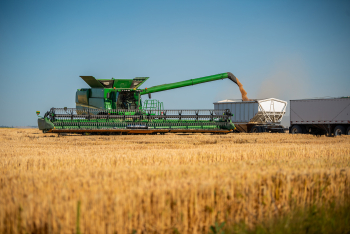
Harvest Ridge Organics harvests wheat near Lewiston, Idaho. Photo: Kirsten Strough, USDA
Barriers to organic transition
Three main categories of barriers (other than production-related barriers such as pest pressure and yield issues) to organic transition have been identified:
- Management: Includes mastering the certification process, developing an Organic Systems Plan, maintaining records, learning how to farm organically, and developing new marketing networks.
- Policy: Federal crop insurance may not provide organic farmers with adequate risk management support, especially (but not only) during the transition period.
- Culture: Norms may prevent some producers from transitioning to organic. Organic certification may be a better option when revenues from nonorganic production are low, and when farm size is small (Delbridge et al., 2017 and Delbridge and King, 2016).
Other barriers include farmers being too busy (especially for limited resource farmers), a transition period (three years) that is perceived to be too long, and the absence of local markets. Furthermore, farmers who are older with larger acreage tend to be more skeptical about certification because of concern about reliable markets. Finally, a lack of technical support, and the reluctance of farmers who farm on rented land to transition round out some of the most common barriers.
One proven approach to helping farmers through the three-year transition period is having certified organic processors provide support. Processors are more likely to support farmers in overcoming transition barriers because processors are motivated to increase the supply of organic farm products. This is especially true for feed grains and oilseeds. Processors offering support to farmers are most likely to provide advice on organic standards and organic farming practices. By comparison, food manufacturers are less likely to provide transition support, largely because they typically do not interact with farmers, and small processors are also less likely to support the transition to organic, likely because of limited resources. Of all the processors, organic dairy buyers are most likely to assist farmers with the transition to organic (Dimitri and Baron, 2020).
Direct markets, once an important outlet for organic producers, currently capture a smaller share of the organic market, declining from 10% of the organic market in 2006 to 6% in 2020 (Carlson et al., 2023). Fruit and vegetable producers who operate small or medium sized organic farms are likely to forgo certification unless they sell into the wholesale market (Torres et al., 2017). Although certified organic farmers are generally less likely to use direct markets, fruit and vegetable producers are more likely to be both certified organic and direct marketers (Chen et al., 2020).
Research suggests that when labor, organic inputs, and organic processing facilities are supported, organic transition by farmers is more successful. Conversely, transition is inhibited when prices received for farm products during the transition period are low and when support for record keeping is lacking (Stephenson et al., 2022).
Decertification
Farmers may also decide to give up their certification. Those located in the Midwest are more likely to decertify (Torres and Marshall, 2018) while women farmers, as well as farmers who had strong connections with other organic farmers, are less likely to decertify (Torres and Marshall, 2018). In Washington State during the years 1998 to 2019, the highest rate of farms leaving the organic sector occurred within the first two years after obtaining certification (Brady et al., 2023), suggesting that beginning organic farmers may need extra support for success. Medium and large-scale operations were most sensitive to market conditions, with exits increasing as the organic price premium declined, while farms that had been organic for a relatively long period of time were less responsive to changes in the price premium (Brady et al., 2023).
Farm performance, profitability, and technical efficiency
Much like their conventional counterparts, smaller organic farms tend to express higher financial performance by diversifying their crop production while larger farms tend to benefit financially from specialization (Khanal et al., 2018). This is likely a function of scale, where small farms diversify as a means of risk management while larger farms can take advantage of large yields of a few commodity crops and use insurance as their means of risk management. Likewise, smaller organic crop and grain farms generally have higher net cash farm income than larger farms (Khanal et al., 2018). Relatively higher cash income is one of the strengths of diversified agriculture that small farmers can take advantage of in their risk management plan.
Studies of the economic condition of organic dairies
Small- and medium-sized dairy farms often transition to organic production to increase their profitability, and in some cases to remain in dairy production. Thus, the profitability and technical efficiency of organic dairy operations have been the focus of multiple studies. Small-scale organic dairy is an important part of the agricultural landscape in several states, although market stresses over the past few decades have resulted in a reduction in the number of farms. Walsh et al. (2020) examined profitability of organic dairies between 2006 and 2016 and identified the existence of a significant relationship between return on assets (ROA) and farm management factors, suggesting that farm management practices that increase milk per cow result in higher ROA. Similarly, the harvest and storage of farm grown hay was found to be significantly related to ROA, resulting from reduced feed costs. Finally, ROA increased with herd size by spreading costs of production over more milking units. Because of factors like these, Nehring et al. (2021) found that organic dairies are more profitable than similarly sized non-organic farms.
Diversification has been found to be important for organic dairy farms as well. For many this includes producing organic milk, creating value added products, raising other farm products, and land management practices (Snorek et al., 2023). One strategy is producing organic and grass-fed milk. In 2021, industry data reported a three-year annual growth of 27% (Maugeri, 2021). Because of the reliance on pasture, grass fed organic cows tend to produce less milk than organic grain-fed cows, leading researchers to examine the productivity of organic grass-fed dairy cows. They found that higher milk production on grass-fed organic operations was associated with herds consisting of Holstein cows, farmers with higher levels of knowledge regarding reproduction and milk, and greater frequency and depth of dairy information sources (Snider et al., 2021).
Risk management and crop insurance
Crop insurance as a risk management strategy is not utilized equally among organic farmers. The scale of the organic operation, and the kinds of crops grown, generally determine whether crop insurance is seen to be beneficial. It is not unexpected that highly leveraged producers are more likely to purchase crop insurance (DeLay et al., 2023), though organic operations that grow more diverse crops and farmers with more years of experience in the organic sector are less likely to use crop insurance. However, organic farms with higher gross sales are more likely to adopt crop insurance (Belasco and Fuller, 2022).
Qualitative data suggests that organic farmers who do not buy crop insurance believe their farms are too diversified or too small to make insurance worthwhile (Belasco and Fuller, 2022). Other research, conducted by USDA-Economic Research Service (ERS), suggests that organic producers believe that crop insurance and other USDA programs benefit large scale operations, and furthermore, find that completing the paperwork to track yields for each crop is prohibitive (Raszap Skorbiansky et al., 2022). The same study found that specialty crop producers prefer to manage risk through their production practices, rather than by purchasing crop insurance (Raszap Skorbiansky et al., 2022).
What the economic research means for farmers
The spatial distribution of organic farms, thin markets, the hurdles farmers must navigate during transition, farm size as a factor of financial performance, and the strategies farmers use to manage risk provide insight into the various ways organic farmers can become more financially resilient while transitioning to and/or maintaining their organic certification. Some key takeaways from the research suggest:
- Relationship building is crucial for the success of organic agriculture. When farmers build networks among their peers and with processors and suppliers, they build a community of practice that allows them to feel ownership in their community, obtain necessary help or advice, and develop multiple avenues for marketing products.
- According to Altieri (2009), when total output is considered (as opposed to the yield of a single crop) small, diversified farms are more productive than large ones. For smaller farms that may not see value in crop insurance, this means that adding biological diversity may offset some of the risk inherent in organic farming by increasing sales and building soil resiliency to mitigate drought, pest pressure, and flooding.
- Farmers who purchase high producing animals and productive, climate adapted plant varieties may offset risk by producing a more consistent product, resulting in favorable relationships with buyers.
- Most successful organic farmers have a high level of technical knowledge and curiosity, which makes them more prone to try new things. They are also seekers of technical assistance and advice from their neighbors and willingly share their experience.
Farmer voices: Key findings from discussions
To understand U.S. organic farmer views on the most pressing economic challenges and opportunities for their operation, we relied on a mixed methods approach. Focus groups took place between February 2021 and February 2022. A semi-structured interview instrument was used to guide the conversation while encouraging the free flow of ideas, and farmers were sent a short survey prior to the focus groups. In our conversations with farmers, farm profitability was reported as not breaking even, breaking even, making a small profit, or making a comfortable profit (see Table 2). About one-half of all farmers reported making a small profit. Farmers were next most likely to report that their operations were not breaking even. Overall, 79% of farmers were breaking even or doing better, and 74% of beginning farmers were breaking even or doing better.
Table 2: Reported profitability of organic farms survey respondents.
| Profitability of organic farm | All farmers | Beginning farmers |
|---|---|---|
| Not breaking even | 21% | 26% |
| Breaking even | 16% | 16% |
| Making a small profit | 46% | 48% |
| Making a comfortable profit | 16% | 10% |
Notes: N=80 for all farmers and N=31 for beginning farmers responding to this question. Beginning farmers have 10 or fewer years of farming experience. Source: Author analysis of organic farmer survey data.
Farmers’ thoughts regarding the economic sustainability of their operations
The discussions among the farmers during the focus groups point to a multi-pronged view of the economic sustainability of their farms, and a shared understanding that operational, infrastructural, and social needs all must be met (see Table 3). These three aspects are strongly intertwined. When asked about their economic challenges, farmers’ responses often touched on all three needs. For example, when asked about their most pressing on-farm economic challenges, farmers cited not only the rising cost of organic inputs, but also concerns about health care access, rural exodus, succession, knowledge sharing, childcare, and the labor market (to name a few).
Table 3: Key areas related to organic farm economic sustainability: focus group findings.
| Farm | Infrastructure | Social |
|---|---|---|
| Compensation for ecosystem services provided | Crop storage | Childcare |
| Affordable organic inputs/ingredients | Fencing | Healthcare |
| Consumer understanding of organic | Organic livestock processing, including slaughter | Farmer injury |
| Access to markets | On-farm washing, processing, and packing | Living income from the farm |
| Stable labor market | Transportation | Farm succession |
| Affordable & easy to access risk management | Equipment sharing | Adequate social security |
| Land – purchase or long-term lease | Retirement financial needs |
Notes: N= 78 for helped with transition, and N= 51 for the other types of support. Source: Author analysis of data from “Economic Issues in the Organic Handling Sector” survey.
In the words of an organic dairy producer, economic sustainability of the operation encompasses both farm and farmer viability:
We’re always talking about farm viability, we never talk about farmer viability and the fact that farms don’t function without people… There’s only so much I can do in a day, so the farm’s viability is impacted by the fact that I have to live nearby to access this land space, and there’s no childcare, there’s no infrastructure for raising families, there’s no health insurance, there’s no nothing. There’s no retirement for farmers and that connection needs to be made: we don’t have farm viability without farmer viability, and that at some point we have to invest in the people, not just the infrastructure, not just the economy of farming, but of the people and the workers of farming as well.
The value of the organic certification was widely agreed upon by most of the farmers in our focus groups. The organic seal allowed farmers to access wholesale markets or to charge premiums on direct-to-consumer sales. One dairy farmer described the impact that certification has had on the business’ bottom line, saying, “we’re really happy today we’re still here and we’re thriving and organic has made that possible. [If we were not certified] we would not still be here.”
Views on organic certification were more mixed among beef producers. Some of them stated that organic certification was not worthwhile when they could market their beef as grass-fed, especially given the scarcity of organic processing facilities. In contrast, several farmers who relied on direct-to-consumer sales noted that having farm stand signage with the organic seal, like at farmers’ markets, helped to boost sales; others noted that being able to market organic products online was essential to generating or increasing sales.
Organic farmers we surveyed shared their view that they are not being compensated for the costs of the organic practices that offer the most long-term benefit to the land and the climate. They expressed a desire to improve soil health, increase biodiversity, increase carbon storage, improve resilience to extreme weather, restore wetlands, and reduce reliance on non-renewable energy sources. However, farmers noted a variety of impediments to improving their farm ecosystem, which often involve higher costs or reduced revenues. For example, on smaller farms, conservation measures might take up precious land that could produce more crops. Additionally, instituting new practices such as diversifying crops and livestock creates new challenges and makes farm business management more complex. Farmers indicated that being compensated for the on-farm ecosystem services they provide, including carbon sequestration, could better support their conservation intentions. As one fruit and vegetable producer commented “I think carbon credits for organic farming would be huge…”
Price premiums
Receiving a higher price is essential for the economic health of an organic farm. Producers frequently mentioned a lack of consumer understanding of the benefits of organic as to why they do not charge a premium. Farmers expressed frustration over consumer confusion regarding the differences between local, non-GMO, and organic. One direct marketing farmer described the challenge of charging the right price:
It’s far harder now than it was in the beginning. I used to have a nearly 100% premium for heirloom organic tomatoes over conventional and the premium for organic over conventional has almost disappeared. And that is due, in great part, to a public that doesn’t understand what organic means.
Grain farmers, who typically sell to processors, felt there was a disconnect between consumer demand for organic grain and the prices processors were willing to pay for their organic production.
Mentioned less often was a buyer’s inability or unwillingness to pay the price premium for organic food, but farmers located in the southeast or in some rural areas indicated that nearby consumers were unable to pay a higher price for organic food. One livestock farmer stated “our marketing challenges have been pretty consistent over the years in that we’re producing some high-end products in an area that is a poor rural community.” A grain farmer observed that “processors talk to us growers and producers about boosting supply, but the price they’re offering doesn’t get us there.”
Land access
The ability to operate a successful organic farm depends on access to land and natural resources. Much of the discussion of land management and infrastructure centered around implementing long-term resiliency measures—measures that would be hindered without consistent land and resource access. One participant underscored the degree to which their operation’s future is dependent on this access, saying:
A huge concern is natural resources. We just got a zero-water allocation for this parcel that we put everything into… And that’s, you know, going to affect our five-year and future plans, as it will affect all of those farming here in what is pretty much a desert. That’s what keeps us up at night.
Farmland costs and loss were mentioned as impediments to land security, particularly as urban sprawl places upward pressure on prices as a result of residential development. One dairy farmer said that six out of eight neighboring dairy farms had been lost to development, observing, “if land is gone, you don’t get it back.” These challenges are felt disproportionately by first-generation and BIPOC farmers, who are less likely to have adequate access to land and capital (Figueroa et al., 2020). Some farmers lease land as a means of navigating the cost and scarcity of acreage but expressed that this hinders their ability to invest in the soil and farmland infrastructure.
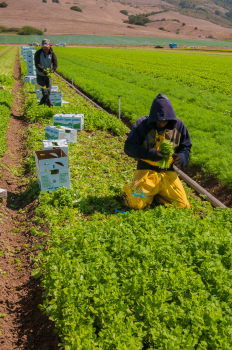
Workers harvesting cilantro at Lakeside Organic Gardens in Watsonville, CA.
Photo: Bob Nichols, USDA
Labor
The complicated issue of farm labor was another dominant theme of focus group conversations. Multiple farmers noted that the rural lifestyle and physical labor inherent to farming discourage potential beginners from entering farming. More than one participant said they would like to have more hands on the farm but that they could not compete with the higher wages afforded by off-farm jobs, a struggle compounded by rising wages. As one dairy farmer said, “I think that people should be earning a lot more than I can pay them.” Multiple farmers said that a family member’s off-farm job helped to offset the wages they are unable to pay themselves, making hiring additional labor out of the question.
Farmers located in rural areas face even more challenges hiring people who desire to be close to the social life provided by cities. In the absence of a strong labor pool, farmers find ways to get by. One vegetable grower made the decision to scale back production, since finding labor was so problematic and costly, resulting in lower income with hired help than when doing it all himself. But eliminating hired workers presents its own set of problems, since producers rely on them to keep an eye on the plants and report problems in the field.
Managing risk
Risk management, notably crop insurance, is another facet that impacts farm economic sustainability. While two farmers acknowledged that crop insurance for organic farmers has improved in recent decades, the perception that existing options do not support small, diversified farms was prevalent (a finding that reinforces existing research on crop insurance participation; see Belasco & Fuller, 2021). Farmers expressed that the cost of insurance and the minimal coverage—essentially only catastrophic—offered by the Whole Farm Revenue Program (WFRP) was a strong disincentive for incorporating diversity and new management practices, such as cover cropping on farms. One field crop producer said of this disincentive:
That’s very frustrating because diversity is our only hope in terms of managing within this increasingly variable climate that we’re dealing with. And yet crop insurance–which should be doing everything [it] can to make you more resilient and diverse–is instead driving specialization and monoculture.
Infrastructure
Infrastructure improvements play an important role in the organic food system. Farm infrastructure includes storage facilities, fencing, equipment, running water, power, and improvements to the land. These costly investments may allow a farmer to save on labor costs or expand production. Adding to the challenge is that the farmers need to invest in these forms of infrastructure while also investing in organic.
The farmer discussions illuminated the wide range of needs. Some farms needed fencing or storage facilities. For those operating farms without running water and electricity, there was a need to figure out how to get water and power. Organic dairy farmers with farms in mountainous regions talked about needing costly fencing to build the laneways needed to move the cows around the field, which requires significant time and human effort. Other farmers mentioned wanting to bring solar energy to their operations, which one farmer was able to manage.
Buying the equipment needed to operate a farm is a major expense, and farmers take different approaches to accessing equipment. One farmer bought a used tractor, which with some effort was brought back to life, but many farmers work with very old equipment. One grass-fed dairy farmer, who was about five years into the intergenerational transfer of the farm, mentioned spending a lot of time fixing machinery that should have been “written off thirty years ago.” Another producer mentioned an aversion to debt and indicated that they don’t even carry an operating loan. Thus, the operation has old equipment which they need to repair frequently. Finding someone local to repair equipment is becoming harder, so farmers must travel further for services, which increases the cost of service. Others mentioned the possibility of sharing equipment, and thus costs, with other producers in their area.
Land tenure adds a complicating layer to the decision to invest in on-farm infrastructure. Those renting land think about their leases when contemplating an investment in infrastructure, and with short leases farmers are unlikely to make costly investments. Any costly infrastructure improvement on rented land needs to be moveable and reusable at another location. For example, one farmer needed fencing on rented land, and given the $18,000 price tag, was seeking a type of fencing that could be salvaged if the land was lost.
For off-farm infrastructure, the problem mentioned most often was access to organic processing facilities, most notably USDA certified slaughterhouses. Farmers in all regions of the country mentioned the lack of certified organic facilities. This means that organic farmers must travel long distances with their livestock, which not only increases cost but makes securing a slaughter appointment challenging. This was felt especially by those producing at a smaller scale. As one farmer said:
We have been wanting to raise animals, and the fact that, as a small farm, it’s harder to get time in a USDA slaughter facility, that’s been really the biggest reason we haven’t moved in that direction… Processing has been very much dominated by larger, established farms.
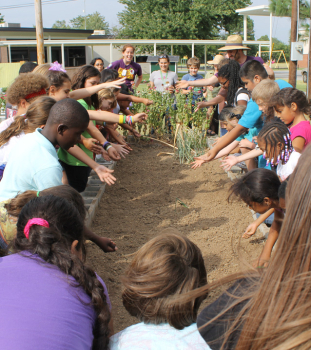
Children learning about planting cover crops. Photo: NCAT
The social dimension of organic farm sustainability
In many cases, the conversations in our focus groups turned towards how social dimensions were intertwined with the economic sustainability of their operations. Consideration of the future was a key theme raised by most of the farmers, extending from their operation to building a skillset and fostering the next generation of farmers within their community. This was made evident through one farm’s apprenticeship program, while another producer would like to eventually convert part of the farm into a training center for new growers and transitioning growers. But at the same time, organic farmers discussed their struggles to achieve work-life balance, ideal farm size, and sharing off-farm and on-farm work to keep households financially afloat.
The public perception of farming was a common theme among the organic farmers in our focus groups. Many farmers expressed a desire to help people understand farming by demonstrating how their farm works and how products are raised. Part of the intention was to change the public image of farming. To meet this goal, some producers were committed to supporting the food and agricultural education of school aged children and college students. Bringing local school children to the farm would provide an opportunity to teach them about food production and value-added activities such as preserving and dehydrating food. A grain farmer who operated a university organic farm mentioned that, though there were many rural students in the area, few of them had any farm experience.
Several farmers mentioned using their roles as farmers to change the racial paradigm about farming. By having students spend time on a successful rural farm operated and owned by a Black farmer, one farmer gives local students a chance to spend time with a farmer who looks like them. A Southeastern farmer stated, “…one of my missions is to try to change the image of farming in Mississippi, so that it is positive… many times it’s associated with slavery and… that’s got to be changed.”
Farmers also cited the difficulties of building a financially and physically healthy farm operation. More specifically, farmers cited minimal social security payments, due to their consistently low earnings, and a lack of 401(k) benefits as major roadblocks to retirement. As one long-time farmer said, “We’re not getting an investment plan into our retirement the whole time we’ve been farming because it went into the new tractor, and the greenhouses, and all those things we would have put into retirement are sitting out in the yard right now.”
Another primary concern among participants was having financially viable retirement options to support aging farmers, options that would allow them to transition their farm to the next generation, rather than farming out their years. Smaller operations, especially those where the owner is also the operator, discussed the challenge of having their farm’s future dependent on their physical health. One poultry producer said of their retirement plan, “We plan to stay in this business until I die, I guess.”
These challenges are further compounded by the cost of securing their own health insurance through the market, and the healthcare costs associated with aging, especially in a physically demanding profession. A diversified fruit and vegetable operator mentioned that access to mental health and healthcare were primary concerns. An organic dairy producer remarked that access to health insurance is one of “the things I stress most, you know, both my husband and I are self-employed people…” They purchased a policy that is essentially catastrophic insurance.
Participants also discussed farming while parenting and the ways in which this may impact family structure, farm structure, and the growth of the operation. Farmers discussed how childcare costs pose a significant expense for small family farms, and how being a primary caregiver might take away from a farm operator’s available time to invest in their farm. One farmer said that the limited childcare in their area also affected who they could hire.
Finally, some farmers expressed an inclination to uphold the family farming tradition as well as maintain the farm to pass along to the next generation. However, it was noted that the transition between generations could sometimes be challenging, as it may expose generational differences in approaches and methods. One sixth-generation dairy farmer says of this difference:
That’s not to say that our goals are different, that’s not to say that our production mindset is different, but the way we go about doing things and the way we go about planning for the future has to change necessarily if the farm is going to continue past my generation.
Strategies farmers may employ to certify or remain certified organic:
Tell your farm’s story. Telling your story (family heritage, production practices, your philosophy of food and community) may help overcome the issue of customer reluctance to pay an organic premium. See ATTRA’s Farm Branding: Selling Your Products Through Story.
Explore a range of solutions to land access. Some land access issues may be dealt with through transition/estate planning, conservation easements, or creative structures such as community/cooperative farming. For more information see the Greenhorns Cooperative Farming Guidebook. See also ATTRA’s Farmland Access.
Expand approaches to compensating workers. Labor problems may be managed by providing the best wage you can afford, providing food shares, enlisting employees in some management decisions to build community and spread out the management load, or offer internships. See ATTRA’s Internship Hub.
Consider crop insurance. To manage risk, see if the crop insurance options available are right for you. See ATTRA’s Crop Insurance Options for Specialty, Diversified, and Organic Farmers. Also, consider diversification for resilience (crops, soil health practices, value-added production). See ATTRA’s Climate Beneficial Practices and Value Added Agriculture.
Explore ways to minimize expenses. Keep expenses low and relative to high cash flow. Consider sharing tools and equipment with neighbors and ask landowners for long term tenure based on your good land stewardship practices.
Cultivate Community. Finally, manage the social dimensions of your operation by developing relationships and networks with buyers, markets, farmers, and customers, and seek sources of technical knowledge by maintaining a spirit of curiosity.
Conclusion
Beginning a transition to organic certification, and keeping that certificate once it is awarded, adds a whole new aspect of risk and management to an already busy farm plan. There are rewards for being organic, for sure, including price premiums for products, better ecosystem health through ecological farm management, and reduced costs by using cover crops and crop rotations for fertility and pest and weed management. But these benefits only accrue through better management, more in-depth knowledge of your farm environment, and an increased reliance on networks for technical assistance and marketing opportunities.
The research literature and farmer focus groups referenced in this publication produced the following insights and questions to consider:
- Operators of diversified farms often forgo crop insurance because they believe their risk is managed by the diversification of the operation.
- The farm level organic price premium can be a motivator to stay certified if it is greater than the cost of certification.
- Businesses, food companies, and other buyers may adequately share risk with farmers, and some buyers will support organic farm transition, but this is related to the scale of the company.
A climate resilience plan can help mitigate risk. Such a plan touches on crop selection, seasonality of production, cover crops and rotations, and soil health and water conservation practices. Some producers feel that crop insurance may not be necessary if they have a comprehensive soil health plan.
- Conservation programs can help fund and assist producers in implementing a climate resilience plan, which can provide savings on irrigation, fertilizers, and pest control. These savings may result in higher net profit.
- Would an add-on certification such as “Real Organic Project” and “Regenerative Organic Certified” expand your marketing choices?
- Whole farm planning involves developing a holistic goal. How does your farm household make decisions about farm size, off farm work, which market channels to use, and other aspects of your farm operation, in the context of family dynamics?
- What are the economic and social factors associated with BIPOC farmer decisions regarding organic certification, and how do these compare to the overall decision to enter farming in general? How does region, crop selection, race/ethnicity, age, and the presence of other organic farmers in your region contribute to the sustainability of organic farming in your region?
- Are there some creative ways to shore up your retirement as an organic farmer?
References
Altieri, Miguel A. 2009. “Agroecology, Small Farms, and Food Sovereignty.” Monthly Review, July 1.
———. 2015. “Earth Talk: Agroecology: Who Will Feed Us in a Planet in Crisis.” Lecture at Schumacher College, UK.
Baron, H., and C. Dimitri. 2019. “Relationships along the Organic Supply Chain.” British Food Journal 121 (3): 771–86.
Belasco, E. J., and K. B. Fuller. 2022. “Who Buys Crop Insurance? Predictors of the Participation Gap between Organic and Conventional Farms.” Applied Economic Perspectives and Policy 44 (3): 1554–72.
Brady, M. P., D. Granatstein, and E. Kirby. 2023. “Survival and Growth of Organic Farms over the Long Run.” Journal of the Agricultural and Applied Economics Association.
Carlson, A., C. Greene, S. R. Skorbiansky, C. Hitaj, K. Ha, M. Cavigelli, P. Ferrier, and W. McBride. 2023. US Organic Production, Markets, Consumers, and Policy, 2000–21. Economic Research Report No. 315. Economic Research Service, USDA.
Chen, B., S. Saghaian, and M. Tyler. 2020. “Substitute or Complementary: Relationship between US Farmers’ Adoption of Organic Farming and Direct Marketing.” British Food Journal 122 (2): 531–46.
DeLay, N. D., B. Brewer, A. Featherstone, and D. Boussios. 2023. “The Impact of Crop Insurance on Farm Financial Outcomes.” Applied Economic Perspectives and Policy 45 (1): 579–601.
Delbridge, T. A., R. P. King, G. Short, and K. James. 2017. “Risk and Red Tape: Barriers to Organic Transition for U.S. Farmers.” Choices Magazine 32 (4): 1–10.
Delbridge, T. A., and R. P. King. 2016. “Transitioning to Organic Crop Production: A Dynamic Programming Approach.” Journal of Agricultural and Resource Economics: 481–98.
Dimitri, C., and H. Baron. 2020. “Private Sector Support of the Farmer Transition to Certified Organic Production Systems.” Organic Agriculture 10: 261–76.
Dimitri, C., and R. Nehring. 2022. “Thirty Years of Organic Dairy in the United States: The Influences of Farms, the Market, and the Organic Regulation.” Renewable Agriculture and Food Systems 37 (6): 588–602.
Greene, C., G. Ferreira, A. Carlson, B. Cooke, and C. Hitaj. 2017. “Growing Organic Demand Provides High Value Opportunities for Many Types of Producers.” Amber Waves. Economic Research Service, USDA. February 6.
Hadachek, J., T. L. Saitone, R. J. Sexton, S. Raszap Skorbiansky, S. Thornsbury, and A. Effland. 2022. Organic Feed Grains and Livestock: Factors That Influence Outcomes in Thinly Traded Markets. Economic Research Report No. 303. Economic Research Service, USDA.
Herrera, J. C. S., and C. Dimitri. 2019. “The Role of Clustering in the Adoption of Organic Dairy: A Longitudinal Networks Analysis between 2002 and 2015.” Sustainability 11 (6): 1514.
Khanal, A. R., S. K. Mishra, and U. Honey. 2018. “Certified Organic Food Production, Financial Performance, and Farm Size: An Unconditional Quantile Regression Approach.” Land Use Policy 78: 367–76.
Kuo, H-J., and D. J. Peters. 2017. “The Socioeconomic Geography of Organic Agriculture in the United States.” Agroecology and Sustainable Food Systems 41 (9–10): 1162–80.
Marasteanu, I., and E. Jaenicke. 2019. “Economic Impact of Organic Agriculture Hotspots in the United States.” Renewable Agriculture and Food Systems 34 (6): 501–22.
Marasteanu, I. J., and E. C. Jaenicke. 2016a. “Hot Spots and Spatial Autocorrelation in Certified Organic Operations in the United States.” Agricultural and Resource Economics Review 45 (3): 485–521.
———. 2016b. “The Role of US Organic Certifiers in Organic Hotspot Formation.” Renewable Agriculture and Food Systems 31 (3): 230–45.
Maugeri, B. 2021. “Latest Dairy Trends: Don’t Count Them Out.” SPINS.
McBride, W., and C. Greene. 2015. “Despite Profit Potential, Organic Field Crop Acreage Remains Low.” Amber Waves. Economic Research Service, USDA.
Nehring, R. F., J. Gillespie, C. Greene, and J. Law. 2021. “The Economics and Productivity of Organic versus Conventional US Dairy Farms.” Journal of Agricultural and Applied Economics 53 (1): 134–52.
Oberholtzer, L., C. Dimitri, and C. Greene. 2008. “Adding Value in the Organic Sector: Characteristics of Organic Producer–Handlers.” Renewable Agriculture and Food Systems 23 (3): 200–207.
Organic Trade Association (OTA). 2024. Organic Industry Survey.
Raszap Skorbiansky, S., and M. K. Adjemian. 2021. “Not All Thin Markets Are Alike: The Case of Organic and Non Genetically Engineered Corn and Soybeans.” Journal of Agricultural Economics 72 (1): 117–33.
Snider, M. A., S. E. Ziegler, H. M. Darby, K. J. Soder, A. F. Brito, B. Beidler, S. Flack, S. L. Greenwood, and M. T. Niles. 2021. “An Overview of Organic, Grassfed Dairy Farm Management and Factors Related to Higher Milk Production.” Renewable Agriculture and Food Systems: 1–9.
Snorek, J., W. Cummings, E. Hryniewicz, K. Stevens, and R. Iannuzzi. 2023. “Diversification Strategies for the Resilience of Small New England Dairies.” Journal of Agriculture, Food Systems, and Community Development. Advance online publication.
Stephenson, G., L. Gwin, C. Schreiner, and S. Brown. 2022. “Perspectives on Organic Transition from Transitioning Farmers and Farmers Who Decided Not to Transition.” Renewable Agriculture and Food Systems 37 (6): 633–43.
Torres, A. P., N. A. Lancaster, and L. H. Vilas Boas. 2020. “Categorizing Organic Grain Buyers in the Midwestern United States.” Sustainability 12 (12): 5169.
Torres, A. P., and M. I. Marshall. 2018. “Identifying Drivers of Organic Decertification: An Analysis of Fruit and Vegetable Farmers.” HortScience 53 (4): 504–10.
Torres, A. P., M. I. Marshall, C. E. Alexander, and M. S. Delgado. 2017. “Are Local Market Relationships Undermining Organic Fruit and Vegetable Certification? A Bivariate Probit Analysis.” Agricultural Economics 48 (2): 197–205.
Walsh, J., R. Parsons, Q. Wang, and D. Conner. 2020. “What Makes an Organic Dairy Farm Profitable in the United States? Evidence from 10 Years of Farm Level Data in Vermont.” Agriculture 10 (1): 17.
Further Resources
Organic Transition: A Business Planner for Farmers, Ranchers and Food Entrepreneurs.
By Gigi DiGiacomo, Robert P. King, and Dale Nordquist. SARE Outreach, 2015.
The Organic Transition Planner contains explanations of key concepts, real-life examples from transitioning farmers and detailed worksheets covering farm operations, marketing, human resources and finances. For ease of use, electronic spreadsheets and fillable PDF worksheets are available online with the Organic Transition Planner.
Transition to Organic Partnership Program (TOPP)
A network assembled by the USDA’s National Organic Program to support transitioning and organic producers with mentorship and resources.
Appendix: Risk Assessment for Organic Farmers: Four Key Questions
- What do you feel are the most pressing concerns for the success of your farm business, specifically related to farm business management and marketing? (Think about pricing, product selection, where to market, finding buyers, continued growth of consumer demand, certification and inspection.)
- What do you feel are the most pressing production concerns for your operation right now?
- What goals have you set for managing your operation (what is the next phase)? What is the one log jam that might be preventing you from achieving this? (Think about expanding farm size, changing product mix, new markets, retirement, succession planning.)
- Do you rely on technical assistance for production or marketing support, with your organic system plan, certification, or other aspects related to operation? What types of assistance, who provides it, and how helpful is it? What is the most helpful for your farm? Do you have any concerns about organic certifications and inspections?
What federal, state and local programs are available for your organic operation? Have you accessed any of these programs? Are there other program supports that you feel could be helpful to your farm? (Think about organic cost share; conservation practices; crop insurance.)
Acknowledgements:
We are grateful for the support of NYU graduate students Ariel Looser, Anjani Sneha Vajrala, Duncan Orlander, Julia Balsam, Sofia Bufilaza, and SJ Whelan. We thank NCAT’s Felicia Bell and Lee Rinehart for their willingness to lead two focus groups. We are especially thankful to the organic farmers and processors who provided us with critical information. Finally, we are deeply appreciative of the guidance provided by our Project Advisory Council: Haley Baron, Deb Stinner, Meg Moynihan Stuedemann, Harn Soper, Marty Mesh, Abby Youngblood, Seth Wilner, Christine Pressman, and Rebecca Dunning.
Organic Certification and Farmer Resiliency: How Can Farmers Overcome Transition Barriers and Remain Organic?
By Carolyn Dimitri, Professor of Nutrition and Food Studies, New York University,
Andy Pressman, NCAT Director of Agriculture, and
Lydia Oberholtzer, Independent Research & Evaluation Consultant
March 2026
©NCAT
IP673
Version 031726
This publication was supported by the USDA NIFA Organic Agriculture Research and Extension Initiative under grant number 2020-51300-32182.