
 NCAT
NCATImpact of Agrivoltaics Depends on Crop and Location, Study Finds
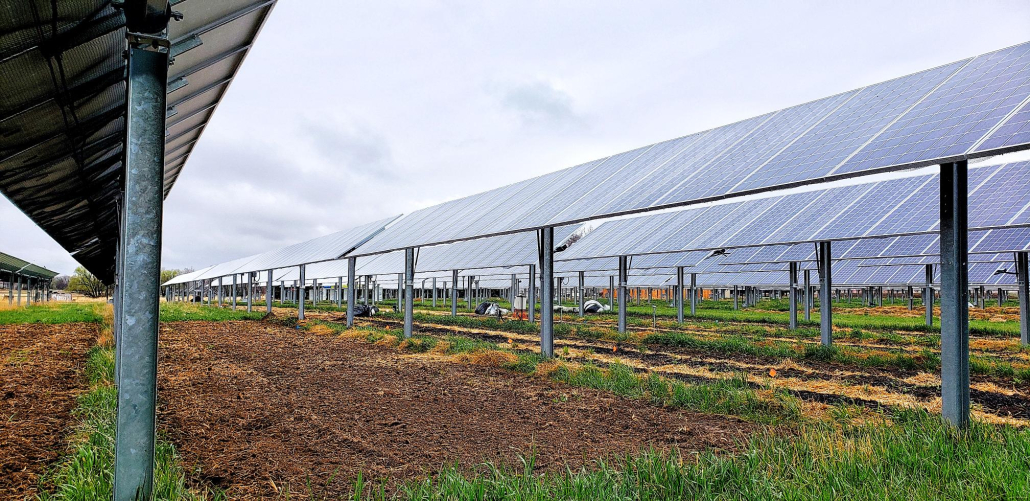
A study led by scientists at the University of Illinois Urbana-Champaign modeled the crop yield and economic impacts of agrivoltaics, or installing solar arrays on working farms across the Midwest. Modeling the impacts of agrivoltaics on energy, water, and plant-soil dynamics revealed that agrivoltaics can increase or reduce yields and profits, depending on the crop and the climate where agrivoltaic systems are installed. The study showed that average aridity or humidity was a key driver of crop yields and the economic viability of agrivoltaic systems. In humid locations, solar shading reduced photosynthesis and resulted in lower yields of the corn and soybean crops tested. In more arid locations, by contrast, shading alleviated water stress and resulted in yield gains for soybeans.
 Marbleseed