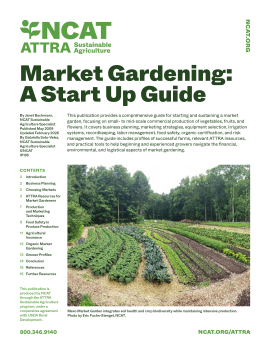
Market Gardening: A Start Up Guide
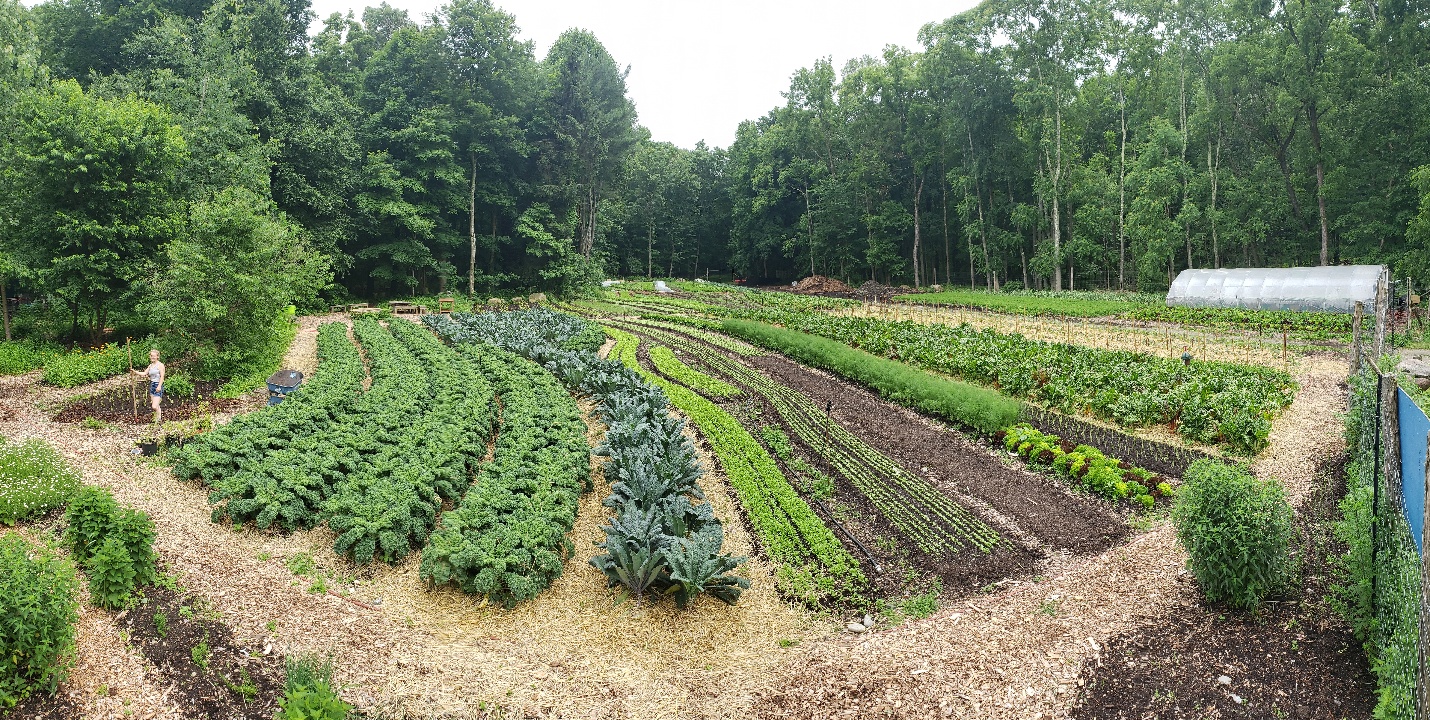
Mevo Market Garden integrates soil health and crop biodiversity while maintaining intensive production.
Photo by Eric Fuchs-Stengel, NCAT.
By Janet Bachmann, NCAT Sustainable Agriculture Specialist
Published May 2009
Updated February 2026
By Gabriella Soto-Velez, NCAT Sustainable Agriculture Specialist
Abstract
This publication provides a comprehensive guide for starting and sustaining a market garden, focusing on small- to mid-scale commercial production of vegetables, fruits, and flowers. It covers business planning, marketing strategies, equipment selection, irrigation systems, recordkeeping, labor management, food safety, organic certification, and risk management. The guide includes profiles of successful farms, relevant ATTRA resources, and practical tools to help beginning and experienced growers navigate the financial, environmental, and logistical aspects of market gardening.
Contents
Introduction
Business Planning
Choosing Markets
ATTRA Resources for Market Gardeners
Production and Marketing Techniques
Food Safety in Produce Production
Agricultural Insurance
Organic Market Gardening
Grower Profiles
Conclusion
References
Further Resources
Introduction
Market gardening is the commercial production of vegetables, fruits, flowers and other plants on a scale larger than a home garden, yet small enough that many of the principles of gardening are applicable. The goal, as with all farm enterprises, is to run the operation as a business and to make a profit through selling your product. Market gardening is often oriented toward selling directly to consumers, although production for shipping to more distant markets is also possible.
Business Planning
Starting any business demands an investment of time and money. When you invest in your own business, be it market gardening or something else, a business plan will help ensure success. Developing your business plan helps you define your business, create a road map for operations, set goals, judge progress, make adjustments, and satisfy a lender’s request for a written explanation of how a loan will be used. The basics of a business plan include:
What? Describe your product or service
Why? Describe the need for your product or service
Who? Describe your customer
When? Draw a timeline and list all the tasks you need to accomplish
Where? Describe the location of your business
How? Describe equipment, materials and supplies you will use in your market garden and how you will finance your market garden
The 280-page publication Building a Sustainable Business: A Guide to Developing a Business Plan for Farms and Rural Businesses is a valuable resource for farmers and rural entrepreneurs seeking to develop a comprehensive business plan. Developed by the Sustainable Agriculture Research and Education (SARE) program, this guide provides step-by-step strategies to help turn farm enterprises into profitable and sustainable businesses. The book walks farmers through goal setting, market research, financial planning, and risk management, using real-life case studies. It includes practical worksheets to assist in developing a customized business plan, helping producers evaluate processing alternatives, identify potential markets, and assess financial viability. This guide is ideal for farmers looking to start, expand, or transition their operations toward a more sustainable model. A free PDF version of Building a Sustainable Business is available for download from SARE, and printed copies can be ordered through the SARE WebStore.
Choosing Markets
Develop a focused marketing plan before planting any crops. A marketing plan helps, but does not guarantee, that most of what you plant will be sold and can help eliminate wasted time, space, product and money. Most market gardeners use several outlets. Diversity in marketing, as well as diversity in planting, is a cornerstone of stability.
Many market gardeners try to maximize their income by selling directly to consumers and bypassing wholesalers and other middlemen. Tailgate markets, farmers’ markets, roadside and on-farm stands, pick-your-own operations and subscription marketing are common direct-marketing strategies. Sales to restaurants, institutions and schools, and grocery stores are common intermediate marketing strategies, where producers maintain their brand identity and can charge a bit more. More in-depth details are provided in other ATTRA publications.
Tailgate Marketing
Tailgate marketing is one of the simplest forms of direct marketing. It involves parking a vehicle loaded with produce on a road or street with the hope that people will stop and purchase the produce. This is commonly used for selling in-season regional produce. This method takes very little investment and can be set up on short notice. Check with your city government first if you plan to set up inside a city. Some cities have regulations governing transient vendors. Local business owners can also be valuable allies; consider asking if you can use part of their parking lot for your market setup.
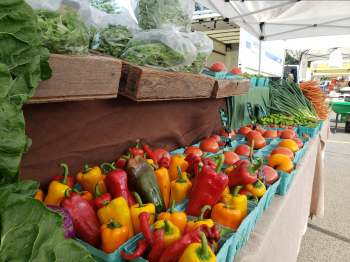
Mevo Farmers Market displays their abundant harvest. Photo by Eric Fuchs-Stengel, NCAT.
Farmers Markets
Farmers markets are an excellent place for a beginning market gardener to sell their crop. Farmers markets do not demand that a vendor bring a consistent supply of high-quality produce every market day, although that is the goal. If you have less-than-perfect tomatoes, you may be able to sell them as canners at a reduced price. A farmers market is a wonderful place to meet people and develop steady customers, which can lead to additional marketing channels. Disadvantages include the need to spend time away from the farm and the possibility of having produce left over at the end of the market. The ATTRA publications Tips for Selling at Farmers’ Markets and Farmers Markets: Marketing and Business Guide offer more information and resources about establishing, promoting and being successful at a farmers’ market. Another resource: Farmers Market Vendor Toolkit.
Community Supported Agriculture
Subscription gardening is a strategy that gained interest in the past decade and can take many different forms. Community-supported agriculture is one type of subscription gardening that involves providing subscribers with a weekly basket of seasonal produce, flowers or livestock products. The subscribers pay at the beginning of the season for part, or all, of their share of the farmer’s planned production. This eliminates the problem of covering up-front production costs at the beginning of the season and guarantees a market. The challenge for the grower is to have a consistent and continuous supply of popular vegetables throughout the growing season. It is helpful to survey the customers or members about their preferences before planting. Refer to ATTRA’s publications Community-Supported Agriculture and Tips for Selling Through CSAs – Community Supported Agriculture for more information.
Selling to Restaurants
Restaurants that are interested in serving fresh, locally grown produce can be a good market. Chefs or restaurant owners are very busy people. Ask the chefs what day and hour is the best time to call to find out what produce they need, and then be consistent about calling at that time every week. You can also find out when to make deliveries. Chefs appreciate the opportunity to tell you what they can use or would like to try. ATTRA’s Tips for Selling to Restaurants has more information about selling to chefs, as does Janet Husts’ The Farm to Market Handbook: How to create a profitable business from your small farm, which is listed in the Further Resources section of this publication.
Grocery and natural food stores may be one of the most difficult markets to break into for small-scale growers, but as interest in locally grown food increases, some stores are looking for ways to make this easier. If you want to sell to retailers, remember that they expect consistently available and high-quality products. Have a sample of your product with you when you visit the store and know what price you want to sell the product for.
Selling to Schools and Institutions
Depending on the size of local school districts, selling to schools can be a steady and dependable marketing channel. Food service departments at schools across the country are joining forces with concerned parents, teachers, community activists, and farmers to provide students with healthy meals while simultaneously supporting small farmers in their region. Check to see if a farm-to-school program exists in your community. Bringing the Farm to School is a partnership between NCAT and the National Farm to School Network to help producers sell to schools. The web page has a lot of resources including a workbook, case studies of farms, recorded lessons and more. ATTRA also has many resources that explore farm to school marketing, including the publication: Farm to School Sales: Profiles of Ranches Making it Work.
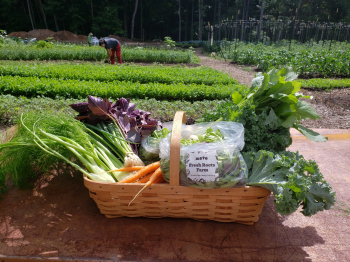
Mevo CSA basket. Photo by Eric Fuchs-Stengel, NCAT.
E-Commerce: Expanding your Market Reach
In today’s digital age, market gardeners are increasingly leveraging online platforms to enhance their sales and streamline operations. E-commerce platforms enable farmers to sell their products directly to consumers, bypassing traditional intermediaries, and expanding their market reach. Notable platforms include:
- Shopify: A widely popular e-commerce platform suitable for various industries, including farming. Its extensive app integrations and customizable themes make it a highly versatile choice for farmers with various products. The platform scales with your business, allowing for growth and expansion. However, the costs can add up, and setting up the perfect online store might require more time and effort. Shopify does come with both point-of-sale and website builder features, making it a robust platform for online sales.
- Barn2Door: An all-in-one business solution tailored for farmers selling directly to consumers. It offers features such as subscription management, sell-by-weight options for meat products, built-in point-of-sale systems, and website building tools. While it provides strong support for subscriptions and direct sales, some users note limited customization options and higher setup fees.
- Local Line: A platform designed specifically for farmers and food hubs, Local Line offers customizable online stores, price list management, weight-based selling, and delivery scheduling. It caters to both retail and wholesale customers, allowing farmers to manage various sales channels efficiently.
- Local Food Marketplace: A software platform that helps farmers, food hubs, and cooperatives manage sales, inventory, and distribution. It supports online storefronts, order management, and delivery logistics, making it easier
to connect communities with fresh,
local food. - Harvie: A sales and distribution platform used by tens of thousands of families each week to buy local food from farmers and distributors. Harvie focuses on enhancing the consumer experience, making it as easy to buy local food as buying from mainstream retailers. The platform offers tools and services that make it easy to develop a customer-friendly direct-to-consumer local food sales channel, including subscription management, delivery scheduling, and customer engagement tools.
- CSAware: Developed by LocalHarvest, CSAware is a software platform that helps CSA farmers offer their members customizable CSA shares. It provides features such as online ordering, membership management, delivery scheduling, financial reporting, and auto-customized subscriptions. The platform aims to make subscription management straightforward and error-free, allowing members to manage their accounts, customize their box contents, and choose delivery preferences.
By embracing these types of digital tools, market gardeners can not only expand their customer base but also improve operational efficiency, leading to increased profitability and sustainability in their farming enterprises.
ATTRA Resources for Market Gardeners: Marketing & Direct Sales Strategies
For market gardeners looking to effectively sell their produce, these ATTRA publications provide essential guidance on direct marketing, farmers’ markets, food hubs, and scaling up to regional markets.
- Explores various direct marketing channels, including farmers’ markets, CSA programs, farm stands, and online sales.
- Provides insight into choosing the right sales strategy based on farm size, production capacity, and customer demand.
- Offers practical pricing strategies and considerations for customer engagement to build a loyal customer base.
NCAT Marketing Tip Sheet Series
- A series of concise tip sheets covering topics such as branding, pricing, storytelling, and customer communication.
- Includes quick, actionable strategies for social media marketing, product differentiation, and effective signage at markets.
- Ideal for beginning and small-scale farmers looking for a straightforward marketing guide.
Selling to Local and Regional Markets: Barriers and Opportunities for Beginning Farmers
- Discusses the challenges beginning farmers face when entering local and regional markets, including regulations, pricing, and competition.
- Provides strategies for overcoming marketing barriers, such as leveraging cooperative networks, diversifying product offerings, and accessing funding resources.
- Encourages relationship-building with local buyers, including restaurants, food hubs, and institutions.
- Explains what food hubs are and how they aggregate and distribute products from small farms to larger buyers.
- Helps market gardeners determine if selling through a food hub aligns with their business goals.
- Covers the benefits of food hubs, including expanded market access and reduced marketing labor for farmers.
Farmers Markets: Marketing and Business Guide
- A comprehensive guide for maximizing sales at farmers’ markets, including booth setup, pricing strategies, and customer engagement.
- Discusses accepting SNAP/EBT and other incentives to increase accessibility for lower-income customers.
- Provides tips for creating value-added products and building brand recognition in a crowded market.
Scaling Up for Regional Markets
- Designed for farmers who want to expand from direct sales into larger wholesale and regional markets.
- Discusses food safety requirements, certifications, and quality control needed for larger-scale distribution.
- Helps farmers evaluate the risks and rewards of scaling up while maintaining profitability and sustainable practices.
Production and Marketing Techniques
Getting started with a market garden doesn’t require a large investment—many successful growers begin with less than an acre and basic tools like a shovel, rake, hoe, and garden hose. However, as operations grow, investing in labor-saving tools such as walk-behind rototillers, mowers, small greenhouses, or refrigeration units becomes worthwhile. In fact, experienced market gardeners often recommend prioritizing tools that support the back end of your operation, like a small walk-in cooler to maintain product quality or an irrigation system to ensure consistent yields, before purchasing larger equipment like a tractor.
If you’re new to market gardening or transitioning from a home garden to commercial sales, one of the best ways to gain practical experience is by apprenticing with a seasoned grower. The ATTRA website offers an internship hub that connects aspiring farmers with hands-on opportunities: attra.ncat.org/internships. If an apprenticeship isn’t possible, there are still many ways to build your knowledge: attend workshops and conferences, talk with other growers, read industry resources, and watch educational videos. You can also reach out to the ATTRA Sustainable Agriculture Specialists at NCAT or your local cooperative extension office for personalized support and reliable information.
Selecting the Right Equipment and Irrigation System for Small-Scale Intensive Crop Production
For market gardeners and small-scale farmers, choosing the right equipment and irrigation system can significantly impact efficiency, profitability, and sustainability. While there are many tools and techniques available, each farm’s needs will vary depending on location, soil type, crop selection, and budget constraints.
The ATTRA publication Equipment and Tools for Small-Scale Intensive Crop Production provides a comprehensive overview of tools and machinery that may be useful for intensive vegetable production. However, not every farm requires large investments in new equipment—many farmers adapt existing tools, purchase secondhand equipment, or outsource certain tasks to save costs.
- Adapting Existing Equipment: Farmers often find innovative ways to repurpose machinery they already own, whether it’s modifying a walk-behind tiller for bed preparation or using small-scale hand tools designed for efficiency.
- Starting Small: For those just beginning on a small parcel of land, it may be more economical to purchase transplants rather than investing in a greenhouse for propagation. This approach reduces upfront costs while allowing farmers to focus on improving production efficiency before expanding.
- Outsourcing Primary Tillage: Many small-scale farmers opt to hire someone with a larger tractor for initial soil preparation instead of purchasing their own expensive tillage equipment. This reduces capital expenses and allows for gradual expansion based on need.
Each of these strategies enables farmers to operate efficiently without making large financial commitments, allowing them to scale their business over time.
Irrigation Considerations for Small-Scale Farms
Regardless of farm size, a well-designed irrigation system is critical for ensuring consistent, high-quality crop production. With increasingly more erratic weather patterns, consider irrigation an insurance policy, even in areas that typically have not required it in the past. Even farms operating on less than an acre benefit significantly from an efficient irrigation system that reduces water waste, minimizes labor, and enhances plant health.
- Drip Irrigation: One of the most efficient irrigation methods, drip irrigation delivers water directly to the plant roots, minimizing evaporation and water loss. It is especially useful for vegetable, fruit, and flower production, as it ensures uniform soil moisture and prevents disease issues caused by overhead watering.
- Overhead Sprinklers: While overhead irrigation can be useful for certain crops, it is generally less water-efficient due to high evaporation rates. Additionally, prolonged leaf wetness can increase the risk of fungal diseases, making it less ideal for crops susceptible to moisture-related pathogens.
Farmers should carefully consider which irrigation system aligns best with their specific production goals, climate conditions, and crop needs.
Customizing an Irrigation System to Fit Your Farm
Since irrigation needs vary based on soil type, crop selection, and climate, it is essential to seek guidance from experts
and regional resources to design an effective system.
- NCAT’s Irrigator’s Pocket Guide: Created with input from irrigation experts in over 20 states, the Irrigator’s Pocket Guide belongs in every irrigator’s hip pocket. It is a take-to-the-field guide that demystifies the art of irrigation management, explains everything you need to know about soil moisture and crop water use, and shows you how to optimize crop yields while conserving water, soil, and energy
- UMass Amherst’s Irrigation Guide: The UMass Amherst Greenhouse Best Management Practices provides detailed insights into various irrigation techniques, including drip and overhead systems, their installation, and maintenance recommendations.
- Local Extension Offices: State and county extension services offer region-specific guidance on irrigation design, efficiency, and water-use regulations. They also provide technical bulletins and support for farmers navigating water conservation programs.
- NCAT Agriculture Specialists: Specialists from the National Center for Appropriate Technology (NCAT) can assist in customizing irrigation plans, ensuring that systems are sustainable, cost-effective, and suited to a farm’s unique needs.
By choosing the right irrigation method and working with experts to optimize system design, small-scale farmers can reduce water use, increase yields, and build resilience against climate variability.
Equipping a small-scale farm with the right tools and irrigation system is a critical investment in long-term success. Whether it’s repurposing machinery, outsourcing tillage, or implementing an efficient irrigation system, these decisions should be made with careful consideration of costs, practicality, and sustainability. By leveraging expert guidance, extension resources, and cost-effective strategies, farmers can build productive and resilient growing operations that support both their business and the environment.
Planning and Recordkeeping
Recordkeeping may be one of the most difficult tasks for market gardeners, but good records are critical if you want to know which crops are profitable. Recordkeeping can help you better understand what you should be producing more of, and how to better adjust your crop planning. Market gardeners use records to fine-tune planting, cultivation, pest management and harvest schedules. Records can help answer questions about labor, equipment and capital needs, and are valuable when developing business plans or making farm business decisions.
A presentation titled “Record Keeping Tool for Small Fruit and Vegetable Farms” was created by the Southern Extension and Risk Management Education in partnership with the University of Tennessee. This PowerPoint can help you create your own Excel spreadsheet, which in turn can help you better understand where there might be waste, what you should be growing more of, and how to adjust your crop plan to maximize efficiency and profits. See Further Resources for this PowerPoint and other useful tools for small farm record keeping.
Labor
The size of your operation and the type of enterprises you choose will determine the amount of labor needed. While some market gardeners opt to manage production and marketing without outside help, many will find it necessary to hire employees to meet their operational needs. Effective labor management begins with proper budgeting and understanding labor regulations in your state. It is essential to account for all labor-related costs, including wages, benefits, taxes, and potential overtime. Creating a detailed labor budget helps in understanding the financial implications of hiring and ensures that labor costs align with overall business goals. Utilize tools and resources like spreadsheets or farm management software to track and manage labor expenses effectively.
Clear communication of expectations and operating procedures is crucial for maintaining a productive workforce. Regular meetings with employees provide an opportunity to discuss goals, address concerns, and ensure everyone is aligned with the farm’s objectives. These meetings can be held weekly to review tasks, progress, and any adjustments needed. Organizing daily and weekly tasks enhances productivity and ensures smooth operations. At the start of each week, outline all tasks planned and assign specific tasks to employees each day. Using tools like dry erase boards or digital task management systems can help in visualizing and tracking these tasks. Including the estimated time to complete each task based on past records helps in setting realistic goals and monitoring performance. Additionally, create task sheets that list the supplies needed for each task. For instance, if floating row covers need to be laid, the task sheet should include shovels, markers, and marking pens, ensuring employees have everything they need to complete their tasks efficiently. Aim to provide full-time jobs where possible and have a list of rainy-day tasks and extra chores to ensure employees always have something useful to do. This not only helps in maintaining employee engagement but also ensures continuous productivity. By keeping employees occupied with meaningful work, you can enhance job satisfaction and retention.
Developing Standard Operating Procedures (SOPs) and employee manuals is essential for consistency and efficiency. These documents should outline farm standards and expectations, such as handling waste, maintaining equipment, and performing specific tasks. For example, an employee manual might include a checklist for ensuring that supplies and equipment are properly stored at the end of the week, or protocols for managing food safety. Employers must also be knowledgeable about government regulations, including field sanitation, drinking water, worker protection, and safety regulations. Staying informed about these regulations helps create a safe and compliant work environment.
Food Safety in Produce Production
The increasing consumer demand for fresh, nutritious produce has led to heightened awareness and regulatory measures to ensure food safety. Notably, the Food Safety Modernization Act (FSMA) and the establishment of Good Agricultural Practices (GAP) guidelines play pivotal roles in safeguarding public health and maintaining the integrity of produce businesses.
Food Safety Modernization Act (FSMA)
Enacted in 2011, the FSMA represents a significant overhaul of food safety regulations, shifting the focus from reactive responses to proactive prevention of foodborne illnesses. A cornerstone of FSMA is the Produce Safety Rule, which sets forth science-based standards for the safe cultivation, harvesting, packing, and storage of fruits and vegetables (FDA, 2024).
Key Components of the Produce Safety Rule:
- Personnel Qualifications and Training: Farm personnel must be trained in health and hygiene practices to prevent contamination.
Agricultural Water: Standards are established for the quality of water used in farming activities, including regular testing and corrective measures to ensure safety. - Biological Soil Amendments: Guidelines dictate the proper use of manure and compost, focusing on treatment and application methods to mitigate contamination risks.
- Domesticated and Wild Animals: Measures are required to prevent contamination from animals in growing areas, including monitoring and mitigating animal intrusion.
- Equipment, Tools, and Buildings: Standards ensure that all equipment and facilities are maintained and sanitized to prevent contamination.
- Recordkeeping: Detailed records must be maintained to document compliance with FSMA regulations.
Compliance with the Produce Safety Rule is mandatory for most produce growers, especially those with average annual produce sales exceeding $25,000. Those producers with annual total sales under $25,000 are exempt from inspections but are still required to follow the standards.
Regular inspections and audits are conducted to ensure adherence to these regulations (FDA 2024).
Good Agricultural Practices (GAP)
Developed by the USDA’s Agricultural Marketing Service, GAP consists of voluntary guidelines aimed at minimizing microbial food safety hazards in the production, packing, handling, and storage of fresh fruits and vegetables. While not legally mandated, GAP certification is often required by wholesale buyers, including grocery chains and wholesale distributors, as it demonstrates a commitment to food safety.
Core Areas Covered by GAP:
- Worker Health and Hygiene: Emphasizes training workers in proper hygiene practices to prevent contamination.
- Water Quality: Provides guidelines for the use and testing of water in agricultural activities to ensure it meets safety standards.
- Soil Amendments: Addresses the safe use and handling of manure and compost to minimize contamination risks.
- Pest Control: Encourages integrated pest management practices to reduce contamination from pests.
- Sanitation: Stresses maintaining cleanliness in packing areas, equipment, and tools to prevent contamination.
- Traceability: Recommends implementing systems to trace produce back to its source, facilitating quick and effective recall procedures if necessary.
GAP certification involves an audit by a third-party certifier who evaluates the farm’s practices against established standards (USDA AMS, 2025).
Agricultural Insurance
According to the Washington State Department of Agriculture (2025), insurance is one of the most overlooked pieces of running a farm business.
Types of Insurance to Consider:
- General Liability Insurance: Protects against claims of bodily injury or property damage that occur on your farm.
- Product Liability Insurance: Covers legal costs and damages if your products cause harm to consumers.
- Business Property Insurance: Covers damage to your farm buildings, equipment, and other physical assets.
- Workers Compensation Insurance: Required if you have employees, this covers medical expenses and lost wages if they are injured on the job.
- Vehicle Insurance: Covers farm vehicles used in the operation of your farm.
- Crop Insurance: Protects against loss of crops due to natural disasters, such as droughts, floods, or pest infestations. Programs like the USDA’s Risk Management Agency (RMA) offer various crop insurance options.
- Livestock Insurance: Provides coverage for the loss of livestock due to disease, accidents, or other covered events.
In today’s litigious culture, it is wise to have adequate coverage for all your farm activities. Insurance coverage is available for nearly any activity on your farm, but the cost of coverage may not be economically viable. Shop around for the insurance that best suits your needs and balance the coverage into your farm business plan.
If your farming operation is very small, you may be able to simply add coverage to your homeowner’s policy. Larger operations typically require a farm policy that includes property coverage as well as liability coverage for physical injury and ingested food products. Additionally, crop and livestock insurance can help protect against losses due to adverse weather conditions, pests, and diseases.
The USDA offers a comprehensive suite of resources on their website designed to help farmers and ranchers better understand and manage agricultural risks. These resources include detailed policies, handbooks, and guidelines that provide crucial information for protecting farming operations against a wide array of potential threats, ensuring greater resilience and stability for agricultural businesses.
The Pennsylvania State University bulletin, Agricultural Business Insurance, discusses the different types of insurance you should consider as part of your risk management strategy. Agricultural business insurance includes general liability, product liability, business property, workers compensation, vehicle and crop insurance, and more. This bulletin and a wide range of other articles pertaining to agriculture insurance for farm businesses are available at the Pennsylvania State University Extension website.
With the increasing frequency of extreme weather events due to climate change, it is essential to consider insurance products that cover these risks. Programs are evolving to provide more comprehensive coverage for climate-related events. The COVID-19 pandemic highlighted the importance of coverage for business interruptions, and some insurance products now offer options to cover losses due to pandemics and other global disruptions. Advances in technology, such as satellite imagery and data analytics, are also being used to improve risk assessment and management in agricultural insurance, providing more accurate and tailored insurance solutions. By understanding and securing the appropriate insurance for your farm, you can protect your business from a wide range of risks and ensure long-term sustainability and resilience.
Organic Market Gardening
Many market gardeners grow their crops organically. The motivations for growing crops organically vary. Some market gardeners think it is the socially and environmentally responsible thing to do. Some market gardeners are motivated by economic benefits. Organically grown produce typically commands higher prices in the marketplace. Growers who sell through CSAs or use other forms of direct marketing sometimes find that their customers expect and demand organic production practices but may not require certification.
Organic production is defined in legal terms, and the use of the term organic is controlled. If your farm is claiming to be organic, especially if you are involved in intermediate or wholesale marketing, you will be subject to federal regulations and will be required to follow an organic system plan and go through an inspection process. You must be certified by the USDA to market your products as organic unless your annual sales of organic products are less than $5,000. ATTRA has numerous publications that address organic production and certification. See ATTRA’s Guide to Organic Publications for more information.
Grower Profiles
To give you additional ideas and inspiration, several market gardeners from different parts of the United States agreed to share information about their operations. It is interesting to note that although each operation is unique, all have a number of things in common. These include:
- Diversity of crops
- Diversity of marketing strategies
- Cover crops grown for soil building
- Detailed recordkeeping systems
- Willingness to share knowledge and ideas with others
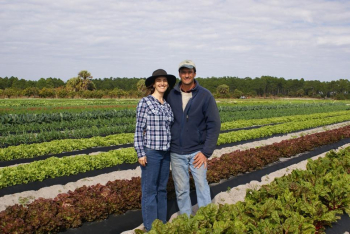
Eva and Chris Worden, Punta Gorda, Florida. Photo: Jen Rodgers
Worden Farms, Eva and Chris Worden, Punta Gorda, Florida
Since 2003, Eva and Chris Worden have been cultivating organic fruits, vegetables, and flowers on their 125-acre farm in Southwest Florida using sustainable, regenerative, and climate-smart agricultural practices. Their farm excels in strategic planning to address the region’s unique climatic challenges such as the potential for a freeze between Christmas and Valentine’s Day. To mitigate this risk, the Wordens incorporate cold-tolerant varieties into their crop mix and schedule fall and spring plantings of long-season crops. They grow all their transplants in greenhouses, enabling them to maintain a diverse array of cultivars, which provides resilience against weather fluctuations.
While weeds are often a major challenge for organic farmers, Eva and Chris take a strategic approach to manage them. They minimize the weed seed bank in the soil and optimize planting times to ensure their crops outcompete the weeds. They use specialized tools for each task, including older and newer high-ground-clearance cultivating tractors configured for row and bed formations with belly- or rear-mounted implements for mechanical weed removal. For within-row weeding, they use disc hiller cultivators, steerable finger weeders, and flex tine cultivators. Between rows, they deploy cultivating shanks and basket weeders, while wheel tracks are managed with discs or S-tine cultivators. “We get good results by using the best equipment for the job at the right time in the crop cycle,” Chris Worden explains.
Their produce, available to the local community from Fall through Spring, can be purchased through a farm box program, a members-only farm stand, and local farmers markets. Additionally, they collaborate with the University of Florida’s Institute of Food and Agricultural Sciences Tropical Research and Education Center on projects like cultivating calabaza and Cucurbita moschata, which are well-suited to the climate and organic farming practices of Southwest Florida. This partnership highlights their dedication to advancing organic agriculture through research and innovation.
“To be sustainable long-term, we ultimately want to create an agricultural system that can thrive without us,” Eva Worden says. “We are the founders of this farm, and we recognize that in order for it to continue beyond us, we must make it viable for our successors. Our goal in the last 20 years was to start up the farm, and our goal in the next 20 years will be to grow towards the future, with our two sons, for the next generation” (Ohlemeier, 2024).

Co-founders Jamie Nadler and Madison Warren of Dancing Greens Farm. Photo: dancing-greens.com
Dancing Greens Farm – Jamie Nadler and Madison Warren, Great Barrington, Massachusetts
Dancing Greens Farm, co-founded by Jamie Nadler and Madison Warren, is a women-owned regenerative farm located in Western Massachusetts. With a focus on minimal tillage and soil health, the farm produces organic vegetables and hosts farm-to-table dinners (or shindigs as they like to call them) that emphasize the connection between healthy food and community. Jamie, who comes from an environmental science and agriculture background, and Madison, a chef focused on health-supportive cooking, have found an intersection between their passions, creating a space where environmental sustainability and good food meet.
Farm Overview
Dancing Greens Farm sits on just ½ acre of land that Jamie and Madison have transformed into a thriving market garden. They sell primarily at the West Stockbridge Farmers Market, supply local restaurants, and participate in food access programs like Berkshire Grown.
“We are no-till, and we consider ourselves regenerative, but I don’t like to get too much into labels. Basically, the principles we use are to grow with soil health first. That’s how all of our decisions get made,” says Jamie, reflecting on the foundational philosophy of their farm.
Sustainable Practices
From the beginning, Dancing Greens Farm has been committed to regenerative practices, despite not seeking formal certifications. Their focus on no-till agriculture arose from both an environmental perspective and practical constraints.
“Honestly, access to equipment was a big reason we chose no-till. It felt like the obvious choice, and the more I learned about soil microbiology, the more it made sense,” Jamie shares. “We started with an initial till to get things going, but after that, we transitioned to a no-till system.”
They also incorporate composting, cover cropping, and crop rotation into their farming practices. Recently, Jamie has been experimenting with Korean Natural Farming techniques, including fermentations, mycelium cultivation, and calcium distillations.
“I’ve been playing around with fermentations and dilutions, using mycelium from the forest and making things like apple cider vinegar and calcium distillations to apply to the plants,” Jamie explains. “I want to make that aspect more robust moving forward.”
Challenges and Solutions
As a small farm, Dancing Greens faces typical challenges like time management and scaling production. They also had to deal with extreme weather conditions early on, which led them to implement practical solutions to safeguard their crops.
“The rain was really bad last year. We had standing water in half the field, and we had to dig trenches to direct the water out. That was really scary,” Jamie recalls. “We were fortunate that our beds were raised, but the experience pushed us to improve our systems.”
Managing time between working at another farm, hosting events, and running their farm has also been a balancing act. “That’s been my biggest challenge—managing my time and staying on top of things,” Jamie admits.
Marketing and Community Building
Dancing Greens Farm sells its produce at the West Stockbridge Farmers Market and through partnerships with local restaurants. Their farm-to-table dinners have become a hallmark of the farm, combining fresh, local produce with a sense of community.
“Our dinners aren’t just about the food—they’re about making farming and local food exciting and fun. Instead of focusing on climate change and the doom of it all, we want to create a joyful, hopeful experience,” Jamie explains. “We’ve also met a lot of people in the area through these events, and it’s really helped us build connections with other local farms.”
They offer unique items at the farmers market, including lesser-known crops like husk cherries. Jamie notes, “I’m trying to grow quirky things you don’t typically find on this scale. Madison loves husk cherries, so we’re growing them and offering them at the market alongside more common crops.”
Note: Dancing Greens Farm made the decision to close operations in 2025. We are saddened that an operation like Dancing Greens was forced to shut down.
Conclusion
Building a market garden business takes a wide range of skills. Not only do you have to know how to grow crops, you also have to be able to market your products profitably, maintain safety standards, manage employees, maintain equipment and infrastructure, and manage a wide range of risks. Fortunately, there are resources to support you as you grow toward your farm goals to build a sustainable business. This publication has addressed some of the most important considerations. ATTRA has more in-depth resources on the individual topics, some of which we have listed below in Further Resources, and our Sustainable Agriculture Specialists are here to support you as you encounter questions or challenges in your endeavors.
References
Ohlemeier, Doug. “Southwest Florida’s Worden Farm Manages Challenges.” Vegetable Growers News, 21 Apr. 2024.
U.S. Food and Drug Administration (FDA). (2024). Food Safety Modernization Act (FSMA). U.S. Department of Health and Human Services.
U.S. Food and Drug Administration (FDA). (2025). FSMA Final Rule on Produce Safety. U.S. Department of Health and Human Services.
U.S. Department of Agriculture, Agricultural Marketing Service (USDA AMS). 2025. Good Agricultural Practices (GAP) & Good Handling Practices (GHP).
Washington State Department of Agriculture. (2025). How to get product liability insurance for your farm. In Risk Management and Food Safety.
Further Resources
Record Keeping Tool for Small Fruit and Vegetable Farms PowerPoint (YouTube)
Created by the Southern Extension and Risk Management Education in partnership with the University of Tennessee. PowerPoint Presentation.
The Living Soil Handbook: The No-Till Grower’s Guide to Ecological Market Gardening
Author: Jesse Frost
Publisher: Chelsea Green Publishing (2021)
Format: Paperback, ISBN: 978-1645020264
The Winter Market Gardener: A Successful Grower’s Handbook for Year-Round Harvests
Authors: Jean-Martin Fortier & Catherine Sylvestre
Publisher: New Society Publishers / Growing for Market (2024)
Format: Paperback
Oregon State University Extension – Vegetable Crop Resources for Small Farms
This curated collection offers production guides and fact sheets on vegetable and specialty seed production for small farms and gardens. Topics include integrated pest management, crop-specific growing tips, and sustainable practices. Available in English and Spanish.
North Carolina State University Extension – Market Gardens for Small Farms
This guidebook outlines production planning, equipment budgeting, crop selection, and irrigation for small-scale market gardens in North Carolina and similar climates. It includes sample budgets and real-world scenarios to help new growers get started efficiently.
 Market Gardening: A Start Up Guide
By Janet Bachmann, NCAT Agriculture Specialist
May 2009, Updated February 2026 by Gabriella Soto-Velez, NCAT Agriculture Specialist
©NCAT
IP195
Version 031226
This publication is produced by NCAT through the ATTRA Sustainable Agriculture program, under a cooperative agreement with USDA Rural Development.