Considerations for Starting Organic Crop Production
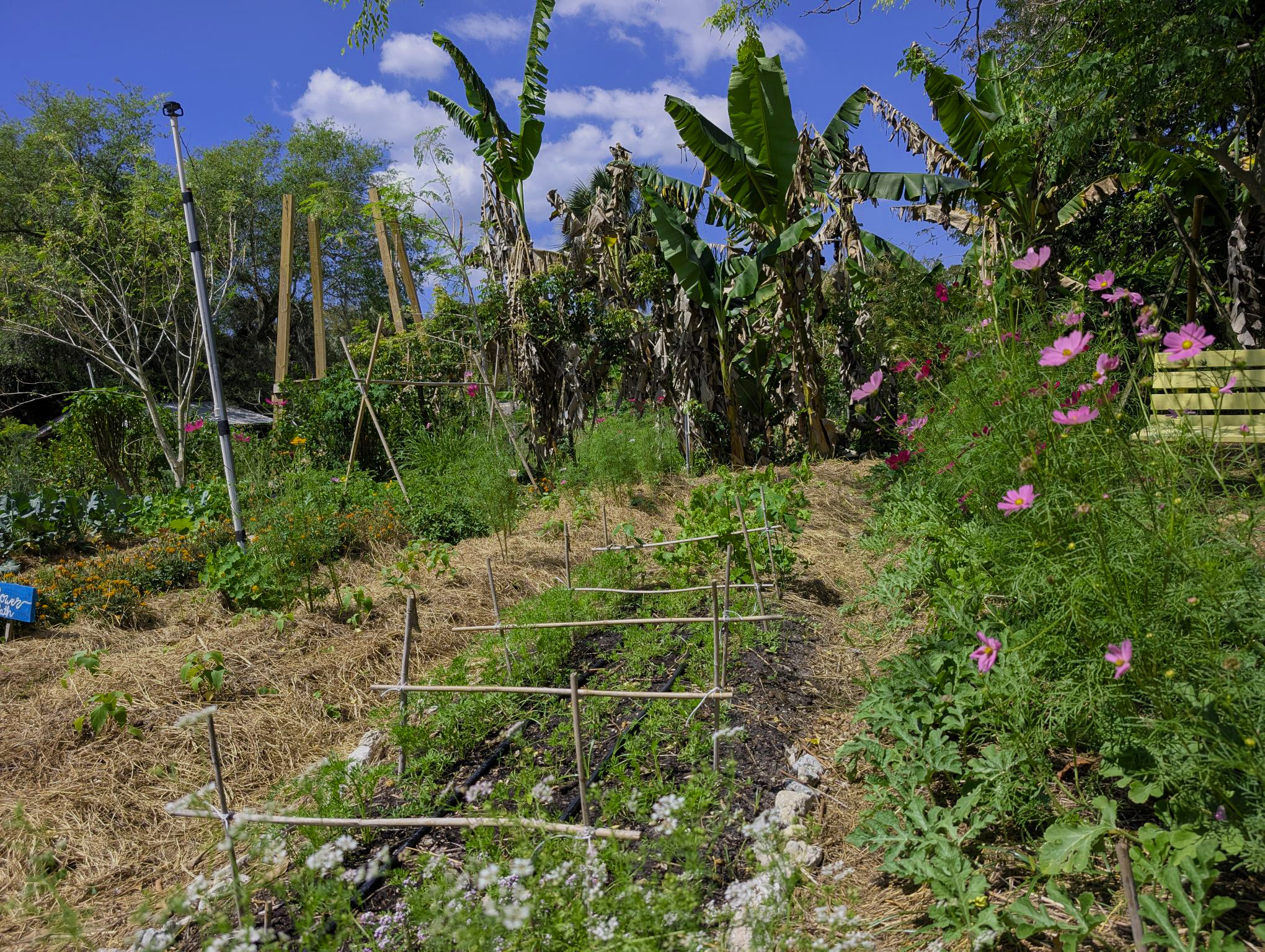
Organic garden at ECHO Global Farm in North Fort Myers, Florida. Photo: Gabriella Soto-Velez
By Gabriella Soto-Velez and Hakeem Holmes, NCAT Sustainable Agriculture Specialists
Abstract
This publication gives an overview of considerations involved in transitioning to organic farming and ranching practices that comply with USDA National Organic Program regulations. It highlights the benefits of organic production and provides tips to minimize common management challenges associated with transition, such as protecting soil health, managing weeds and pests, and marketing transitional and organic products.
Contents
Introduction
Understanding Organic Certification
Soil Health and Nutrients
Weed, Disease, and Pest Management
Marketing Organic Products
Yield Expectations
Managing Risk During Transition and Beyond
Conclusion
References
Further Resources
Introduction
Transitioning to organic farming is a rewarding but complex journey. This guide is designed to empower beginning and established farmers with the knowledge and tools they need to shift successfully from conventional practices to certified organic production. This publication includes many resources for small-scale specialty crop farms and also addresses the unique needs of medium- to large-scale producers of field crops.
Whether you’re managing a few acres or several hundred, transitioning to organic production requires thoughtful planning and a willingness to adapt. This guide offers practical steps, real-life examples, and helpful resources to support you through the process.
Why Organic?
Organic farming is more than just avoiding synthetic inputs; it’s a holistic management approach that fosters soil health, conserves biodiversity, and promotes ecological balance for more resilient, sustainable systems. Organic farming can open new doors to market opportunities and help producers build a more secure future for their operations.
Organic certification is a voluntary, market-driven program. With growing market demand and consumer interest, not only in organic fruits and vegetables, but also in organic grains, oilseeds, and animal products, certified organic producers may be able to achieve reduced input costs and increased profitability.
Unfortunately, economic benefits and price premiums are not guaranteed. Profitability depends on input costs and market forces, both of which are generally beyond the producer’s control. However, organic practices themselves are in the producer’s control and may provide ecological benefits that increase farm sustainability over time. For example, use of cover crops and compost management of crop residues can increase soil organic matter, which improves soil structure and aggregation, boosts biological activity (microbes, earthworms, and other beneficial soil organisms), reduces erosion, and minimizes nutrient and pesticide runoff. Ultimately, when the soil can soak up and hold more water, the farm can be more resilient in the face of extreme weather events and resource limitations.
That said, the road to organic production isn’t without its bumps. During the transition period, farmers may face increased costs as they learn new management techniques and work to secure stable markets. In addition, price premiums and access to some marketing channels are not typically available until the operation is fully certified. However, some producers choose to grow transition crops, such as grains or forage, that are more adaptable to organic practices and may offer more consistent income during this period. With careful planning and the right support, the transition can become a valuable investment in the long-term health and sustainability of the farm business, the land, and the surrounding community.
Deeper Dive
Unfortunately, economic benefits and price premiums are not guaranteed. Profitability depends on input costs and market forces, both of which are generally beyond the producer’s control. However, organic practices themselves are in the producer’s control and may provide ecological benefits that increase farm sustainability over time. For example, use of cover crops and compost management of crop residues can increase soil organic matter, which improves soil structure and aggregation, boosts biological activity (microbes, earthworms, and other beneficial soil organisms), reduces erosion, and minimizes nutrient and pesticide runoff. Ultimately, when the soil can soak up and hold more water, the farm can be more resilient in the face of extreme weather events and resource limitations.
That said, the road to organic production isn’t without its bumps. During the transition period, farmers may face increased costs as they learn new management techniques and work to secure stable markets. In addition, price premiums and access to some marketing channels are not typically available until the operation is fully certified. However, some producers choose to grow transition crops, such as grains or forage, that are more adaptable to organic practices and may offer more consistent income during this period. With careful planning and the right support, the transition can become a valuable investment in the long-term health and sustainability of the farm business, the land, and the surrounding community.
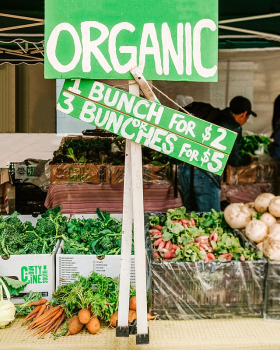
Organic vegetables on display at a farmers market. Photo: Ella Olsson, Wikimedia Commons
Understanding Organic Certification
Certified organic operations must follow specific standards set by the USDA’s National Organic Program (NOP), contained in 7 CFR Section 205. These standards require that farmers maintain or improve the status of the natural resources on their operations, including soil and water, while using only approved materials and practices. The goal is to produce food and fiber in a way that is sustainable, environmentally sound, and transparent to consumers. All certified operations must maintain detailed records, undergo annual inspections, and follow a written Organic System Plan (OSP) that outlines how they meet organic requirements.
The Three-Year Transition Period
The transition period is the 36 months between the last application of a prohibited material and when a crop or product can be sold as certified organic. During this time, producers must adhere to all organic practices but cannot yet market their products as organic. Because transitional products cannot receive organic price premiums, some producers explore designated transitional markets that offer some level of premium pricing for “transitional” or “in-transition” crops. Although markets for transitional products are limited, some companies that recognize the value of transitioning more farms to organic and understand the difficulties of this process are willing to purchase products at a premium to support transitioning farmers.
Some producers diversify their crop rotations or integrate livestock by grazing cover crops or rotating pastures to maintain income and build soil fertility during the organic transition period. Careful planning can ease the burden of this transition. Keeping detailed records from the beginning, understanding which substances are allowed or prohibited, and connecting early with a USDA-accredited certifier are all essential steps. Certification requires a robust documentation process, including maps, field histories, input records, and your Organic System Plan. Many certifiers offer checklists to help new applicants stay on track.
Deeper Dive
Before making the shift to organic production, it’s important to take a close look at your farm’s current condition and long-term goals. Every operation is different, and the path to certification varies depending on your land use history, infrastructure, and management systems. Thoughtful planning at this early stage can save you time, money, and frustration later.
Assessing Your Farm for Organic Transition Readiness
What are the differences between your current practices and those required for your type of production by National Organic Program regulations? Begin by evaluating the health of your soil. Organic farming hinges on the vitality of the soil, so understanding its current state is key. A comprehensive soil test can provide valuable insight into nutrient levels, organic matter, pH balance, bulk density, and soil texture—all of which guide your fertility and crop planning.
Find some of ATTRA’s resources to guide your understanding of soil testing in the Further Resources section.
Take inventory of your infrastructure and equipment, as well. Transitioning to organic production may require modifications to your current setup and identifying these needs early will help you build a realistic plan.
Creating a Transition Plan
With your farm assessment in hand, it’s time to develop a transition plan. Will you convert your entire operation at once, or phase in fields over time? What prohibited inputs will need to be removed from your system, and when? How will you prevent commingling organic and non-organic products and materials? What changes in crop or livestock management will be needed?
The land requirements of the organic regulations state: “Any field or farm parcel from which harvested crops are intended to be sold, labeled, or represented as “organic,” must…Have had no prohibited substances [such as synthetic fertilizers or pesticides] applied to it for a period of 3 years immediately preceding harvest of the crop.” However, land may be eligible for certification right away, if you can provide documentation that no prohibited substances have been applied in the past three years. This documentation may include past input records or land-use affidavits from previous landowners or operators, showing that the land has either been fallow or managed organically, with or without certification, for the required amount of time. Additionally, a producer can plant an organic crop before the transition period is complete but must harvest the crop after three years from the last date of application of any prohibited material.
Crop rotation is another essential piece of the organic production puzzle. In fact, it’s a requirement under USDA organic standards. The regulations state that organic producers must implement a crop rotation that maintains or improves soil organic matter, supports nutrient management, provides pest control, and reduces erosion. This means your crop plan must go beyond simply switching inputs: it must actively build soil and ecological health. In Title 7, § 205.2, the National Organic Program defines crop rotation as “The practice of alternating the annual crops grown on a specific field in a planned pattern or sequence in successive crop years so that crops of the same species or family are not grown repeatedly without interruption on the same field. Perennial cropping systems employ means such as alley cropping, intercropping, and hedgerows to introduce biological diversity in lieu of crop rotation.” To support your planning, the ATTRA tipsheet Crop Rotation in Organic Farming Systems offers a useful overview of rotation principles and examples. For farmers in temperate climates or smaller-scale systems, Iowa State Extension’s Crop Rotation Guide provides additional practical guidance.
If your operation includes livestock, use the transition period as a planning window to design grazing systems that improve pasture condition, distribute nutrients, and minimize parasite pressure. Integrating animals with crops strengthens the farm by cycling nutrients and adding diversity. Under USDA organic regulations, animals must be removed from fields growing food crops (other than pasture or cover crops), and raw manure must not be applied, for either 120 or 90 days before harvest (120 days when the edible portion of the crop can contact soil or soil splash; 90 days when it does not).
Deeper Dive
To learn more about regulations for integrating livestock into your cropping system, refer to the ATTRA publication Food Safety Considerations for Integrating Livestock into Produce Cropping Systems.
Finally, prepare a budget for the transition period. Demands on labor may increase and input strategies will likely change during this time when your product will not receive an organic price premium. Your budget should reflect any anticipated income loss, along with new investments
in equipment, infrastructure, or labor. Some producers choose to diversify their incomes by integrating direct sales, value-added products, or livestock enterprises during this time.
A good transition plan is flexible and responsive. Set goals and timelines but be prepared to adapt as you gain experience. The transition is more than a paperwork exercise—it’s a process of rethinking how your farm can function biologically over the long term.
Dig Deeper with These ATTRA Resources
As you plan your transition to organic production, these ATTRA publications offer more in-depth guidance on specific topics that can support your success:
- Crop Rotation in Organic Farming Systems
A concise tipsheet on the principles of crop rotation and how this practice supports pest control, fertility, and weed suppression.- Integrating Livestock and Crops: Improving Soil, Solving Problems, Increasing Income
Learn how combining livestock and crops can improve fertility, reduce pests and weeds, and enhance overall farm resilience.- Reducing Tillage Intensity in Organic Systems
Explore strategies for managing weeds and soil fertility with less soil disturbance—key for building long-term soil health.- Overview of Cover Crops and Green Manures
A foundational guide to selecting, planting, and managing cover crops to improve soil health and nutrient cycling.
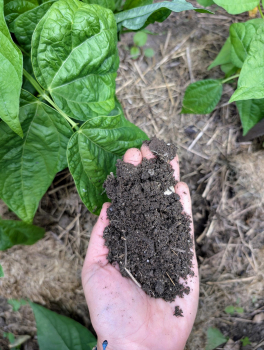
Photo: Gabriella Soto-Velez, NCAT
Soil Health and Nutrients
Healthy soil is the foundational element for productive and resilient agricultural systems, extending its influence beyond crop yields alone to include the overall health and sustainability of the broader ecosystem. The agricultural landscape of the United States encompasses a wide variety of soil types, each with its own set of benefits and limitations. Many regions face challenges such as low levels of organic matter, high rates of runoff or flooding, reduced capacity to retain water, and a tendency for rapid nutrient leaching. Regional variations in temperature and precipitation, as well as potential for extreme weather events, present additional challenges for maintaining optimal soil health through erosion and nutrient loss. The increasing awareness of environmental concerns and a growing desire for healthier, more sustainable food production have spurred significant interest among farmers and gardeners across the country for adopting organic soil-management practices. The key organic practices addressed here include transitioning from synthetic fertilizers to organic inputs like manure, compost, and cover crops; using legumes strategically to enhance natural nitrogen fixation; implementing optimized tillage and soil-disturbance-management techniques; and applying versatile cover crops within diverse cropping systems.
Transitioning from Synthetic Fertilizers to Organic Inputs
The shift from relying on synthetic fertilizers to a healthy soil system based on organic inputs is a carefully planned process that typically unfolds over several years, often spanning three to five growing seasons. A fundamental first step in this transition involves soil testing. This analysis provides crucial information about the existing nutrient profile of the soil, identifies any specific deficiencies, and establishes a baseline against which to measure the effectiveness of new organic practices. One strategy for moving toward organic methods involves gradually reducing the application rates of synthetic fertilizers. For instance, a farmer might aim for a 20% reduction in synthetic fertilizer use during the initial year, followed by further incremental decreases in subsequent years. Simultaneously increasing utilization of organic soil amendments, such as compost, manure, and cover crops, becomes paramount. For this method of transition, it is important to remember that the required organic transition period of 36 months begins after the last date of application of a synthetic fertilizer or pesticide (not when you begin reducing their use).
For farmers across the United States contemplating switching to organic production, the USDA Organic Transition Initiative offers significant support. This initiative provides both financial assistance and technical guidance to producers who are in the process of becoming certified organic. The support includes help with developing organic management plans and implementing conservation-oriented practices like cover cropping and nutrient management, as well as potential reimbursement for income lost during the initial transition period. It is important to note that the Organic Transition Initiative supports specific NRCS conservation activities and practices required for organic certification, including Conservation Cover and Cover Crops.
Benefits of Adopting Organic Inputs
Adopting organic inputs brings about several significant improvements to soil health that are particularly beneficial in regions with challenging soil conditions. Adding organic matter from sources like manure, compost, and cover crops plays a crucial role in enhancing soil structure. Organic material acts as a binding agent, causing individual soil particles to clump together into stable aggregates. This aggregation creates a more porous soil environment, which is essential for improving aeration, allowing better gas exchange for plant roots and soil organisms, and also enhancing water infiltration, enabling the soil to absorb water more effectively. Furthermore, organic matter possesses a remarkable ability to improve the soil’s capacity to retain water. Acting much like a sponge, it can hold onto moisture for extended periods, a particularly valuable trait for sandy soils that tend to drain quickly. Enhanced water retention helps buffer soil against drought conditions and can reduce the need for frequent irrigation.
Organic inputs also serve as a vital food source for a diverse community of beneficial soil microorganisms, including bacteria, fungi, and earthworms. This thriving microbial community is essential for breaking down organic matter, cycling nutrients, and improving overall soil fertility over the long term. Unlike synthetic fertilizers that release nutrients all at once, organic fertilizers break down slowly, supplying a steadier stream of nutrients that crops can use as they grow and lowering the risk of leaching excess nutrients, especially in sandy soils. Additionally, a 2025 meta-analysis in Environmental Technology & Innovation shows how different compost teas have the potential to mitigate particular diseases (Yin et al., 2025). Some organic fertilizers may possess disease-suppressing characteristics, and the overall healthy soil environment fostered by high levels of organic matter can lead to more resilient plants that are better able to withstand various stresses.
The Role of Legumes and Pulses in Organic Systems
There are several effective strategies for integrating legumes and pulses into cropping systems to capitalize on their nitrogen-fixing capabilities. One common approach is to utilize legumes as cover crops within crop rotations. In this system, strategically planting legumes either before or after nitrogen-demanding cash crops, such as corn or various vegetables, naturally enriches the soil with nitrogen, thereby reducing the need to add other nitrogen fertilizers. Adding nitrogen this way involves growing a legume cover crop to a substantial level of biomass and then terminating it and incorporating the plant material directly into the soil, often through tillage.
Deeper Dive
For more detailed information on using cover crops and green manures, see the ATTRA publication Overview of Cover Crops and Green Manures.
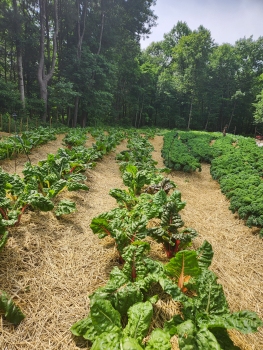
Swiss Chard and Kale mulched with straw. Photo: mevo.org
Weed, Disease, and Pest Management
Managing weeds and pests without synthetic chemicals is one of the defining—and often most challenging—aspects of organic farming. Success relies on a deep understanding of ecological interactions and preventive strategies, rather than reactive treatments. Fortunately, a range of techniques can work in concert to reduce pressure and improve long-term system resilience.
Weed Control
Weeds, while often perceived as a threat to crop production, can also serve ecological functions such as preventing erosion and supporting pollinators. As highlighted by Haq et al. (2024), weeds are ultimately a product of human value judgments and system design. In organic systems, the goal is not to eradicate weeds but to manage them in a way that enhances the productivity and health of the overall system.
Deeper Dive
Organic weed control starts with proactive, system-level design:
- Crop Rotation: Rotating crops with different planting and harvest times, root structures, and canopy habits can help break weed life cycles and reduce weed seed banks. A 2021 study by Sharma et al. found that diversified crop rotations significantly suppressed weed growth and improved crop competitiveness in organic systems.
- Cover Crops: Species like rye, hairy vetch, and buckwheat establish quickly and can outcompete weeds through shading and allelopathy. According to Fernando and Shrestha, some cover crops also release biochemical compounds that inhibit weed germination (2023).
- Relay Cropping: This means seeding a new crop into one that’s already growing, so the two overlap for a while. Keeping plants on the field most of the year helps with climate adaptation and even mitigation (Gesch et al., 2023).
- Interplanting: Growing two or more crops together in the same field—overlapping in space (and often time) —helps them use light, water, and nutrients more efficiently and boosts pest, weed, and disease management.
- Mulching: Fully degradable organic mulches (e.g., straw, wood chips) help suppress weeds, moderate soil temperature, and retain moisture. Note that the organic regulations require in 7 CFR §205.206(c)(6) Crop pest, weed, and disease management practice standard that any synthetic mulch be completely removed from the field at the end of the growing season.
Deeper Dive
For a comparison of mulch materials—see ATTRA’s Season Extension Techniques for Market Gardeners.
- Mechanical Tillage: Mechanical tools like tine weeders, flame weeders, undercutters, and rotary hoes remain important in organic systems, especially when the producer integrates them thoughtfully to minimize soil disturbance (Mohler et al., 2021).
Balancing tillage for weed control with the need to maintain soil health is crucial. Frequent tillage can harm soil structure and microbial activity, so many producers are now adopting reduced-tillage systems with high-residue cover crops and shallow cultivation to promote soil health.
Organic Disease Management
In organic farming, managing plant diseases such as fungal, bacterial, and viral infections relies on prevention, soil health, and system resilience rather than synthetic pesticides. While this approach may initially feel limited compared to conventional options, studies increasingly show that organic systems can naturally suppress many diseases through thoughtful system design.
Healthy soils are the cornerstone of disease resistance. They support diverse microbial communities, improve water management, reduce compaction, and provide crops with balanced nutrition, all of which reduce plant stress and disease susceptibility. Rotating crops, integrating compost and cover crops, and minimizing soil disturbance are key strategies that reduce pathogen buildup and break disease cycles.
Scientific research now widely supports the idea that organic systems can reduce disease incidence, particularly for biotrophic, soil-borne, and foliar fungal diseases. A growing body of studies has shown that organically managed soils tend to have greater disease suppression capability and contribute to improved resistance in crops themselves, especially under high-stress conditions. These findings support a philosophy that’s been central to organic farming for more than 80 years: “Healthy soils generate healthy crops, which lead to healthy livestock and healthy humans.”
Research over the last three decades has confirmed that organic systems often result in benefits such as these:
- Higher soil organic matter and carbon levels
- Increased microbial activity and biodiversity
- Enhanced soil structure and erosion resistance
- Greater natural disease suppression in crops
- Reduced environmental impacts, including nitrate leaching and greenhouse gas emissions
In short, although disease control in organic systems requires foresight and ecological thinking, it offers significant long-term advantages. Fostering a healthier agroecosystem reduces the likelihood of major outbreaks and increases your farm’s overall resilience (Rempelos et al., 2021).
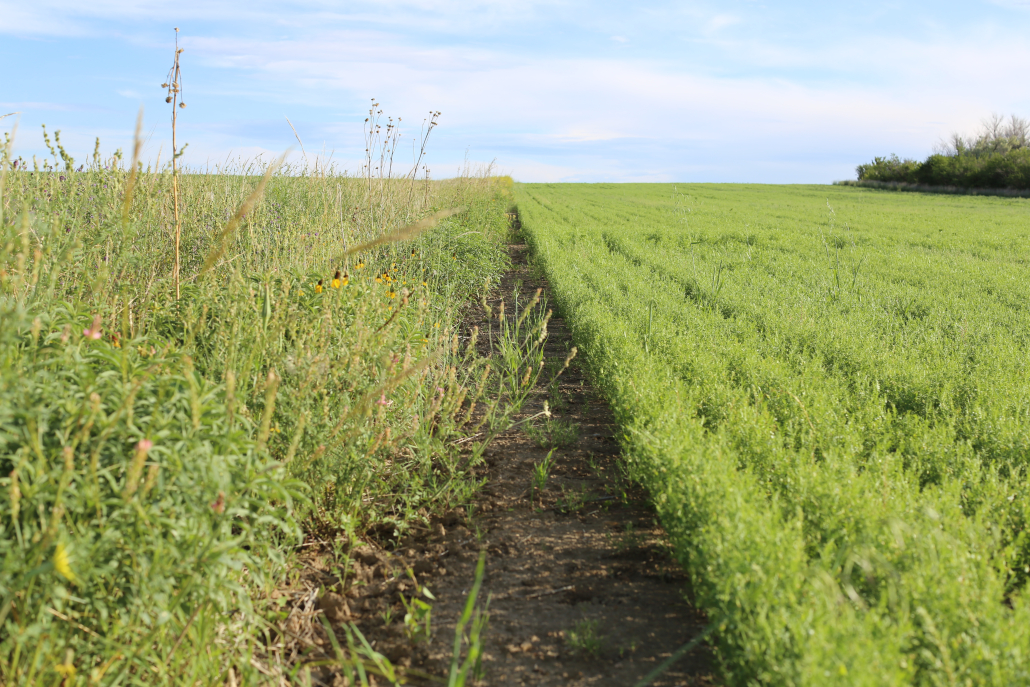
Riparian buffer. Photo: Nora Chovanec of Iroquois Valley Farmland REIT
Organic Pest Management
Organic pest management begins with designing systems that support biodiversity and reduce vulnerability to pest outbreaks. Organic regulations require preventive strategies for pest management, such as cultural, biological, and mechanical methods. Approved organic inputs should be used only when other methods are insufficient. For more information, refer to the organic regulations §205.206 Crop pest, weed, and disease management practice standard.
Ecological Strategies
- Habitat Diversity: Integrating flowering borders, hedgerows, or insectary strips encourages beneficial insects like lady beetles, lacewings, parasitic wasps,
and hoverflies. - Crop Diversity: Intercropping or rotating different plant families helps break pest and disease cycles.
- Healthy Soil Supports Healthy Plants: Crops grown in biologically active, well-balanced soils are more resistant to stress and pathogens.
Deeper Dive
The ATTRA publication Farmscaping to Enhance Biological Control gives in-depth insight into how to increase biodiversity on your farm to enhance biological control.
Approved Organic Pest Management Inputs
When organic producers must intervene to control pests, they can use substances that are listed in their Organic System Plan and approved by their organic certifier for the intended use. There are many guides for initial evaluation of materials allowed under the USDA National Organic Program (NOP). These substances must be natural in origin and used only as a last resort after cultural and mechanical practices have failed. The Further Resources section contains helpful resources for understanding organic regulations and allowed substances.
Deeper Dive
Additionally, the ATTRA website has a section devoted to organic agriculture where you can find not only crop-specific information, but also information about marketing your organic produce, organic regulations and compliance, and organic pest and disease management.

Photo: Gabriella Soto-Velez, NCAT
Marketing Organic Products
Transitioning to organic production is not just about how you grow—it’s also about how you sell. Understanding the organic marketplace and developing a solid marketing strategy are essential for capturing the price premiums and customer loyalty that make organic production financially sustainable.
Understanding Organic Markets
The demand for certified organic products has grown steadily over the past two decades. Consumers are increasingly seeking organic grains, oilseeds, meats, dairy, and fresh produce—driven by concerns about health, sustainability, and food transparency. This demand is reflected in the price premiums available for certified organic products, especially in wholesale and retail markets.
That said, markets vary significantly by region, commodity, and buyer. It’s important to research what organic buyers are looking for in your area. Some producers find success selling to organic grain buyers, livestock feed mills, or branded food companies. Others sell through food hubs, farmers markets, or direct-to-consumer channels.
To access these markets, you’ll need to be certified through a USDA-accredited certifier and ensure that your products meet the documentation and labeling requirements for organic sales.
USDA’s Organic Integrity Database can help you find buyers, brokers, and certifiers near you. You can also explore market data through the USDA’s Organic Economic and Market Information portal for insights on pricing, trends, and production forecasts
Marketing Strategies
When planning your marketing approach, consider your operation’s scale and location, as well as your comfort level with customer engagement. Some marketing outlets to explore include these:
- Organic Cooperatives – Joining a co-op can provide access to established buyers and distribution systems while reducing individual marketing burdens.
Deeper Dive
- Transitional Markets – If you’re not yet certified, some buyers offer partial premiums for “in-transition” products. These markets can help bridge the financial gap during the period of waiting for certification.
- Direct-to-Consumer Sales – Farmers markets, CSAs (Community Supported Agriculture), farm stands, and online sales platforms allow for better margins and strong community engagement.
Deeper Dive
- Wholesale Contracts – Larger-scale producers may contract with grain buyers, processors, or retail supply chains. These relationships often require consistency in quality, quantity, and documentation.
Deeper Dive
ATTRA has many tipsheets and publications that cover marketing at several different levels. See the Further Resources section for more marketing materials.
Regardless of your market outlet, understanding costs of production is critical. Without this, it’s easy to underprice your products and struggle to stay profitable. Pricing tools, enterprise budgets, and tracking actual labor and input costs can help guide your pricing decisions and ensure long-term viability.
Pricing and Cost-of-Production Tools
Accurate pricing starts with understanding your true costs. The tools and publications listed below can help you build enterprise budgets, evaluate wholesale opportunities, and ensure long-term profitability—especially during your transition to organic production.
Guides and Pricing Tools
- Understanding Organic Pricing and Costs of Production (ATTRA)
Learn how to calculate your production costs and set prices that reflect the value of organic practices. - The Farmer’s Guide to Organic Wholesale Pricing (CAFF)
Provides pricing tables, worksheets, and best practices for farmers entering wholesale organic markets.
University Extension Cost Calculators
Michigan State University Tools:
- Cash Flow Estimator
For overall financial planning. - Crop Budget Estimator
Helps calculate crop-specific production costs.
University of Wisconsin–Madison:
- Calculating Production Costs [PDF]
A helpful breakdown for per-acre, per-ton, or per-bushel analysis.
Penn State Extension:
- Fruit Production Cost Calculator [Excel Download]
An excellent tool for orchards and fruit producers to evaluate
enterprise viability.
Yield Expectations
The decision to transition to organic production rarely stems from the expectation of higher yields; it’s about building a healthier, more resilient farm system. Critics often argue that because organic production frequently results in lower yields, scaling organic production requires more land to produce the same amount of food, risking deforestation and biodiversity loss. This frames the issue as a simple trade-off between output and environmental protection. Proponents counter that organic systems excel on other, equally important metrics: richer biodiversity, improved soil fertility, greater crop nitrogen uptake, better water infiltration, and lower greenhouse gas emissions. In short, judging a farming system by yield alone is shortsighted; yield is just one metric among many, and organic management prioritizes the broader “health metrics” that sustain production over the long term.
Challenges in the Short Term
Organic farming places a strong emphasis on regenerating soil health, relying on natural processes, biodiversity, and additions of compost, animal manures, and green manure crops for plant nutrition. This contrasts with conventional farming, which primarily uses synthetic fertilizers to provide readily available nutrients to plants. A producer who adopts organic production practices must account for the slower nutrient availability from organic inputs and has to find timely ways to provide for the needs of the crop to avoid growth delays and potentially lower yields in organic systems. This is especially important in the early stages of crop development or for crops with high immediate nutrient demands. For instance, nitrogen availability is a significant constraint for organic wheat production. The difference in nutrient release dynamics between conventional and organic nutrient management fundamentally impacts initial crop growth and can explain a portion of the yield gap, especially in the short term.
However, long-term studies offer a more optimistic perspective on organic yields. For example, the Rodale Institute’s Farming Systems Trial has shown that, after a transition period of three to five years, organic corn and soybean yields can match those of conventional systems, particularly under stress conditions like drought. This result highlights the ability of organic systems to build resilience over time through improved soil health and biological activity.
Although an initial dip in crop yield is common during the transition to organic production, it is often temporary. As soil health improves and farmers gain experience with organic-specific practices, yields tend to stabilize and become competitive. Even so, USDA organic surveys consistently report that achieving target yields is one of the greatest challenges cited by organic producers, reflecting the steep learning curve involved. Factors such as weed pressure, nutrient timing, and the absence of conventional chemical tools all require new management strategies that take time to master. Ultimately, this suggests that farmer experience, ecological understanding, and adaptive management play a key role in overcoming early yield limitations and achieving long-term success in organic systems.
Managing Risk During Transition and Beyond
Managing yield variability and associated risks is crucial for the economic stability of any farming operation, and organic systems employ specific strategies to buffer against these challenges.
- Crop Insurance: The U.S. Department of Agriculture (USDA) plays a role in supporting organic growers through programs like the Risk Management Agency’s Transitional and Organic Grower Assistance Program. This initiative automatically provides subsidized crop insurance to organic growers who purchase policies, offering a safety net against unforeseen yield losses and contributing to financial stability. In 2022, over 10,600 certified organic crop insurance policies and more than 1,000 transitional organic crop insurance policies were in place, indicating a growing uptake of this risk management tool (Raszap Skorbiansky, 2025).
- Diversification: Agricultural diversification practices, such as multi-cropping (growing several crops together on the same field) and crop rotations, are fundamental to organic farming and significantly contribute to mitigating yield variability. These practices enhance the resilience of the entire agroecosystem, making it less susceptible to single-point failures from pests, diseases, or adverse weather events. For instance, crop rotations can lead to 10% to 15% higher yields compared to monoculture by improving soil microbial activity, nutrient availability, and limiting weed build-up. Including perennial legumes like alfalfa in rotations can be effective in managing weed problems. Spreading risk across multiple crops can foster a healthier, more balanced ecosystem, and diversification can help stabilize overall farm productivity and income over time.
- Financial Planning: Effective financial planning is paramount for organic farmers, especially given the potential for initial yield dips during the transition period and the wider variability in net returns observed among organic producers. Although organic products often command price premiums that can offset lower yields and higher production costs, a producer needs careful financial management to navigate these dynamics. Understanding farm income indicators and forecasts, as provided by USDA’s Economic Research Service, is crucial for policymakers, lenders, and farmers to assess the financial health of the farm sector and make informed decisions. The higher median net returns for organic corn and soybeans, despite yield differences, underscore the importance of market demand and pricing in the economic viability of organic operations. However, the variability in these returns suggests that robust financial planning, including budgeting for potential fluctuations and leveraging available support programs, is essential for long-term success in organic agriculture.
Photo: Nora Chovanec of Iroquois Valley Farmland REIT
ATTRA Marketing Resource Guide for Beginning Organic Farmers
The following resources offer a step-by-step pathway for planning and executing your marketing strategy—from identifying markets and planning for profitability to branding and selling through various channels:
Start with Planning and Market Research
- Planning for Profit in Sustainable Farming
Learn how to assess enterprise viability, analyze costs, and plan for financial success from the start. - Selling to Local and Regional Markets: Barriers and Opportunities for Beginning Farmers
Understand the landscape of local and regional marketing and how to navigate access challenges as a new farmer.
Explore Marketing Channels
- Direct Marketing
A foundational guide to selling directly to consumers and choosing the best outlet for your farm. - Farmers Markets: Marketing and Business Guide
Best practices for making the most of farmers markets, from signage to customer service. - Community Supported Agriculture (CSA)
Build a strong customer base and stable income stream through a CSA model. - Tips for Selling on the Internet
Learn how to reach customers and grow online sales through social media, e-commerce platforms, and email marketing. - Tips for Selling to Aggregators / Grower Marketing Co-ops
Work with food hubs and co-ops to access wholesale markets while maintaining farm-scale viability. - Tips for Selling to Produce Brokers
Understand how to work with intermediaries in regional wholesale markets and what to expect.
Understand Pricing and Financial Viability
- Understanding Organic Pricing and Costs of Production
Learn how to calculate your true production costs and price your organic products for sustainability.
Tell Your Story and Build Your Brand
- Farm Branding: Selling Your Products Through Story
Learn how to craft a compelling brand narrative to connect with your customers and build loyalty.
Conclusion
Transitioning to organic farming is not just a change in inputs; it’s a change in mindset, management, and values. It’s a commitment to building healthier soils, supporting biodiversity, shifting away from reliance on synthetic inputs, and creating a resilient farming system. It’s important to understand that the term “regenerative” has significant similarities but is not the same as organic. See Organic Farming Research Foundation’s Organic is Regenerative for more detail on this topic.
Although the organic production process can be challenging, especially during the initial transition years, switching to organic production also provides an opportunity to reimagine your farm as part of a larger ecological and economic system. By focusing on soil health, preventative weed and pest management, and strategic marketing, farmers can create operations that are both profitable and sustainable over the long term.
Organic certification provides a milestone in a journey and a framework for transparency and integrity in the marketplace, opening doors to new customers and premium markets. Beyond the label, organic farming offers farmers a chance to take pride in practices that protect natural resources, strengthen local food systems, and support healthier communities.
It’s important to remember that no two farms are alike; thus, the inclusion of “site-specific” in the USDA definition of Organic production. There is no single “right” way to farm organically. This guide provides foundational tools and resources to help you get started, but the transition is ultimately yours to shape. Whether you begin with one field or convert your entire operation at once, the most successful transitions come from continuous learning, flexibility, and a commitment to working with nature rather than against it.
If you need support along the way, reach out to your local Extension office, a USDA-accredited certifier, or an ATTRA Sustainable Agriculture Specialist. You don’t have to do it alone.
Organic farming is a long-term investment in your soil, your farm, and your future.
What This Publication Doesn’t Cover in Depth and Why
Some topics related to organic transition are highly specific to a farmer’s region, financial situation, crop type, or production system. Although these are critical considerations, they go beyond the scope of this general guide. We encourage producers to explore these further with their local Extension agents, organic certifiers, technical service providers, and the bevy of free ATTRA resources. Here are a few of those important, but nuanced topics:
- Crop Insurance in Organic Systems
Organic and transitioning farmers can access Whole Farm Revenue Protection and crop-specific insurance plans, but coverage varies by state and crop. Some options account for organic price premiums, while others don’t. Visit USDA Risk Management Agency’s Organic Policy page or consult a crop insurance agent for details.
Deeper Dive
ATTRA’s Crop Insurance Options for Specialty, Diversified, and Organic Farmers can help you understand alternative crop-insurance policy options.
- Financial Aspects of Transition
Transitioning to organic production involves upfront costs, changes in labor management, and delayed price premiums. Tailor your financial planning to your operation’s size, markets, and risk tolerance. Consider developing an enterprise budget (see Managing Risk During Transition and Beyond and the Pricing Tools box) or working with a financial advisor who understands organic systems. - Land Leasing and Expired CRP Ground
Some producers lease land for organic production, particularly acreage that has been fallow for at least three years, such as land coming out of the Conservation Reserve Program (CRP). However, such land’s organic eligibility depends on past input history. Organic certification requires documentation of land use history with respect to synthetic fertilizers, pesticides, or other materials prohibited in organic production. Work closely with your certifier to understand recognized ways to verify and document past management. Recognize that the absence of prohibited materials can be a starting point for organic certification. Achieving certification is a baseline, from which the farm will continue to improve and foster life. Maintaining organic certification involves consistently protecting the operation’s natural resources (soil, water, air, woodland, wetlands, wildlife, etc); improving the biological, physical, and chemical condition of the soil; maintaining or improving soil organic matter; and documenting inputs used in production. - Tillage and Equipment in Organic Systems
A common myth is that organic farming always requires intensive tillage. Although mechanical weed control often plays a role, many organic producers now use minimum-till, roller-crimpers, high-residue cultivators, and strip-till systems to protect soil health. However, managing tillage and equipment becomes more complex if you are transitioning only part of your operation, or conducting what is called a split operation. Equipment used on conventional fields must be thoroughly cleaned before being used in certified organic fields, to prevent contamination by prohibited materials, such as synthetic fertilizers in application equipment, or fungicide-treated seed in planters. Organic producers must also keep detailed records of cleaning procedures on shared-use equipment, as required by organic certifiers. With respect to harvest equipment, organic producers must take measures to prevent commingling non-organic and organic products and keep documentation of those measures. Similarly, split operations must implement practices to prevent contamination and commingling and must document those practices.
For assistance tailoring these complex management situations to your farm, contact your local Extension office, USDA service center, or an ATTRA Sustainable Agriculture Specialist. To connect with an ATTRA agriculture specialist, visit our website or call ATTRA at 800-346-9140.
References
Fernando, M., and A. Shrestha. 2023. The potential of cover crops for weed management: a sole tool or component of an integrated weed management system? Plants. Vol 12, No. 4. p. 752.
Gesch, Russ W., Marisol T. Berti, Carrie A. Eberle, and Sharon L. Weyers. 2023. Relay cropping as an adaptive strategy to cope with climate change. Agronomy Journal. Vol. 115, No. 4. p. 1501-1518.
Haq, Shiekh Marifatul, Muhammad Waheed, Rainer W. Bussmann, and Manoj Kumar. 2024. Trouble in the rice field: distribution ecology and indicator value of weed species in the rice fields of Himalayan region. Ecological Frontiers. Vol. 44, No. 3. p. 507-516.
Mohler, Charles L., John R. Teasdale, and Antonio DiTommaso. 2021. Manage Weeds on Your Farm: A Guide to Ecological Strategies. 3rd ed. Handbook Series Book 16. Sustainable Agriculture Research and Education (SARE) Program.
National Organic Program. Code of Federal Regulations.
Title 7, Section 205.
Raszap Skorbiansky, Sharon. 2025. Organic Situation Report, 2025 Edition. EIB-281. Washington, DC: U.S. Department of Agriculture, Economic Research Service.
Rempelos, Leonidas, Marcin Baranski, Juan Wang, Timothy N. Adams, Kolawole Adebusuyi, Jeremy J. Beckman, Charlotte J. Brockbank, et al. 2021. Integrated soil and crop management in organic agriculture: a logical framework to ensure food quality and human health. Agronomy. Vol. 11, No. 12. p. 2494.
Sharma, G., S. Shrestha, S. Kunwar, and T.M. Tseng. 2021. Crop diversification for improved weed management: A review. Agriculture. Vol.11, No. 5. p. 461.
Yin, Jie, Jiani Wang, Lu Zhao, Zhongliang Cui, Sheng Yao, Guoxue Li, and Jing Yuan. 2025. Compost tea: Preparation, utilization mechanisms, and agricultural applications potential–A comprehensive review. Environmental Technology & Innovation. p. 104137.
Further Resources
Publications
Beyond Organic Farming—Harnessing Biodiversity-Friendly Landscapes. Trends in Ecology & Evolution. 2021.
Argues that true, durable pest suppression depends on landscape level biodiversity and habitat design.
Managing Soils for Water: How Five Principles of Soil Health Support Water Infiltration and Storage. ATTRA Sustainable Agriculture Program.
Explains how soil health principles improve infiltration, reduce runoff, and build drought resilience.
Organic Crop Production Overview [PDF]. ATTRA Sustainable Agriculture Program .
A broad introduction to certified organic crop systems, planning, and compliance.
Organic Pest Control Methods. South Dakota State University Extension.
Provides a practical overview of prevention-first strategies, biological controls, and compliant inputs.
Organic Transition: A Business Planner for Farmers, Ranchers and Food Entrepreneurs. By Gigi DiGiacomo, Robert P. King, and Dale Nordquist. SARE Outreach, 2015.
The Organic Transition Planner contains explanations of key concepts, real-life examples from transitioning farmers and detailed worksheets covering farm operations, marketing, human resources and finances.
Organic Transition Guide. USDA Agricultural Marketing Service [PDF].
Walks producers through the certification process, records, and timelines needed to transition to organic.
Soil Health Indicators and Tests. ATTRA Sustainable Agriculture Program.
A practical guide to choosing, using, and interpreting physical, chemical, and biological soil health tests.
Soil Sampling: A Management Strategy. ATTRA Sustainable Agriculture Program.
Outlines step-by-step sampling protocols to get meaningful, comparable soil test results.
Soil Testing to Understand Soil Health. ATTRA Sustainable Agriculture Program.
Reviews common soil tests, what they measure, and how farmers can use results to guide management.
Tipsheet: Organic Pest Management. ATTRA Sustainable Agriculture Program.
A concise checklist of OMRI-approved tools and cultural practices for managing pests organically.
Transitioning to Organic Production – IP241. Sustainable Agriculture Network. (Print only.)
Explains key considerations, costs, and benefits of organic transition, with worksheets and case examples.
Websites
Electronic Code of Federal Regulations, 7 CFR Section 205 (National Organic Program). U.S. Government Publishing Office.
Full text of the organic regulations; see Subpart C for production standards and §205.2, §205.103 for definitions and recordkeeping.
Organic Grain Resource and Information Network (OGRAIN).
OGRAIN provides resources, research, events, and a community network for organic grain production in Wisconsin.
Organic 101: Five Steps to Organic Certification. USDA.
A plain-language overview of the certification process from application to inspection.
Organic Certifying Agents. USDA Agricultural Marketing Service.
Current list of USDA-accredited certifiers for producers seeking certification.
Organic Integrity Database. USDA Agricultural Marketing Service.
Searchable database to verify the certification status of farms, processors, and handlers.
Organic Stands Out in a Growing Sea of Labels. Farm Progress.
Reports that the USDA Organic seal remains among the most trusted labels with consumers.
Roadmap to Organic California. California Certified Organic Farmers (CCOF).
Presents policy pathways and investments needed to scale organic for climate, health, and equity benefits.
Transitioning to Organic. UC Organic Agriculture Institute, University of California ANR.
Aggregates University of California resources on certification steps, enterprise budgets, and crop specific guidance.
Transitioning to Organic. Organic Farming Research Foundation
Step-by-step instructions on the process of organic transition and success stories of operations that have gone through the process.
Transition to Organic Partnership Program (TOPP). USDA
Information on a partnership network for transitioning and existing organic farmers that operates in six regions across the United States. The program offers mentorships, training, and information related to organic production.
Podcasts
Episode 242: Understanding the Organic Certification Process. ATTRA Sustainable Agriculture Program.
An interview-style walkthrough of certification basics, paperwork, timelines, and common pitfalls.
Considerations for Starting Organic Crop Production
By Gabriella Soto-Velez and Hakeem Holmes, NCAT Agriculture Specialists
March 2026
©NCAT
IP670
This publication is produced by NCAT through the ATTRA Sustainable Agriculture program, under a cooperative agreement with USDA Rural Development.