Farming the Soil, Not Just the Crop
 Print This Post
By Gabriella Soto-Velez, NCAT Agriculture Specialist
A farmer mentor of mine once told me, “You’re not growing crops, you’re growing soil.”
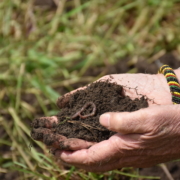
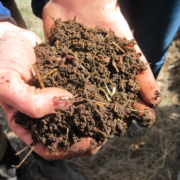
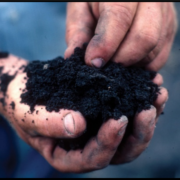
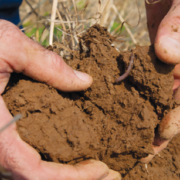
That really stuck with me, and it shaped the way I look at our food production systems. Because soil is not just dirt. It is a living system made up of minerals, organic matter, fungi, bacteria, worms, and countless other organisms working together. When that system is healthy, crops do not just survive, they perform better, handle stress more effectively, and often produce higher quality yields.
For a long time, especially following the Green Revolution, agriculture shifted toward a more input-driven model. If something was missing, we added it. Nitrogen, phosphorus, pesticides, herbicides… these tools can be effective in the short term, but over time many systems have become dependent on them, while soil biological activity and soil structure have declined.
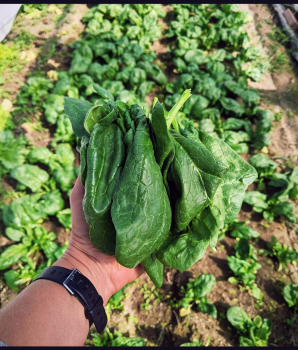
Healthy crops need healthy soil. Healthy, dark green spinach thrives when it grows in rich, dark brown soils. Photo: Gabriella Soto-Velez
What we are seeing now is a shift back toward building soil health as the foundation of fertility. When the soil biology is functioning well, it helps cycle nutrients, improves water retention, and supports plants in resisting pests and diseases. In other words, the system starts working with you instead of against you.
This is where many homemade inputs come into play.
Instead of relying entirely on purchased products, farmers can create effective amendments using materials that are already available on the farm or in the local area.
Some common examples include:
- Biochar for improving soil structure and nutrient holding capacity
- Fish hydrolysate as a nitrogen and micronutrient source
- Vermicompost and traditional compost for building organic matter
- Compost teas to introduce and stimulate microbial activity
- Fermented biofertilizers made from plant materials
- Banana-based extracts as a supplemental potassium source
These can be valuable tools, but they are not one-size-fits-all solutions.
The most important step is to work with what is available and appropriate for your region. For example, fish-based inputs may make sense in coastal or island systems where materials are readily accessible. In landlocked areas, they may be less practical or more expensive than other options. The same principle applies to plant-based inputs; use what is abundant and low-cost in your area.
Before making or applying any input, it is worth taking the time to understand your soil. A basic soil test can help identify nutrient levels, pH, and organic matter, which will guide your decisions and prevent unnecessary applications.
If you are interested in trying these approaches, start small. Apply a new input to a small section of your field or garden, observe how the soil and crop respond, and adjust from there. Soil systems take time to change, and careful observation is one of the most valuable tools you have.
Through ATTRA and partnerships with Florida Organic Growers, there are a number of videos, webinars, and publications available that walk you through how to make and use these inputs step by step. If you need support, reach out to our agriculture specialists for technical assistance. We’re happy to help you think through what makes the most sense for your operation.
At the end of the day, the goal is to build a system where the soil is doing more of the work. When that happens, fertility becomes more stable, you can often reduce inputs, and the overall resilience of the farm improves.
ATTRA Resources:
Read: Ferments and Biochar: A Practical Guide to Utilizing Local Resources
Watch: How to Make Hydrolyzed Fish Emulsion for Organic Production
Watch: Brew Your Own Fertility: Practical Biofertilizers for Farms and Gardens Webinar
Watch: Fire Up Your Fertility: How to Make Biochar
This blog is produced by the National Center for Appropriate Technology through the ATTRA Sustainable Agriculture program, under a cooperative agreement with USDA Rural Development. ATTRA.NCAT.ORG.
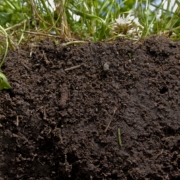 USDA NRCS