
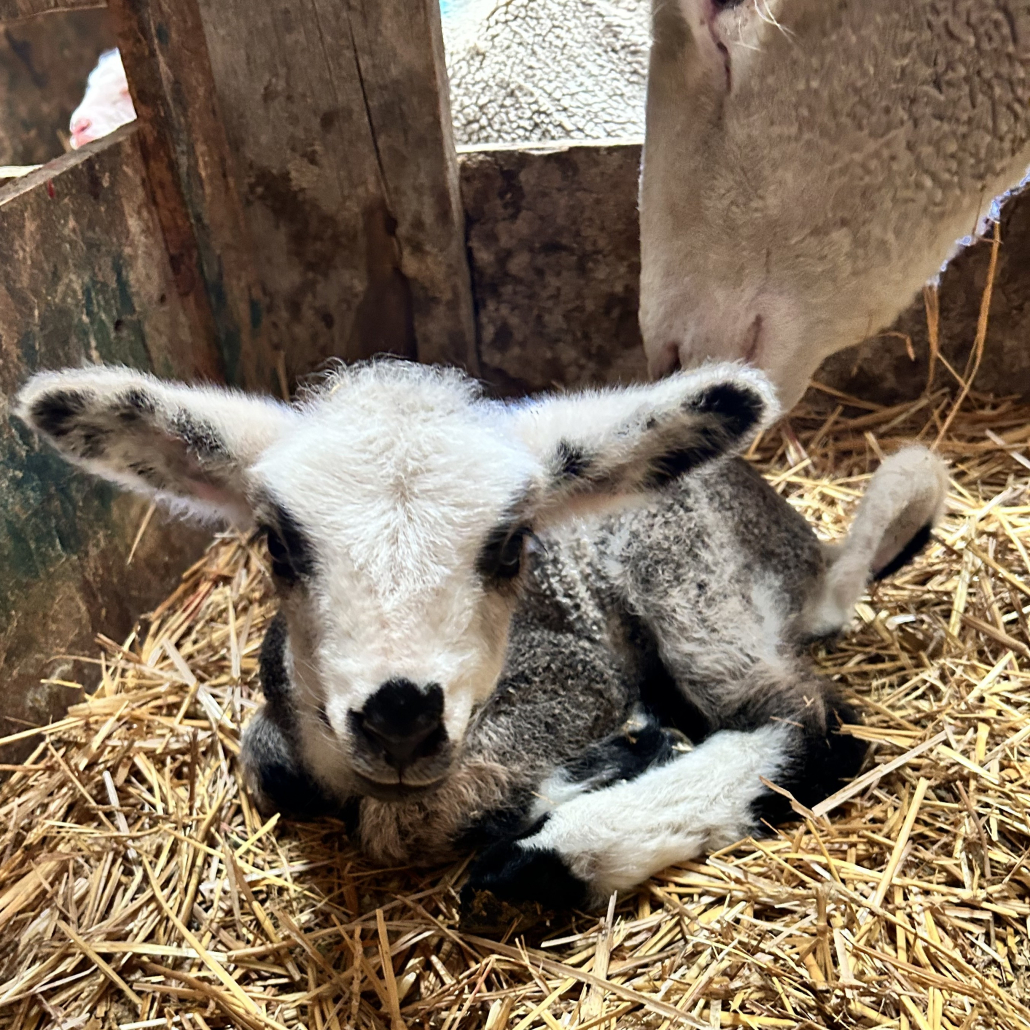
Get Organized for a Smooth Lambing, Kidding, and Calving Season
 Print This Post
By Danielle Duni, NCAT Agriculture Specialist
The birth of baby lambs, kids, and calves—what a special time of year! It’s what producers prepare for all year long. Beyond the fall paycheck, the real reward of ranching comes from watching a newborn lamb, goat, or calf stretch out for the first time and take those wobbly steps, then trail faithfully behind its mother.
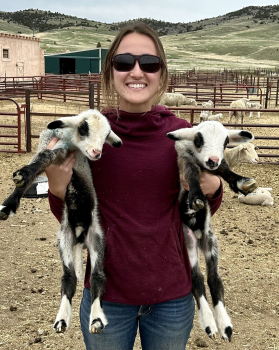
Danielle Duni holds two young lambs.
Still, amid those heartwarming moments lies the reality of long days, sleepless nights, and tough decisions. Preparation can make all the difference, easing the pressure and setting the stage for a successful season. The best way to be ready is to ensure your facilities, nutrition program, and supplies are all in order. Facilities don’t have to be elaborate, just functional, with a space to hold expectant mothers that are about to lamb/kid/calve, a few jugs (i.e., mothering pens), and an area to sort animals when needed.
The main factor that will make or break the birthing season is the nutrition received by the mother during pregnancy and lactation. This subject is beyond the scope of this blog, however. Your local Cooperative Extension Service will have resources regarding nutrition that incorporate locally available feedstuffs. Check your flock or herd’s body condition and aim for moderate condition (not fat, not thin) during pregnancy. We can provide more information on nutrition upon request at askanag@ncat.org.
It’s amazing how even with all the planning in the world, each lambing, kidding, or calving season still manages to surprise you. Maybe it’s a ewe that decides to lamb at two a.m. during the coldest cold snap of the year, or a calf that needs a little extra encouragement to nurse. Those moments remind us why it’s so important to have everything ready and within reach. When things get busy (and they always do), being organized and prepared can make the difference between chaos and calm.
Here are some sample supply lists of materials and equipment that can help make lambing and calving go more smoothly. It is important to note that the sample list is an extensive list of supplies that could possibly come in handy. Most of these supplies can be gathered over time, and each operation will learn what works best for their situation.
*The asterisk denotes basic items that are nice to have when getting started.
Lambing, Kidding, and Calving Supplies
Pen Set-Up and Cleaning Supplies
- Straw or bedding material*
- Water and feed buckets*
- Extra panels for pens
- Lime for pen sanitation
- Bedding fork and shovel*
- Broom
- Wheelbarrow
- Garbage cans and trash bags
- Designated disposal area for afterbirth and dirty straw
Supplies for in the Pen
- Alfalfa pellets or good-quality hay*
- Head catch (to secure stubborn ewes and assist in lamb bonding and feeding)
- Heat lamps* (babies may arrive during cold weather)
- Replacement bulbs for heat lamps
- Extension cords*
- Wire or carabiner (to secure heat lamps and prevent heat lamps from starting straw fires)*
Supplies for Assisting the Birth
- OB lubricant (or mild dishwashing soap)
- Long OB sleeves (arm-length gloves) (important to protect from zoonotic diseases)
- Calf/lamb puller
- Clean towels or rags for drying lambs*
- Prolapse harness or spoon
- Prolapse needle (to sew prolapses)
- Umbilical tape (to tie thick umbilical cords or sew prolapses)
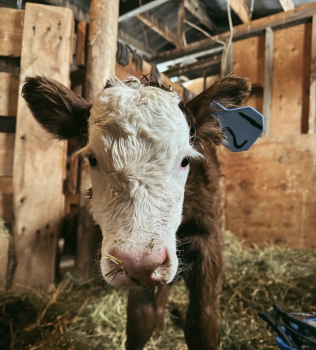
Fresh calf in a warm pen sporting a shiny new ear tag.
Supplies for Processing Lambs, Kids, and Calves
- Elastrator bands and banding tool (for docking tails and castrating)
- Paint marker for tags
- Ear tags and tagger
- Scissors (to trim umbilical cords)
- Betadine or iodine (used to dip umbilical cord)
- Umbilical dipping cup (filled with betadine—an empty pill bottle works well)
- Scale for weighing lambs/kids
- Record sheets or notebook along with pens/pencils*
- Livestock paint – spray or paint bucket (to mark mothers and their babies)
- Paint numbers (numbers can be stamped on livestock to identify pairs in the field)
- Paint brand (necessary in larger operations to identify owner)
Supplies for Supplemental Feeding
- Bottles with spare nipples*
- Colostrum replacer (to use within first days of birth)*
- Milk replacer*
- Hot water supply (for mixing milk replacer)*
- Stomach tube (for lambs, kids, or calves not taking a bottle)
- Measuring cups and spoons
Supplies for Veterinary Medicine
- Gloves
- Needles and syringes
- Sharps container
- Drugs and dosage information
- Thermometer
- Solution
- Antibiotic spray or powder
- Electrolyte solution (for dehydrated lambs/kids/calves)
- Energy drench (e.g., Nutri-Drench) (for lambs/kids/calves needing a boost)
Ensure supplies are stored in an easy-to-access location. Pro tip: make sure milk replacers are stored in a cool, dry, mouse-proof location.
Not mentioned in this list are the necessary drugs and dosages for treatment, as that information requires veterinary oversight. Always make sure to have established care with a vet before lambing and calving season. This article from Texas Tech University provides guidance on when to call your vet during calving, lambing, and kidding season.
At the end of the day, no matter how many seasons you’ve been through, each year brings its own set of lessons and little victories. Being ready with the right nutrition, setup, and supplies helps take some of the stress off so you can focus on what really matters, caring for your animals and appreciating the new life on the ground. It’s hard work, but it’s the kind that fills your heart and reminds you why you do it year after year.
ATTRA Resources:
Masterful Management in Lambing Jugs – ATTRA – Sustainable Agriculture
Top 5 Lambing Hacks for a Panic-Free Season – ATTRA – Sustainable Agriculture
Lambing, Kidding, and Calving on Pasture – ATTRA – Sustainable Agriculture
For a Safe Lambing Season, Make a ‘Lambulance’ – ATTRA – Sustainable Agriculture
Healthy Animals, Happy Farm: Strategies for Sheep and Goat Care – ATTRA – Sustainable Agriculture
This blog is produced by the National Center for Appropriate Technology through the ATTRA Sustainable Agriculture program, under a cooperative agreement with USDA Rural Development. ATTRA.NCAT.ORG.
 UNFAO
UNFAO Nieder Farms