
Season Extension Techniques for Market Gardeners
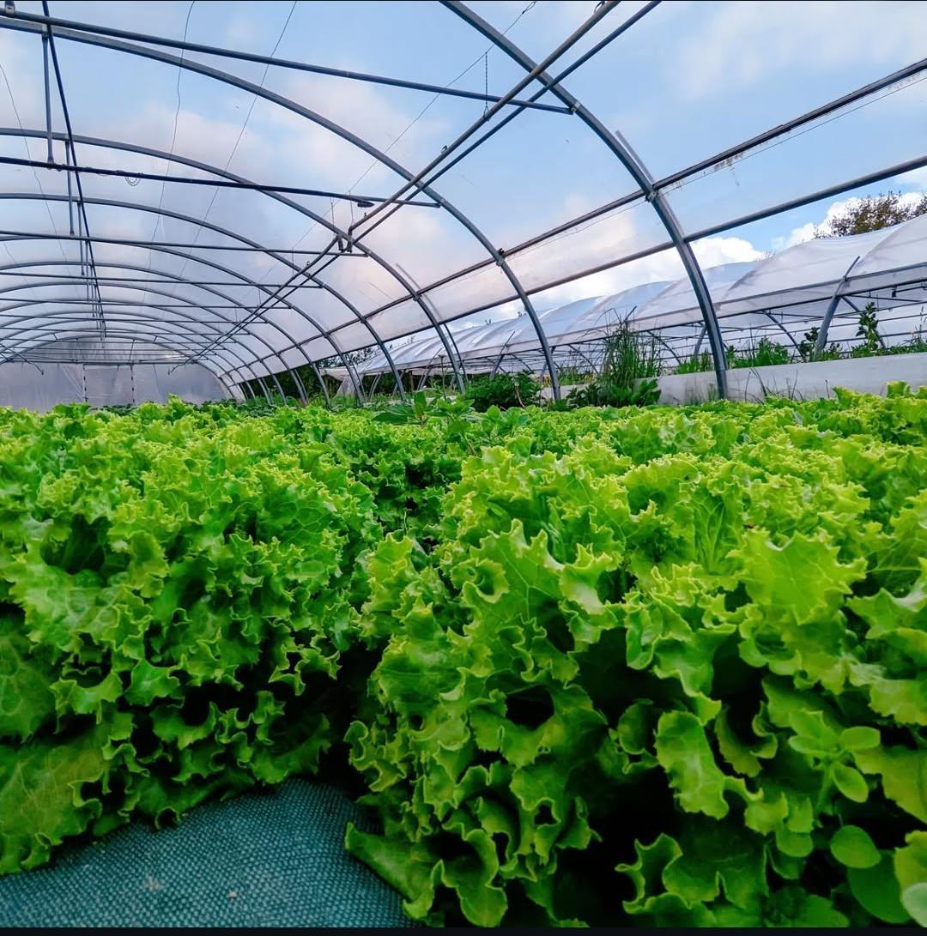
Hoop houses and fabric mulch help produce earlier lettuce harvests for market while reducing weed pressure and labor demands. Photo Gabriella Soto-Velez, NCAT
By Janet Bachmann, NCAT Agriculture Specialist,
Updated by Gabriella Soto-Velez and Chris Lent, NCAT Agriculture Specialists
This publication explores season extension techniques for market gardeners, focusing on practical strategies to expand crop production beyond the traditional growing season. Topics include cultural practices like site selection, soil types, and tillage systems; crop protection methods such as shade structures, windbreaks, and frost protection irrigation; and season extension infrastructure including high tunnels, low tunnels, floating row covers, and cold frames. It also covers cultivar selection, intercropping, mulching, and relay cropping systems to increase productivity and profitability. A detailed case study, economic considerations, and funding opportunities round out this guide to sustainable, climate-resilient production.
Contents
Introduction
Cultural Practices
Crop Protection
Crop Selection and Techniques for Season Extension
Mulching and Soil Temperature Management for Season Extension
Season Extension Structures
Stonecipher Farm: A Case Study in Relay Cropping for Season Extension
The Economics of Season Extension
Conclusion
References
Further Resources
Introduction
Market gardeners today employ a range of innovative and rediscovered techniques to extend the growing season, adapting to changing climates and marketing opportunities. Season extension methods have deep historical roots, and current practices blend traditional knowledge with modern technology.
Historically, gardeners utilized simple but effective materials to jump-start spring planting, to maintain production during the hot summer months, and to continue harvesting well into the fall and winter. Traditional methods like manure-heated cold frames, heat-retaining masonry walls, stone mulches, and cloches (small glass bell jars) evolved with the availability of improved materials.
In recent decades, the introduction of plasticulture has revolutionized year-round production, particularly with the widespread use of plastic mulches, drip irrigation, row covers, low tunnels, and high tunnels (also called hoop houses). These innovations, in concert with other specific soil and crop management practices, can protect crops from extreme weather and extend growing seasons. These season extension practices enable farmers to increase yields, improve crop quality, and reach new markets.
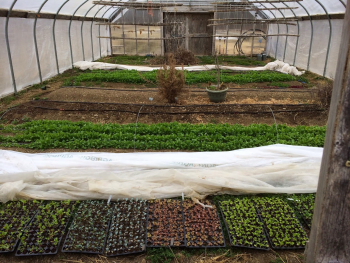
Late winter greens and seedling starts in an unheated tunnel. Photo: Chris Lent, NCAT
The Importance of Season Extension Nationwide
Farmers and the communities they serve benefit in many ways when farmers adopt season extension techniques. Communities may see an increase in access to locally produced foods, which can lead to improved nutrition and a more resilient food system. Specific outcomes can vary based on regional factors and the methods employed, making it essential for farmers to consider local conditions and community needs when implementing season extension strategies.
In addition, by diversifying production and gaining more control over growing conditions through season extension, farmers can better withstand the impacts of climate change and fluctuating weather patterns. Whether battling early frosts in northern states or extreme heat in the South, season extension techniques help farmers remain flexible and responsive to these challenges, ensuring that local food production can continue even when environmental conditions are unfavorable.
Overview of Factors Influencing Growing Seasons
The growing season is shaped by numerous factors, including geographic location, climate, and soil conditions. In regions with shorter growing seasons, such as the northern United States, early and late frosts limit the window for outdoor cultivation, leading to the use of frost protection techniques to improve economic viability. In southern regions, extreme heat during the peak of summer can hinder crop growth, requiring innovative methods like shade structures, high tunnels, and heat-tolerant crop varieties to maintain production.
Other factors that influence the growing season include the availability of water, day length, and pest pressure. Season extension techniques combined with other agronomic techniques like drip irrigation, mulching, and sustainable soil management can mitigate these challenges, enabling farmers to optimize their growing conditions. For example, in the South, mulching can help cool the soil and preserve moisture during scorching summer months, allowing crops like leafy greens to grow longer than they would in unprotected fields.
One major factor—climate change—affects growing seasons in multiple ways across all regions. “Observed changes in seasonal temperature include both increases in average temperatures and more frequent and severe extremes, such as heat waves. Changing precipitation patterns include long-term changes in average seasonal conditions as well as increased seasonal variability, which drives more intense periods of drought and flooding” (EPA, 2021). Farmers will need a variety of tools and techniques to adapt to these changing conditions, and many season extension tools help mitigate the risks posed by unexpected extreme weather events.
Economic Importance of Diversity Across Seasons
Season extension can improve economic sustainability for farmers. By employing a combination of traditional methods and modern technologies, farmers can increase yields, diversify their offerings, and extend the growing season in virtually any climate. The resources and techniques outlined in this publication will help you analyze the benefits and costs of season extension for your farm, ensuring that you can make informed decisions that align with your unique growing conditions and business goals.
As the demand for fresh, local produce continues to grow, farmers are increasingly turning to season extension techniques to maximize their yields and profitability. By creating protected environments or modifying the growing conditions, farmers can produce crops beyond the typical growing season.
Cultural Practices
Cultural practices include site selection, soil preparation, planting methods, and weed and pest management practices that support crops through harvest time. Choosing the right strategies for the various steps of the process can support your season extension goals.
Site Selection
One of the key factors to ensuring success in season extension is proper site selection. In warmer climates, selecting areas with slight elevation or natural shading can help mitigate the extreme heat that impacts crop growth during peak summer months. In colder climates, sites with good southern exposure can harness more sunlight and warmth in the early spring and late fall, extending the window for crop growth. If high winds are common in a region, farmers should take into consideration the prevailing wind direction when choosing what type of season extension tools to use and where to locate them. By carefully evaluating elevation, aspect, and topography and their impact on temperature, air movement, and water drainage, farmers can optimize site selection to maximize the effectiveness of season extension techniques.
Soil Types, Conditions, and their Impact on Crop Growth
Soil types not only influence water retention and fertility but also significantly affect temperature regulation. Soil texture plays a critical role in its heat storage capacity and conductivity, which impacts crop growth and frost susceptibility. For example, when dry, sandy and peat soils do not store or conduct heat as effectively as heavier soils like loam and clay. This creates a greater daily temperature variation at the soil surface in sandy or peat soils, resulting in lower minimum surface temperatures, which increases the risk of frost damage during cold nights. In contrast, loam
and clay soils tend to retain more heat, providing a more stable temperature range that benefits crops during early and late growing seasons.
Soil color can also have an impact on crop growth. Dark-colored soils absorb more sunlight and store more heat compared to light-colored soils, which makes fields with darker soils less prone to frost damage.
Soil coverage affects temperature as well. Bare soil absorbs and radiates more heat than soil covered with vegetation, and this radiated heat can provide some protection against frost. However, there are many downsides to bare soil, such as erosion and surface crusting. Farmers often use cover crops to prevent these soil issues, and they have found ways to manage their cover crops while minimizing frost risk. Mowing cover crops to keep ground cover low is a practical compromise, allowing for some heat absorption while still maintaining the protective functions of the cover crop (Snyder, 2000).
Maintaining proper soil moisture levels is key to maximizing heat storage. Moist soils can absorb and radiate significantly more heat than dry soils, because water has a high heat-storage capacity. Ensuring that soil moisture levels are kept near field capacity in the top foot of soil (where most temperature changes occur) can help buffer crops from extreme cold.
Microbial activity increases in warmer soil, making nutrients available to plants for longer. “Consider all the microbes that live in our soils and the work they do decomposing organic materials (plant residue, compost, manures, leaves, etc.) that are added to the soil. As a rule of thumb, for every 18°F increase in temperature microbial activity doubles” (Schmitt and Rosen, 2024). However, this trend only holds within an optimal temperature range; once soils become excessively hot or dry, microbial populations begin to decline, and decomposition rates can slow significantly.
Tillage Practices in Season Extension
Choosing the appropriate tillage practices for your needs is central to successful season extension. Minimizing tillage helps preserve soil structure, reduces erosion, and maintains organic matter. However, certain tillage methods, like ridge tillage, are especially beneficial for extending the growing season. Ridge tillage raises planting rows above ground level, creating warmer soil conditions that facilitate earlier planting in the spring while improving drainage in areas prone to heavy rainfall (Alagbo et al. 2022). Other relevant tillage methods include:
- Strip tillage: This reduces soil disturbance by only tilling narrow strips where seeds are planted. This practice preserves organic matter and moisture in the untilled areas, which is particularly helpful for early-season planting and protecting crops from heat stress in hotter climates.
- No-till: By leaving the soil undisturbed, no-till methods help maintain soil structure, reduce water evaporation, and allow for natural biological activity that supports healthy crops. Soil aggregates are built and maintained more effectively in no-till systems, increasing water holding capacity that can help with holding soil warmth (Dou et al. 2024).
Crop Protection
Crop protection strategies improve growing conditions for your crops, physically protecting plants from stressors like extreme heat, freezing temperatures, and wind. There are many different ways to protect crops so they can continue to be productive in a wide range of weather conditions.
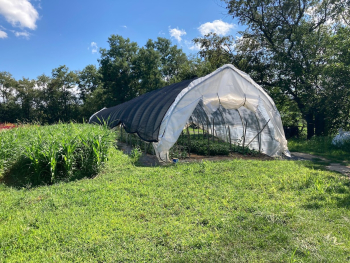
Shade cover being used to create a cooler microclimate on a flower farm in Pennsylvania. Photo: Chris Lent, NCAT
Shade for Season Extension
While season extension often focuses on protecting crops from cold temperatures, managing heat is just as important, particularly during the height of summer. Shade can create a cooler microclimate, preventing heat-sensitive crops such as lettuce and spinach from bolting or developing bitterness. Shade also allows warm-weather crops like tomatoes and peppers to thrive in regions with extremely hot summers.
Additionally, providing shade can facilitate the germination of cool-season fall crops when late-summer soil temperatures are too high for seeds to sprout effectively.
Many growers use creative solutions to provide shade, such as growing climbing plants like gourds or beans on trellises or cattle panels placed over crop beds. This not only cools the beds below but also makes efficient use of vertical space. Alternatively, growers can drape shade cloth, also called shade fabric, over hoops or other structures to reduce soil temperatures. These coverings protect crops from intense sunlight, wind damage, and sunscald while also helping retain soil moisture by reducing evaporation.
Shade cloth is rated by the percentage of sunlight it blocks, offering various levels of shade to meet the needs of different crops. For instance, 30% shade cloth is often recommended for warm-season crops like tomatoes, peppers, and cucumbers in hot climates, where it can lower leaf temperatures by 10°F or more. For cool-season crops like lettuce, spinach, and broccoli, a 30% to 47% shade cloth is suitable, depending on the region (Ernest and Johnson, 2023). In extremely hot areas, higher-density shade cloth—up to 63%—may be required to grow shade-loving or heat-sensitive plants. Commercial-grade shade fabrics also offer UV protection and come in different materials, allowing growers to customize their setup based on local conditions and crop needs (Bartok, 2004).
Reflective shade cloth (often sold under brand names such as Aluminet) is a highly effective solution for managing greenhouse temperatures and protecting plants from excessive heat and UV radiation. Unlike traditional black shade cloth, which absorbs heat, reflective shade cloth is made from aluminized polyethylene that reflects sunlight and radiant heat, reducing air and leaf temperatures by up to 10°F. This helps create a cooler environment for heat-sensitive crops and reduces the risk of sunscald. Its reflective properties also improve ventilation and diffuse light, ensuring plants receive adequate sunlight without harmful UV exposure. Durable and resistant to wear, reflective shade fabrics are a practical choice for creating optimal growing conditions in greenhouses and outdoor production systems (Farm Plastic Supplies, 2024).
For growers using high tunnels (unheated plastic-covered structures used to extend the growing season), advancements in polyethylene (poly) films can further improve temperature management. Newer infrared-blocking poly films can reduce interior temperatures by as much as 10°F–12°F during the hottest parts of the day by filtering portions of the solar infrared spectrum. Infrared films are also used on tunnels in cold climates to hold radiation inside and increase average overnight temperatures. Although these films cost more than standard greenhouse plastics, they can reduce the need for additional shading and help prevent heat-related crop stress.
Using shade strategically helps extend the growing season through the hottest months, allowing farmers to maintain productivity and produce high-quality crops even when outdoor conditions are less than ideal (Tian et al., 2023).
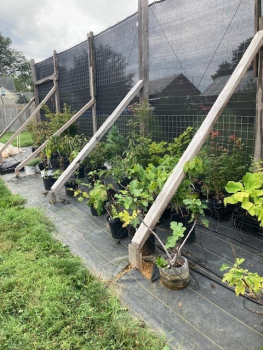
This windbreak structure on a Pennsylvania farm can have wind screening material added or removed as needed to protect the crops in the fields beyond.
Photo: Chris Lent, NCAT.
Windbreaks for Season Extension
Windbreaks play a vital role in reducing evaporation, protecting crops from wind damage, minimizing soil erosion, and providing habitat for beneficial insects. Windbreaks are also a valuable tool for season extension, creating sheltered microclimates that allow for earlier planting and better crop performance. Ideally, windbreaks should be perpendicular to prevailing winds, particularly during the early season when young crops are most vulnerable (Smith et al. 2021).
In tropical regions, sea grape (Coccoloba uvifera) is a commonly used windbreak due to its hardy nature and ability to withstand strong coastal winds. Sea grape’s dense foliage provides excellent protection without excessively competing for water or nutrients, making it a suitable choice for creating protective barriers around farms in coastal and tropical areas.
Existing stands of trees can serve as natural windbreaks, but growers should select tree species carefully to prevent excessive shading or competition for resources. In temperate climates, growers can plant fall cover crops such as rye, barley, or winter wheat to create temporary windbreaks in early spring. Leaving strips of cover crop standing every 30 to 40 feet provides wind protection, which growers can till under once no longer needed. Perennial grasses also function as long-term windbreaks that maintain protection through winter and early spring (Fronczak and Galbraith, 2023).
Growers can also use snow fences, commercial windbreak materials, brush piles, stone walls, hedges, berry brambles, or even overgrown ditches as alternative windbreaks. These options adapt well to specific farm conditions and help shield crops from prevailing winds. Be sure to allow some air circulation to prevent frost pockets and avoid the obstruction of downslope airflow.
Finding the right windbreak involves balancing protection with resource competition. Experimenting with different windbreak strategies based on local conditions and crop types helps growers maximize their effectiveness in extending the growing season (Brandle and Finch, n.d.).
Irrigation as Frost Protection
Furrow and drip irrigation and overhead sprinklers can be effective methods for protecting crops from frost damage. Growers who use this method typically activate sprinklers when temperatures drop to 33°F. As the water contacts plant surfaces, it freezes and releases latent heat, creating an insulating layer of ice around branches, vines, leaves, or buds. This process helps protect crops from further temperature drops.
While the level of protection offered by sprinklers is significant and the costs are relatively low, there are some drawbacks. If the system fails during the night, the risk of crop damage increases dramatically. Additionally, some plants may struggle to support the weight of the accumulated ice, leading to potential breakage. Large amounts of water, as well as sizable pipelines and pumps, are also necessary for this method to be effective.
Using drip or furrow irrigation provides frost protection by maintaining higher soil temperatures without the risk of ice accumulation. Water applied through these methods helps to release stored ground heat, which can prevent frost damage without the structural risks posed by sprinklers. Moreover, drip and furrow systems typically require less water and energy to operate, making them more efficient for frost protection in certain scenarios (Evans, 1999; Snyder, 2000).
Crop Selection and Techniques for Season Extension
Growers can set themselves up for success by choosing the best crops and varieties
for their conditions and season extension goals. Using techniques like transplanting, crop rotations, intercropping, and relay cropping can help make the most of the growing season.
Cultivar Selection for Extended Growing Seasons
Choosing the right cultivars is a critical component of successful early crop production and late season extension. The number of days from planting to maturity can vary widely between cultivars, with some varieties thriving in cooler soils, while others may struggle to germinate. Selecting cultivars that are well-adapted to your region’s specific conditions—whether it’s cooler spring soil or the heat of late summer—can significantly influence the success of your growing season.
To extend harvests, farmers can stagger planting dates and choose cultivars with a range of maturity dates. This strategy helps maintain a continuous supply of fresh produce throughout the season, allowing you to reach markets when other local growers may have limited offerings. Early-maturing cultivars are especially valuable for hitting the early market, but keep in mind that these crops may be smaller or slightly lower in quality compared to later-maturing varieties. For later harvests, cultivars that mature over longer periods often offer superior eating qualities and higher yields, which can be critical for mid- to late-season markets.
In regions with variable weather, heat-tolerant and cold-hardy cultivars are essential. For example, cool-season crops like broccoli, lettuce, and spinach have varieties specifically bred to withstand warmer temperatures, while cold tolerant varieties of tomatoes, peppers, and beans can extend production into the cooler months. Understanding how different cultivars respond to temperature changes and seasonal fluctuations will allow growers to maximize yield and quality across the extended season.
Additionally, consider disease resistance and pest tolerance when selecting cultivars for extended seasons, particularly in high tunnel or greenhouse environments where humidity and temperature are more controlled. Certain varieties are bred specifically for resistance to common diseases like downy mildew, fusarium wilt, or powdery mildew, which can reduce the need for chemical inputs and ensure more reliable yields in extended-season systems.
Finally, when selecting cultivars, it is essential to gather information from local sources such as experienced growers, seed catalogs, cooperative extension services, and trade magazines. These resources can provide insights into which varieties are best suited to your local conditions, helping you optimize for both early and late market opportunities. Many seed companies now offer detailed guides and specific cultivar recommendations for different climates and regions, making it easier than ever to choose varieties that align with your season extension goals (Barrett and DeLong, 2021).
Transplants
Using transplants instead of direct seeding is a common practice to maximize the growing season. Starting crops like tomatoes, peppers, and broccoli indoors during the late winter or early spring allows for earlier establishment in the field once temperatures permit, leading to earlier harvests. In areas with short growing seasons, transplants are essential for crops with longer days to maturity.
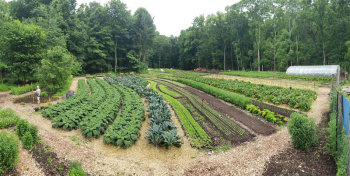
Intensive crop planting at Mahwah Environmental Volunteers Organization (MEVO) Market Garden. Photo: Eric Fuchs-Stengel, NCAT
Relay Cropping, Intercropping, and Intensive Cropping Techniques
To maximize yields and get the most out of your extended growing season, especially in small spaces, multiple cropping systems are key. Relay cropping involves planting successive crops in the same space across different seasons. For example, in one field you might plant a fast-growing spring crop like radishes or spinach, followed by a summer crop like tomatoes, and then a fall crop like leafy greens. This maximizes land use and ensures continuous production.
Intercropping is another method to improve yield and optimize space by planting two or more crops in the same field at the same time. This practice improves biodiversity, enhances pest and disease resistance, and increases overall productivity. For example, interplanting quick-growing crops like lettuce or radishes between rows of slower-growing crops like cabbage or tomatoes can help farmers increase yields using the same space during a single season.
Intensive cropping refers to using small-scale plots in high-density arrangements to increase production. Growers can achieve this by carefully managing planting distances, using vertical space such as trellises for climbing plants, and employing succession planting techniques. With proper management, intensive cropping methods enable growers to produce a high volume of crops in a shorter time frame, making them ideal for market gardeners who aim to maximize output during the growing season (Mohler and Johnson, 2009).
Mulching and Soil Temperature Management for Season Extension
Mulching is commonly used in agricultural systems to influence soil temperature. The type of mulch applied can moderate or amplify soil temperatures depending on its properties and how it interacts with the specific cropping system.
Organic materials such as straw, wood chips, and compost can help regulate soil temperature. For instance, some studies suggest that wheat straw mulch may decrease soil temperature and minimize fluctuations compared to unmulched soil, potentially promoting crop growth during high-temperature periods (Scherbatyuk et al., 2024).
Plastic Mulches
Plastic mulches, particularly black and clear polyethylene films, are often used to warm the soil. Black plastic mulch can absorb solar radiation and increase soil temperature, which may benefit heat-
loving crops in cooler climates. Research indicates that plastic mulches could raise soil temperatures by approximately 6°C at a two-inch (5 cm) depth, which might allow for earlier planting and extended growing seasons (Ghosh et al. 2022). Note that while plastic mulches are allowed in certified organic production, the National Organic Program (NOP) rules require the removal of plastic from the field at the end of each growing season.
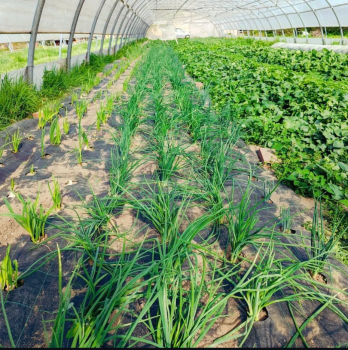
Fabric mulch is used to suppress weeds in high tunnels. Photo: Gabriella Soto-Velez, NCAT
Biodegradable Mulches
Biodegradable plastic mulches are sometimes considered a more environmentally friendly alternative to traditional plastics while offering similar thermal effects. These mulches, made from plant-based materials such as corn or potato starch, decompose in the soil. While biodegradable mulches appear to offer comparable benefits in moisture retention and temperature regulation, their long-term performance in season extension systems requires further study (Ghosh et al. 2022). Additionally, biodegradable plastic mulches that meet NOP criteria are allowed in certified organic production systems, but as of the release of this publication, no biodegradable plastic mulches on the market meet those criteria.
Living Mulches
Living mulches, such as cover crops, may also influence soil temperature. These ground covers can provide insulation, potentially reducing temperature fluctuations and shielding the soil from extreme conditions. While they may not significantly increase soil temperature, living mulches could create a more stable thermal environment, which may be beneficial for certain crops during transitional seasons (Scherbatyuk et al. 2024).
The management of cover crops and living mulches plays a crucial role in their effectiveness as tools for season extension. Selecting winter cover crops that naturally die back or frost-kill during low temperatures can simplify spring planting, as the grower can directly transplant crops without the need for additional termination efforts. Incorporating strip tillage into this system, i.e., clearing narrow bands of the frost-killed cover, can further enhance early season planting. This practice exposes the soil to sunlight, allowing the soil to warm more quickly, which creates favorable conditions for early crop establishment while still retaining the benefits of the remaining cover crop.
Choosing the Right Mulch
Selecting an appropriate mulch type has the potential to influence soil temperature management in season extension strategies. Organic mulches might be better suited for cooling the soil and reducing temperature fluctuations, while plastic mulches could offer advantages in warming the soil in cooler climates. Understanding the varying effects of mulch materials and site conditions can help growers make more informed decisions when working toward season extension.
Season Extension Structures
Season extension structures are essential tools for farmers and gardeners to protect crops from extreme weather and extend the growing season by weeks or even months. These structures range from simple fabric coverings to more permanent enclosed systems. By understanding the different types of season extension structures, along with their benefits and challenges, growers can make informed decisions based on climate, crops, market goals, and available resources.
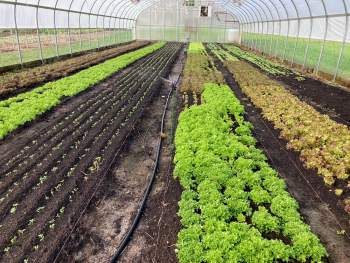
A high tunnel on a farm in New Hampshire is transitioned from summer tomatoes to fall lettuce that will be harvested late into the season. Photo: Chris Lent, NCAT
High Tunnels
High tunnels, also known as hoop houses, are tall, walk-in structures typically with steel or aluminum frames and covered with polyethylene plastic. Passive solar heating creates a protected microclimate that allows for earlier planting in spring, later harvests in fall, and in some regions, even year-round production. These structures are especially beneficial in medium- to large-scale operations and can help farmers capture early and late-season markets with premium pricing.
High tunnels come in two main forms: single-bay and multi-bay systems.
Single-bay tunnels are freestanding and typically 14-30 feet wide and up to 100 feet long. These are well-suited for diversified market gardens growing crops like leafy greens, tomatoes, or small fruits. Ventilation is often manual, using roll-up sides.
Multi-bay tunnels are connected in rows under one frame, offering more coverage at a lower cost per square foot. However, they require more careful ventilation and are less ideal in high-wind zones.
Site selection for high tunnels is crucial to their success. They ideally would be oriented east-west in northern climates for optimal sunlight exposure and placed on well-drained soil to reduce waterlogging.
High tunnels can also serve as a physical barrier to pests and allow for organic production methods with reduced need for synthetic inputs (Lamont, 2005; Wells & Loy, 1993).
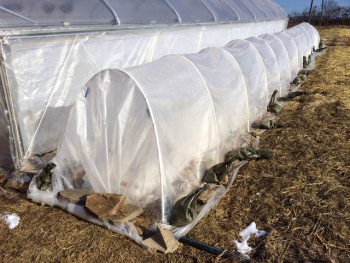
This plastic-covered low tunnel is being used to protect carrots for harvest over the winter. Photo: Chris Lent, NCAT
Low Tunnels
Low tunnels are smaller-scale versions of high tunnels: essentially miniature hoop houses installed over individual crop beds. They’re made by placing wire, metal, or PVC hoops over rows and covering them with plastic, shade cloth, or row cover fabric. This setup moderates temperature, protects from frost and sun, and reduces pest pressure.
Low tunnels are popular among small-scale growers due to their affordability and flexibility. Growers can easily construct these structures and quickly adapt them to seasonal needs using floating row covers in spring and fall, plastic for heat retention in winter, or shade cloth during summer. However, their limited height makes weeding and harvesting more difficult, and they withstand high winds or snow less effectively. Growers also need to ensure proper ventilation to prevent overheating.
Row Covers
Row covers are breathable fabrics, typically spun-bonded polyester or polypropylene, that are laid directly on top of plants or supported by hoops. These materials provide a simple and cost-effective way to protect crops from light frost, pests, and wind, while allowing air, light, and moisture to pass through.
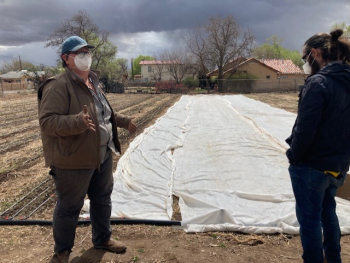
Floating row cover being applied directly over planted field beds.
Photo: Chris Lent, NCAT
Floating row covers are unsupported fabrics that “float” directly on top of crops. They are available in different weights: lightweight versions serve primarily as insect barriers, while heavier fabrics provide frost protection. They are ideal for quick, temporary protection but may cause abrasion to plant foliage and limit vertical crop growth if left on too long.
Traditional row covers are supported by hoops or other light support structures to allow for more room for growth underneath the fabric.
Regardless of type, both floating and traditional row covers must be secured at the edges with weights or soil, and proper storage is essential to prolong their life (Beddes et al., 2022). Additionally, growers may need to remove floating covers for pollination.
Cold Frames
Cold frames are low-to-the-ground, box-like structures with transparent lids that capture solar energy and trap heat. Made from wood or metal with glass or plastic covers, they protect crops during early spring and late fall and are especially helpful for hardening off transplants. These passive solar structures are best suited for hardy leafy greens like spinach or kale.
Cold frames can be homemade or purchased as kits and customized for specific needs. Some designs, like solar cold frames, maximize sun exposure to enhance insulation. However, growers must monitor temperatures inside, as they can spike on sunny days, risking plant damage (Steil, 2024).
Stonecipher Farm: A Case Study in Relay Cropping for Season Extension
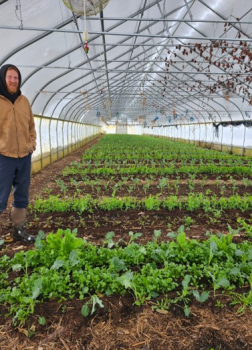
Ian Jerolmack of Stonecipher Farm in one oof his ten season extension high tunnels. Photo: Stoneciper Farm
Stonecipher Farm, located in Bowdoinham, Maine, is a certified organic vegetable farm that employs various season extension techniques to supply fresh produce year-round.
Owner Ian Jerolmack purchased the property in 2008, fulfilling a longtime dream of building a thriving food production hub. Today, the farm operates with a team of six employees and produces hundreds of thousands of pounds of organic vegetables annually.
Like many diversified vegetable growers in the Northeast, Ian prioritizes maintaining a consistent supply of high-quality food throughout the year to retain customers during what would traditionally be the off-season. To achieve this, he has implemented a no-till management system along with 10 high tunnels covering over an acre of land. His innovative relay cropping techniques further support his ability to provide fresh produce to winter markets.
Relay Cropping for Year-Round Production
Relay cropping maximizes space, optimizes labor, and increases overall system diversity. Ian utilizes well-timed and strategic interplanting to grow multiple crops in the same beds simultaneously, effectively staggering and extending his high tunnel production season. He considers each crop’s days to maturity and canopy requirements to maximize vertical space and ensure efficient use of available sunlight.
A key factor enabling successful relay cropping at Stonecipher Farm is weed control through a deep compost no-till bed system. It would be impractical to manage weeds with hand-cultivation in the dense planting required for relay cropping. By using deep composting as mulch and eliminating tillage while maintaining high planting densities, Ian has created an efficient system where crops can transition seamlessly from one to the next.
Examples of Relay Cropping at Stonecipher Farm
Planting in the high tunnels at Stonecipher is a nearly continuous process. For example, Ian gains an extra month of growth on winter Swiss chard by interplanting chard transplants into main-season tomato beds in September. This allows the late tomato harvest to continue through mid-October while the chard establishes itself. By the time Ian removes the tomato plants, the chard has already developed, enabling a winter harvest. The following February, Ian and his crew transplant fava beans directly into the same bed for a spring crop, while continuing to harvest the chard.
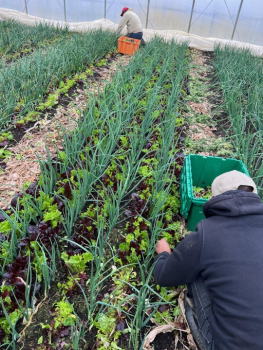
Greens being harvested from between rows of onions. Photo: Stonecipher Farm
Another effective relay cropping sequence involves onions and peppers. Pepper production in high tunnels can extend into early November. The crew starts onion transplants in early September but keeps them in their trays until the last peppers are harvested in November and the plants are removed. They then transplant the onions into the now-empty beds alongside rows of direct-seeded arugula or another fast-growing green. They harvest the greens throughout winter. When the greens harvest is finished, the onions can take over the bed and size up for an early spring harvest.
Similarly, Ian uses snap peas in combination with turnips or red beets. They transplant these crops all on the same day in mid-March using a paper pot planter. By late May, the beets and turnips have matured, and their harvest is nearly complete. Their growth is not affected by shade from the peas because they reach harvest stage before the peas are tall enough to have an impact. In early June, after the pea harvest is complete, the beds are replanted with peppers or cucumbers for summer production.
One of Ian’s fall relay cropping strategies involves direct-seeding parsley between rows of transplanted beets. They harvest the beets through December while the parsley (which has germinated and grown into small plants underneath the beets) remains. Once the beets are out of the way, more sunlight can reach the parsley, allowing it to size up for a spring harvest.
Managing Soil Fertility in Intensive Cropping Systems
Since relay cropping requires beds to remain in continuous production, managing soil fertility is essential. The challenge is to provide adequate nutrients for multiple crops while avoiding over-fertilization. At Stonecipher Farm, Ian relies on the fertilizer he applies to his summer crops to sustain the following winter crops. For example, rather than fertilizing cool season crops following tomatoes, he allows the residual fertility from summer amendments to carry over. Throughout the season, he monitors plant health and applies side-dress fertilizers as needed, particularly for alliums, which receive an additional fertility boost when planted in the winter high tunnels.
Labor Considerations and Profitability of Relay Cropping
Relay cropping for season extension requires additional labor and management, but Ian finds that the increased production and higher market prices in the offseason justify the extra effort. Winter-grown relay crops remain profitable at Stonecipher Farm, in part because the labor saved on hand cultivation can be reallocated to relay cropping tasks.
To ensure financial viability, Ian sets clear profitability targets for each crop bed. Both outdoor and high tunnel growing beds at Stonecipher are 500 square feet each. Outdoor beds must generate at least $1,000 per bed per season, whereas high tunnel beds need to bring in closer to $3,000 per bed to offset infrastructure costs. This level of productivity is made possible through the efficient and strategic season-extending relay cropping methods that have become a hallmark of Stonecipher Farm.
By leveraging high tunnels, no-till methods, and relay cropping strategies, the Stonecipher Farm team successfully extends the growing season, optimizes land use, and meets customer demand for fresh, organic produce year-round.
The Economics of Season Extension
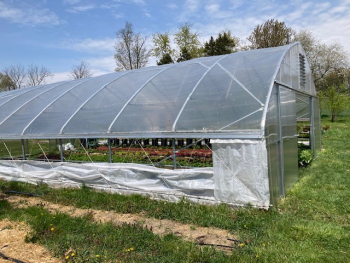
Roll down sides on a high tunnel allow crops to be protected from wind while ventilating the tunnel to control temperature and humidity. Photo: Chris Lent, NCAT
Season extension can give farmers a real economic edge. By using techniques that protect crops from weather extremes, growers can produce diverse crops outside natural seasonal boundaries. These farmers can then supply markets when fresh, local produce is limited, often earning better prices while building a loyal customer base. Diversifying production across seasons also helps reduce the risks associated with monoculture and market saturation. In addition, greater crop diversity can improve soil health and decrease pest and disease pressure.
When implementing season extension practices, it is important to factor costs into your production planning. Whether you are investing in high tunnels, plastic mulches, row covers, or drip irrigation systems, each practice carries both upfront and ongoing expenses that influence overall farm profitability.
In general, farm expenses fall into two categories:
- Fixed costs are one-time or infrequent expenses that remain relatively stable, such as the purchase and installation of a high tunnel, irrigation infrastructure, or durable tools. These investments often have long lifespans and can be depreciated over time. The fixed costs tend to remain stable regardless of the amount of production.
- Variable costs change with the scale of production or are incurred seasonally, such as labor, seeds, fertilizers, mulch, and replacement materials.
Assessing whether season extension methods will be financially beneficial for a farm often involves partial budgeting, a method used to evaluate potential changes in income and expenses associated with adopting a new practice without requiring a complete analysis of all farm costs. The focus is on comparing the economic differences between the current system and the proposed changes (Ilic, 2004).
To effectively use partial budgeting for season extension strategies, consider the following steps:
- Identify the crop and extension method. Determine which crop you will grow and what season extension method you will implement.
- Calculate the costs of the new practice. Estimate all costs associated with adopting the practice, including materials (for example, plastic mulch or row covers), specialized equipment rentals or purchases, labor, water usage, and pest management. Factor in additional labor costs for the initial learning curve during the first season.
- Estimate the expected income increase. Project the additional revenue generated by the new practice. Calculate gross income by multiplying the anticipated yield (units produced) by the selling price per unit. Increased income can result from higher yields, improved crop quality, or accessing premium markets earlier or later in the season when produce is less available.
- Account for cost reductions. Identify any cost savings the season extension method might provide. For example, black plastic mulch can reduce weed pressure and the need for manual cultivation or herbicides, while row covers may minimize pest issues and reduce pesticide applications.
- Balance income and expenses. Sum both the projected income increases and cost reductions. Subtract the total costs of the new practice from these combined benefits to determine whether the technique would positively impact farm profitability.
By following this approach, growers can make informed decisions about whether season extension strategies align with their financial goals and operational capacity. This method also allows for more precise comparisons when evaluating multiple techniques side by side, ensuring the chosen strategies support both profitability and sustainability.
Although season extension structures and materials require investment, they provide opportunities for increased income by extending the growing season and enabling earlier spring or later fall harvests. This can help farmers capture premium market prices, maintain consistent customer supply, and make better use of farm labor and infrastructure throughout the year.
Just as important, growers should identify a marketing strategy that matches the timing of their extended harvests, such as targeting early spring farmers markets, winter CSA shares, school or institutional markets, or restaurant accounts seeking off-season produce. This ensures there is a reliable outlet for the crops when they are ready. For more guidance on connecting with the right markets and assessing farm costs and profitability, see the Further Resources section of this publication.
Season Extension Funding Sources
- NRCS EQIP: USDA’s Natural Resources Conservation Service (NRCS) offers cost-share funding for high tunnels through the Environmental Quality Incentives Program (EQIP). This program provides financial assistance to farmers for implementing conservation practices, including season extension. To be eligible for NRCS EQIP funding, growers must meet certain requirements, such as having at least $1,000 in annual sales related to agriculture, and they must provide a detailed business plan (Environmental Quality Incentives Program, n.d.).
- SARE Grants: The Sustainable Agriculture Research and Education (SARE) program offers grants for research and education projects related to sustainable agriculture, including season extension (Southern Agriculture Research and Education Grant, n.d.).
- OREI Grants: The Organic Agriculture Research and Extension Initiative (OREI) provides funding for projects that integrate research, education, and extension activities to address critical organic agriculture issues, including season extension (National Institute of Food and Agriculture, n.d.).
Please note that grant money you receive from these programs will need to be reported as income on your farm tax return.
Conclusion
There are a wide range of strategies for extending your production season, including planting techniques, crop variety selection, and using physical structures like high and low tunnels and row covers. By carefully choosing one or a combination of these methods—tailored to your region’s climate, soil types, topography, and market demands—you can increase the likelihood of improved yields, extended harvest windows, and increased farm profitability.
Season extension is not a one-size-fits-all solution, but with thoughtful planning and a focus on long-term sustainability, it can become a powerful tool to diversify crops, strengthen local food systems, and build farm resilience.
To further support your efforts, we have provided a list of additional resources and recommended ATTRA publications below, offering deeper insights into season extension practices and their applications across various climates and production scales.
References
Alagbo, O., Spaeth, M., Saile, M., Schumacher, M., and Gerhards, R. 2022. Weed management in ridge tillage systems—a review. Agronomy. Vol. 12, No. 4. p. 910.
Barrett, J. J., and DeLong, C. 2021. Variety Selection for the Home Garden. West Virginia University Extension.
Bartok, J. W. 2004. Shade houses provide seasonal low-cost protected space. Greenhouse Management & Production. May. p. 56–57.
Beddes, T., Caron, M., Hansen, S., and Gunnel, J. 2022. Extending the garden season. Utah State University Extension.
Bergtold, J.S., Smith, A., Lamb, M., and Duzy, L. 2020. Conservation Economics: Budgeting, Cover Crops, and Government Programs. In: Bergtold, J.S., Sailus, M. (eds.). Conservation Tillage Systems in the Southeast. Sustainable Agriculture Research and Education.
Brandle, J. R., and Finch, S. (n.d.). How windbreaks work. University of Nebraska Extension. EC 91-1763-B. Dou, S., Wang, H., Zhang, W., and Li, X. 2024. Strip tillage promotes crop yield in comparison with no-tillage based on a meta-analysis. Soil and Tillage Research. Vol. 240. 106085.
DT, S., Maitra, S., and Sairam, M. 2024. Enhancing rural economies with protected cultivation technologies. International Journal of Biological Sciences. Vol. 11, No. 1, p. 71–79.
EPA. 2021. Seasonality and climate change: a review of observed evidence in the United States. U.S. Environmental Protection Agency. EPA 430-R-21-002.
Evans, R. D. 1999. Frost protection in orchards and vineyards. Northern Plains Agricultural Research Laboratory.
Farm Plastic Supply. 2024. Aluminet shade cloth – 14’ wide.
Fronczak, S. and Galbraith, C. 2023. Cover crop considerations for vegetables. Michigan State University Extension.
Ghosh, P. K., Mohanty, S. R., Ray, P. K., and Ray, P. P. 2020. Mulching techniques to conserve the soil water and advance the crop production: A review. Current World Environment Journal. Special Issue (Sustainable Mining).
Gu, S. 2021. High tunnel farming. North Carolina Agricultural and Technical State University Cooperative Extension. ANR-21-01.
Ilic, P. 2004. Plastic tunnels for early vegetable production. University of California Agriculture and Natural Resources Small Farms Network.
Lamont, W. J. 2005. Plastics: Modifying the microclimate for the production of vegetable crops. HortTechnology. Vol. 15, No. 3. p. 477–481.
Mohler, C.L., and Stoner, K.A. 2009. Guidelines for Intercropping. In: Mohler, C. L., and Johnson, S. E. (eds.). Crop Rotation on Organic Farms: A Planning Manual. Sustainable Agriculture Research and Education Outreach.
Schmitt, M., and Rosen, C. 2024. Warmer winter presents benefits and challenges to soils. University of Minnesota Extension.
Further Resources
ATTRA Publications
Planning for Profit in Sustainable Farming
Evaluating a Farming Enterprise
Selling to Local and Regional Markets: Barriers and Opportunities for Beginning Farmers
Business Planning for Season Extension
Model Business Plan for Season Extension Hightunnels. 2010. By David S. Conner. Michigan State University Extension. Bulletin E-3112.
This bulletin takes a thorough look at budgeting for a high tunnel enterprise. This is an older resource so the costs and revenues presented are not current, but there are budget templets included to create your own high tunnel budget.
My One-High-Tunnel Business Planning Guide. 2025. By Harry Edwards. Rimol Greenhouse Systems.
This is a guide covering all aspects of planning a high tunnel enterprise on your farm. It includes goal setting, marketing considerations, production planning, soil management, and sample enterprise budgets.
Extension Web Pages and Articles
Center for Agriculture, Food, and the Environment at UMass Amherst: Greenhouse & Floriculture: Ventilation for Greenhouses.
University of Maryland Extension: High tunnel best management practices.
Oklahoma State University: High Tunnels.
Penn State Extension: High Tunnel Production.
Penn State Extension: Season Extenders and Growing Fall Vegetables.
High Tunnel Construction and Materials
Constructing a Low-Cost High Tunnel for Tall Crops (14.5’ wide by 10’ tall)
Maughan, T., Rowley, D., Black, B., & Drost, D. (2014). Constructing a low-cost high tunnel for tall crops (14.5’ wide by 10’ tall). Utah State University Extension.
This illustrated fact sheet walks growers through the steps of building an affordable, tall high tunnel suitable for crops like tomatoes or trellised cucumbers. It includes a materials list, diagrams, and cost estimates—ideal for those looking to expand protected growing space on a budget.
Constructing a Greenhouse or High Tunnel.
This instructional video shows step by step construction of a high tunnel. It discusses tools and techniques needed to complete a successful build.
High Tunnel Structures: The Basics.
This is a series of basic instructional videos by Penn State Extension on how to build a small high tunnel structure.
Farm Plastic Supply: 70% Aluminet Silver Shade Cloth
Koollite Plus Greenhouse Films: RKW Group
High Tunnel General Management
Basic Aspects of High Tunnel Soil Fertility Management. 2019. Vegetable Crops Hotline Newsletter. Issue 655. Petrus Langenhoven. Purdue University.
This article is a short overview of considerations in soil fertility management in high tunnel production.
High Tunnel Farming, Gu, S. 2021. High tunnel farming. ANR-21-01. Cooperative Extension at North Carolina A&T State University.
This comprehensive guide offers detailed insights into high tunnel agriculture, including construction techniques, crop selection, planting calendars, and soil health management. Especially helpful for growers in the southeastern U.S., it also provides broadly applicable strategies for successful high tunnel production.
Managing the Environment in High Tunnels for Cool Season Vegetable Production. 2018. By Elizabeth Maynard and Michael O’Donnell. Purdue University Extension.
This detailed publication looks at the importance of tunnel orientation, air and soil temperature, and relative humidity on cold weather growing in high tunnels. Best management practices for the tunnel environment are included.
Soil and Water Data is Critical for High Tunnel Growers. 2023. Petrus Langenhoven. Vegetable Crop Hotline Newsletter. Issue 716. Purdue University.
This short article focuses on water quality in high tunnel irrigation. Specifically, the two issues of water alkalinity and soil salinity are covered.
Water, Soil and Fertility Management in Organic High Tunnels. 2013. John Biernbaum. Michigan State University.
This is an informational paper on managing high tunnel soil health with proper irrigation, soil testing, and fertility management.
Season Extension Manuals and Guides
High Tunnel Pest Management – University of Vermont – Entomology Research Laboratory.
This is a tool kit of resources with links to conference presentations, factsheets, and publications. Most of the resources here focus on pest control in high tunnel production.
High Tunnels and Other Season Extension Techniques. By Vern Grubinger. Northeast SARE.
This publication talks about construction, crop selection, fertility, and the economics involved in season extension.
A Guide to Season Extension for Illinois Specialty Crop Growers.
By Terra Brockman, Cara Cummings, and Jeff Hake. The Land Connection.
This 49-page guide covers many techniques used for season extension. It touches on pros and cons and marketing considerations and contains several case studies. It’s targeted to Illinois growers but contains universal information on season extension.
Overwintering Vegetable Crops Planting Chart, Johnny’s Selected Seeds
High Tunnel Suppliers
This resource is run by researchers, extension specialists, professors, growers, technicians, and students collaborating to share experiences and knowledge about high tunnels.
Webinars
Cornell Cooperative Extension: Introduction to Winter Growing Webinar
Windbreaks
Natural Resources Conservation Service: Windbreak/Shelterbelt Establishment and Renovation (Ft.) (380) Conservation Practice Standard
USDA Forest Service: Agroforestry Notes
Windbreaks: An Agroforestry Practice
Season Extension Techniques for Market Gardeners
By Janet Bachmann, NCAT Agriculture Specialist
January 2005,
Updated February 2026 by Gabriella Soto-Velez and Chris Lent, NCAT Agriculture Specialists
©NCAT
IP035
Version 022526
This publication is produced by NCAT through the ATTRA Sustainable Agriculture program, under a cooperative agreement with USDA Rural Development.