Increasing Cover Crop Prof itability with Livestock
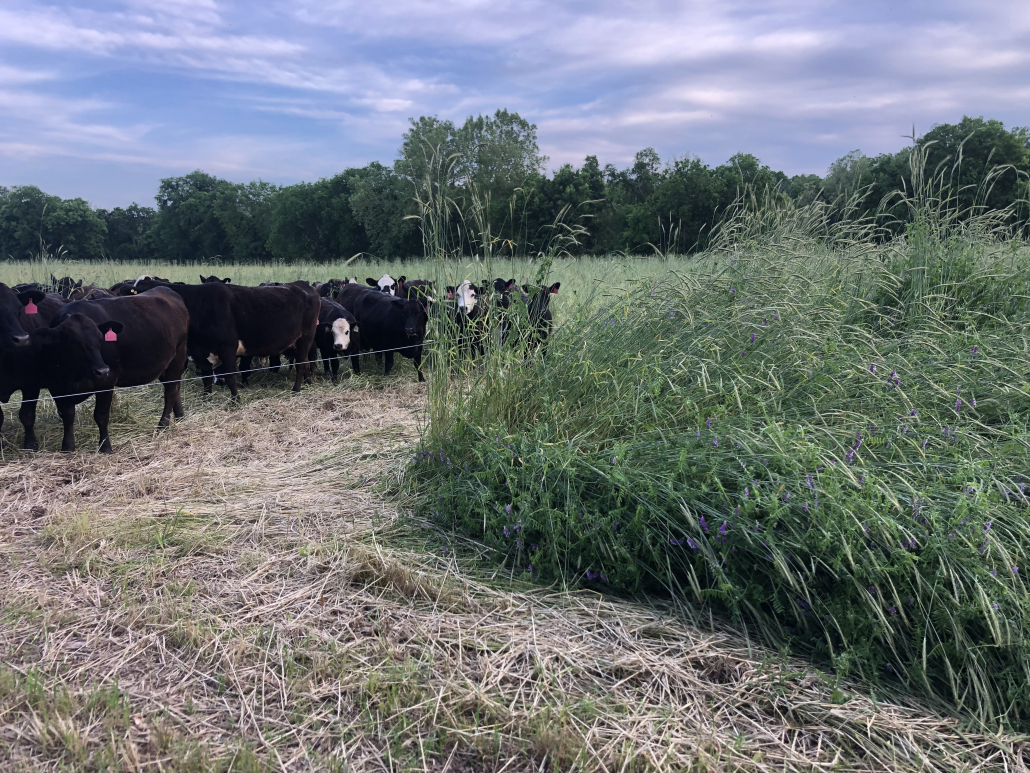
Cattle grazing a cereal rye – hairy vetch mixture. Photo: Jacob Gilley
By Lee Rinehart, NCAT Agriculture Specialist
Special thanks to Jacob Gilley of JG Land & Livestock in Orange, Virginia for providing technical review and constructive additions to this publication.
Abstract
Cover crops improve soil structure and encourage water infiltration. They may also provide additional income when grazed by livestock to augment or extend the grazing season. This publication is for producers interested in adding livestock to cover crop rotations in cropping systems, or for adding cover crops into livestock operations. We discuss the ecological and financial benefits of grazing cover crops, species selection, how to develop a custom cover crop mix, managing risk of pathogen contamination in vegetable crops, and managing grazing by balancing forage production with livestock demand. Resources are provided for further reading.
Contents
Introduction
Profitability
Cover Crop Grazing Considerations
Grazing Cover Crops, Foodborne Pathogens, and Vegetable Harvest
Conclusion
References
Further Resources
Introduction
Cover crop acreage, tracked by the Census of Agriculture, has been increasing as farmers understand its tangible benefits and sometimes receive financial incentives to implement the practice.
In the 2022 Census, U.S. cropland area planted to cover crops increased 17% from 15.4 million acres in 2017 to 18.0 million acres in 2022. However, cover crops were reported to occupy only 4.7% of all US cropland in 2022 (Bowman and Morales, 2024).
Graphic 1: Cover crop use on U.S. cropland, 2022.
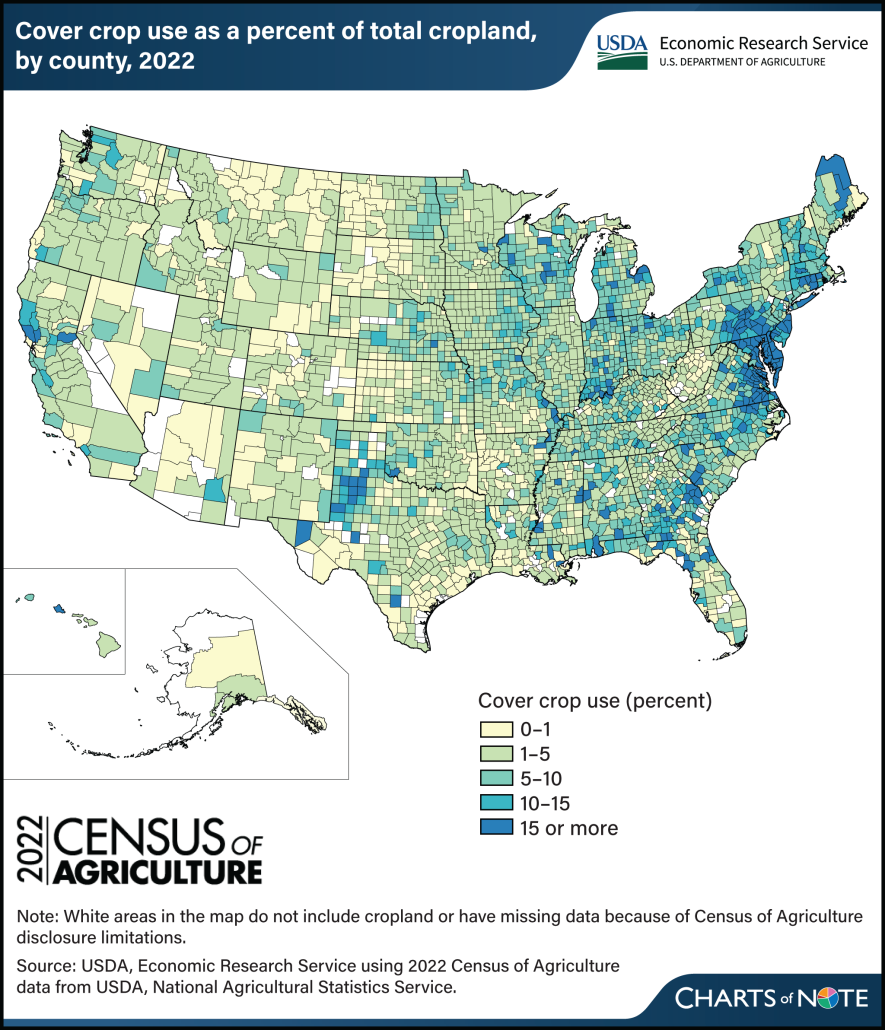
Source: USDA ERS
Using cover crops is a path to healthier soils and financial benefits. Year-round soil cover by cover crops and crop residue keeps soil microorganisms alive. Soil microorganisms such as beneficial bacteria and fungi thrive on the organic matter contributed by cover crop biomass. Microbial threads and natural glues hold soil particles together in small clusters or aggregates. Fostering soil aggregation is the foundation of healthy soils into which water can infiltrate and air can circulate readily (unlike lifeless, hard-compacted soils). Well-aggregated soil has better water holding capacity, withstands temperature fluctuations, and recycles nutrients that cash crops can utilize. Cover crops contribute to crop resilience and productivity, especially under heat and drought stress.
When producers introduce livestock to the system to graze cover crops, they have an additional source of income from the sale of animals or animal products, thereby increasing the chances of a positive economic return on cover crops (Filbert et al., 2017). This is especially true if the owner of the livestock is also the crop farmer. In addition, livestock break down plant material through digestion and make those nutrients more plant available in their urine and manure.
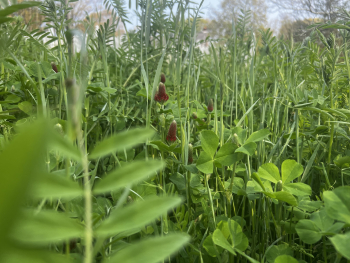
Diverse cover crops build soil health and provide high quality forage. Photo: Lee Rinehart
Profitability
Introducing animals into the farming system to graze cover crops significantly increases both the soil health benefits and the chances of making a profit the first year, compared with using cover crops in crops-only systems. Producers who invest the time and infrastructure to manage livestock well can expect greater cycling of nutrients, increased beneficial microorganisms, and a positive economic return to the farm operation.
Planting and grazing cover crops can transform what would have been fallow crop land into economically productive land that supports livestock. By moving animals off pastures to graze cover crops in the late summer and fall, perennial grass pastures can rest and recover or even grow stockpiled grass for winter grazing. Annual cover crops have higher forage nutrient quality than perennial pastures, especially pastures with cool season perennials that are essentially dormant in the late summer. Grazing annuals can save the cost of harvesting hay, extend the grazing season, and increase the feed quality of forage, thereby increasing the productivity of grazing animals. For example, producers can expect to see increased breed back and enhanced performance of calves nursing cows as a result of grazing cover crops due to the cover crops’ higher nutritional quality.
The most important aspect of cover crop grazing is managing the biomass to make it pay. Cover crops should be stocked to remove no more than 50% of the forage (to allow for regrowth and to provide soil cover), so the half that is grazed must be comprised of enough high-quality biomass to meet the maintenance and growth requirements of the livestock. Weight gain of calves or lambs is the yield from a livestock operation, and high quality, high biomass forage is the cheapest way to increase livestock weight gain, and thus, profits.
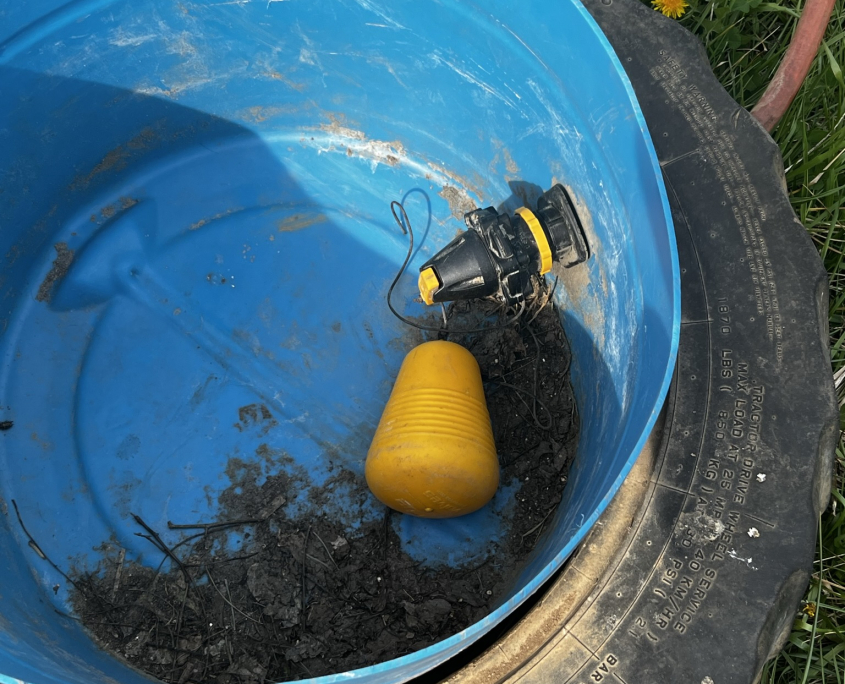
Producers can optimize their financial returns by using low-cost infrastructure, such as temporary fencing and moveable water tanks, and by moving animals regularly between paddocks. In fact, the stocking rate can often be increased by rotating livestock among paddocks and matching forage yield with herd weight (see the accompanying box on forage-animal balance). Rotational grazing reduces the likelihood of damaging soil and allows for better control of forage utilization so that managers can ensure there will be substantial post-grazing residue.
Forage-Animal Balance
The profitability of grazing cover crops depends on cover crop biomass and proper stocking. To achieve the right number of animals grazing a paddock for a specific amount of time, you must calculate a forage-animal balance. In other words, you need to determine the amount of forage currently in the paddock and match that to the livestock’s forage demand, while allowing for enough post-grazing residue to keep the soil covered and allow full plant recovery.A forage-animal balance will ensure proper initial stocking to optimize the available forage, and will, given ample biomass, ensure cover crop profitability. By grazing cereals at boot stage and younger, and by matching herd size to the size of the field, you’ll be better able to graze the entire field of cover crops before they mature (Duiker, 2023).
The ATTRA publication Pasture, Rangeland, and Adaptive Grazing will help you calculate the size and number of paddocks for the number of animals you have available for grazing.
-
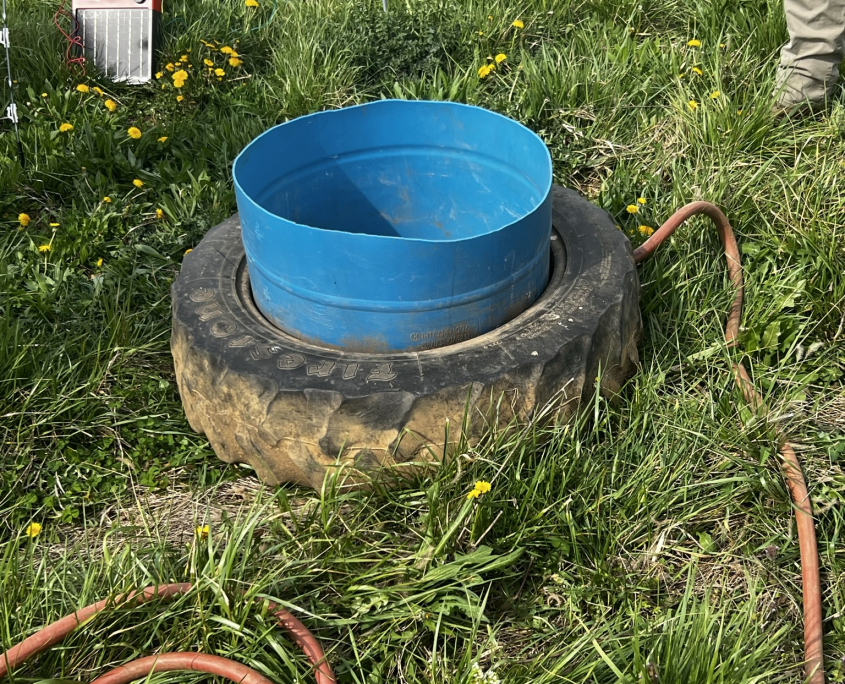
- A small watering tub and high-volume float valve are useful for rotational grazing on cover crops. Photos: Lee Rinehart
Cover Crop Grazing Considerations
Adding livestock to cover crops increases the complexity of an already multifaceted system. There are decisions to make about cover crop species, planting rate and time, how many animal units to stock, when to move them, and when to terminate the cover crop. Performance of plant species varies in different climate zones and responds differently to soil moisture and precipitation. Careful attention is needed to ensure forage quality and yield. Producers who experiment and track what happens will learn from their mistakes as well as their successes. What works on one farm may not work elsewhere. Still, some principles apply across the board, such as the variation of temperature and precipitation from one year to another. Producers can make adjustments based on local knowledge, experience, and available infrastructure.
Factors affecting the profitability of grazing cover crops:
- The amount of biomass the cover crop produces
- The nutritional quality of the cover crop
- The amount of forage that is consumed by livestock
- The effects of the cover crop on the following cash crop
- The fixed costs of grazing cover crops (fence, water, etc.)
- The producer’s experience with livestock
- Financial assistance through conservation programs (i.e., the Natural Resources Conservation Service’s (NRCS) Environmental Quality Incentive Program (EQIP) or state cost share incentives
- Precipitation and soil moisture
Source: Bowman et al., 2024.
It is important for producers to pay attention to livestock when grazing highly vegetative cover crops. Livestock manure can become loose (thin and runny) on high moisture cover crops with low lignin content, which occurs especially in young, vegetative cover crops. This can negatively impact gains. In some cases, producers might need to supplement their flock or herd’s diet with long stem hay or defer grazing cover crops until the plants reach a certain level of maturity to reduce these challenges.
Cover Crop Selection
One of the first decisions a farmer will make is selecting cover crop species. One of the most common species is cereal rye. It grows in all regions of the U.S., germinates well, provides high biomass for grazing, and contributes a large amount of organic matter to the soil with its expansive root system. When you add a legume such as red or crimson clover to the seeding, the cover crop produces higher protein forage and higher nitrogen content in the biomass. Seed costs are higher, because legume seed is more expensive than annual grasses, but the benefits are greater too. Many farmers and ranchers use highly complex and diverse cover crop mixes, with ten or more species. These producers are mimicking the high plant diversity of natural ecosystems, which provides greater resilience against pests and drought and fosters a rich community of soil microorganisms. Traditional wisdom and experience suggest that diversity increases soil ecosystem stability.
Producers who have experience planting and grazing cover crops extol the benefits of diverse cover crop mixes. The more species in a mix, the greater the range of benefits that can accrue. However, there’s more that goes into developing a seed mix than pouring bags into a hopper. Species should complement each other, and no one species should dominate the planting.
Table 1. Cover crop species for grazing
| SPECIES | DM LB/ACRE/YEAR | NOTES |
|---|---|---|
| Annual ryegrass | 2,000 – 9,000 | Cool season, good germination, will reseed, mix with clovers |
| Barley | 2,000 -10,000 | Cool season, high forage quality, moderate winterhardiness |
| Oats | 2,000 – 10,000 | Cool season, high forage quality, winterkill in north |
| Annual rye | 3,000 – 10,000 | Cool season, high biomass, high winterhardiness |
| Wheat | 3,000 – 8,000 | Cool season, graze prior to stem elongation for grain harvest |
| Sorghum-sudan | 8,000 – 10,000 | Warm season, drought-tolerant, strip grazing, Prussic acid |
| Mustards | 3,000 – 9,000 | Cool season, low biomass, quick growth, use in mixes |
| Brassicas (radish, etc) | 4,000 – 5,000 | Cool season, high protein, use in mixes, pasture renovator |
| Berseem clover | 6,000 – 10,000 | Cool season, low winterhardiness, high quality, low bloat potential |
| Cowpeas | 2,500 – 4,500 | Warm season, good mix with Sorghum-sudan |
| Crimson clover | 3,500 – 5,500 | Cool season, high protein, spring grazing, mix with ryegrass or small grains |
| Field peas | 4,000 – 5,000 | Cool season, use with mixture of brassicas and 60% small grains or ryegrass |
| Hairy vetch | 2,300 – 5,000 | Cool season, good mix with annual rye, excellent green manure, potential toxicity in livestock |
| Medics | 1,500 – 4,000 | Cool season, adapted to dry regions, high forage quality, use in mixes |
| Red clover | 2,000 – 5,000 | Cool season, establishes well by frost seeding, large statured clover, use in grass mixes |
| Subterranean clovers | 3,000 – 8,500 | Cool season, adapted to southern US, quality declines in early summer, mix with annual ryegrass, overseed into warm season pastures |
| Sweetclovers | 3,000 – 5,000 | Cool season, good subsoiler, can overseed into wheat for post-harvest grazing, winter hardy and drought tolerant |
| White clover | 2,000 – 6,000 | Cool season, high protein and TDN, tolerant of close grazing, mix with small grains, ryegrass, or interseed into warm season pastures |
Producers should select species that complement each other based on their growth habits, their rooting zones, their functionality, and their planting and maturity dates. For example, tall, robust grasses like cereal rye complement hairy vetch. Vetch fixes nitrogen and cereal rye scavenges and accumulates nutrients. Rye also serves a structural function that allows vetch to climb, clinging by its tendrils, while keeping the canopy open to allow other plants such as brassicas, clovers, and other forbs to grow.
In addition to adding species of differing functional groups (for example, grasses, legumes, and brassicas), adding diversity among a functional group adds redundancy, which builds resilience in the system. Choosing several species of clover, for instance, increases nitrogen fixation and serves as insurance in case one species fails to germinate.
Once the appropriate species have been chosen, the next decision is to determine the seed composition of the mixture. The easiest way is to base the seeding rates as a proportion of monoculture planting recommendations. “A starting point for a two-species mix would be to divide the monoculture seeding rate for each component by two. Likewise, a starting point for a six-species mix would be to divide the monoculture seeding rate by six. From that point adjustments can be made” (Barrett and McGhee, 2019). See the accompanying charts for examples of common cover crop seed mixtures.
Tables 2-4. Sample cover crop seed mixes in pounds of pure live seed per acre.
| SAMPLE 2 – SPECIES MIXTURE BASELINE | ||
|---|---|---|
| SPECIES | MONOCULTURE SEEDING RATE | MIXTURE SEEDING RATE |
| Rye | 90 | 45 |
| Crimson Clover | 20 | 10 |
| SAMPLE 3 – SPECIES MIXTURE WITH REDUNDANCY BASELINE | ||
| SPECIES | MONOCULTURE SEEDING RATE | MIXTURE SEEDING RATE |
| Rye | 90 | 22 |
| Oats | 64 | 16 |
| Crimson Clover | 20 | 10 |
| SAMPLE 6 – SPECIES MIXTURE BASELINE | ||
| SPECIES | MONOCULTURE SEEDING RATE | MIXTURE SEEDING RATE |
| Rye | 90 | 15 |
| Oats | 60 | 10 |
| Crimson Clover | 20 | 3.3 |
| Hairy Vetch | 25 | 4.2 |
| Daikon Radish | 9 | 1.5 |
| Rapeseed | 5 | 1.3 |
Even though we have learned that diversity provides benefits such as increasing biological activity, enhancing forage quality, and bolstering soil health, complex cover crop mixes might not always increase overall forage yield, which is an important consideration for managing a profitable cover crop grazing operation. If you are just beginning to graze cover crops, seek a balance between crop diversity and seed cost. Research has shown that cover crops with low seed cost and high biomass yield are most profitable, especially for grazing (Blanco-Canqui et al., 2023). A mix of two to five species including an annual grass, legumes, and brassicas or other forbs may be the sweet spot for biomass production, forage diversity, forage quality, and cost.
Grazing Scenarios
Wherever cover crops fit within the annual crop rotation, grazing can be added as well. A producer can consider many rotation scenarios depending on their crop plan. For instance, cover crops can be terminated with grazing in the spring, then planted to a summer cash crop. Or clover and ryegrass can be interseeded into corn for silage. Once the corn is harvested, you can move livestock onto that field to glean any remaining corn residue as well as the fall cover crop.
Grazing Opportunities with Cereal Rye
Iowa State University and Practical Farmers of Iowa provide a useful guide on best management practices for grazing stocker cattle on rye cover crops. Well-managed cereal rye provides adequate crude protein and high relative feed value to meet the nutritional needs of growing livestock. It is also a great crop for producers who are new to grazing cover crops. However, the fairly short grazing window of cereal rye may pose a challenge to graziers as it can bolt if not kept in a vegetative state with appropriate stocking rates. Producers in Virginia have found triticale to have a wider, more forgiving grazing window (Gilley, 2026).
This publication provides tips on when to begin grazing, supplementation needs, and expected performance. Download the publication or call 515-294-5247 to order a hard copy.
Another example is grazing wheat in the spring followed by grain harvest in the summer. Some farmers will follow this with warm season cover crops for grazing, like sorghum sudangrass or cowpea. You can add fall-planted cool season covers to this mix to take the grazing straight into the winter, then continue the cash crop rotation in the late spring (Duiker, 2023 and LaRose et al., 2021). These example scenarios have tremendous soil-building effects, including the addition of organic matter and increased diversity in the crop rotation.
Potential Concerns with Grazing Cover Crops
There are a few issues to keep in mind when planting and grazing cover crops, especially in dryland regions. Soil water use prior to cash crop planting and soil compaction from grazing may result in cash crop yield loss. And nitrates and prussic acid in the cover crops can cause livestock health issues. However, management practices help reduce the risk of these potential problems.
Cover cropped soils can lose water through evapotranspiration, and moisture deficits at cash crop planting time may cause subsequent crop yield loss in some semi-arid, dryland cropping areas. This is management-dependent, as well as precipitation-dependent. Producers can offset these losses with livestock income through grazing and through the soil health benefits cover crops provide (i.e., higher water holding capacity from higher levels of organic matter). One key practice to help conserve soil moisture is to leave high surface residue cover on the field. This helps increase water infiltration, keeps the soil cooler, and reduces evaporation. In semi-arid regions, it may take a few years of cover crop grazing on poor soils to build organic matter levels enough to achieve the benefits of increased soil aggregation and water holding capacity.
Another concern is soil compaction from livestock standing, walking, and trampling the soil. Studies have shown that grazing can increase soil bulk density, a measure of pore space in the soil. The higher the bulk density, the more compacted a soil is. However, studies also find bulk density values on grazed cropland are most often under the threshold value that could reduce crop root penetration and subsequent crop yield loss (Blanco-Canqui et al., 2023).
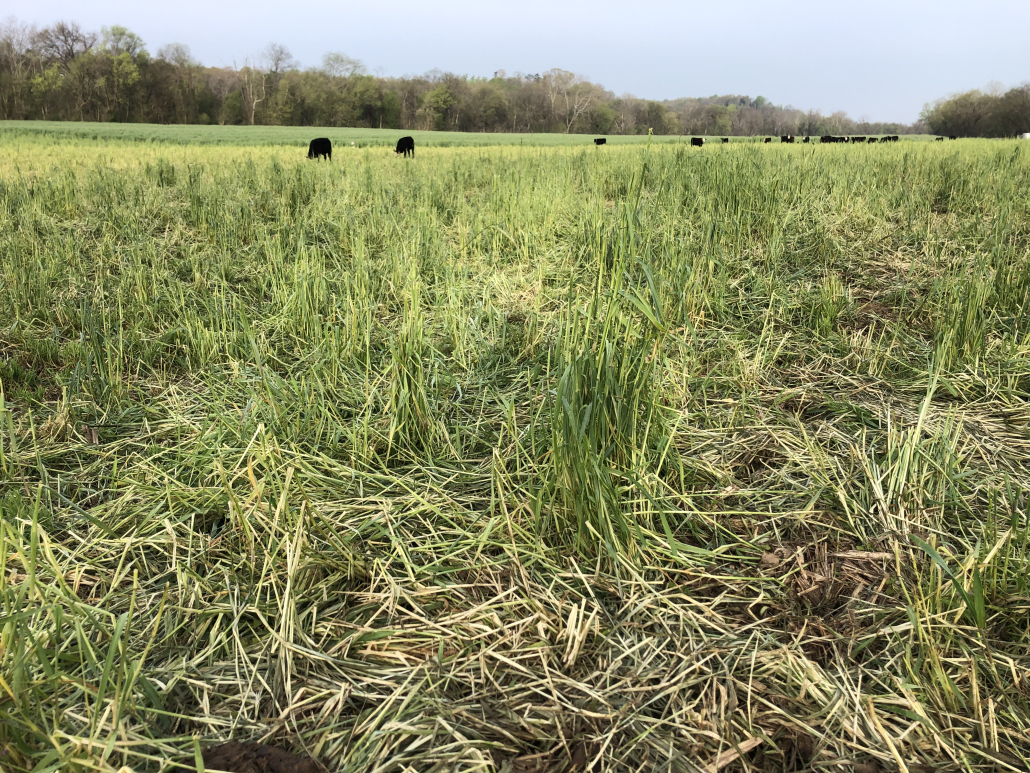
High biomass and post grazing residue can help soils resist compaction. Photo: Jacob Gilley
Soil compaction under grazing is a function of stocking rate, how long animals graze a paddock, and the water content of the soil. Stocking rate and grazing duration on a paddock are under the control of the producer, and soil moisture content can be increased over time as the soil’s water holding capacity improves through the addition of organic matter. For example, a producer can stock moderately, maintain a high post-grazing residue, keep grazing periods short, and defer grazing on fields that are saturated. In instances where compaction occurs, the natural freeze-thaw that occurs in late winter (in northern regions) as well as the addition of organic matter from manure can often alleviate any effects on cash crop yield (Blanco-Canqui et al., 2023).
A Word on Soil Compaction
Some studies have shown that soil compaction on grazed cropland is usually minimal, and often under the threshold where subsequent cash crops are affected. “Particular cover crop species such as cereal rye and radishes, if allowed enough time to grow, often root more deeply than summer cash crops such as corn and soybeans” (Filbert et al., 2017). Choosing the right cover crop species and maintaining high residue after grazing may therefore help minimize or correct soil compaction, should it occur.
Managing Nitrate and Prussic Acid Toxicity in Annual Cover Crops
Some annual cover crop species may pose threats of toxicity to livestock if not managed correctly. These crops aren’t problematic in themselves but may exhibit toxicity when subjected to stresses such as drought or frost. Nitrates may accumulate in the lower leaves of oats, sorghum-sudangrass, and brassicas. Prussic acid accumulates in the higher leaves of sorghum-sudangrass after a frost or drought, particularly in young plants.
Nitrates can be measured by forage testing or managed by delaying grazing and using a mixture of forage species in the pasture. Prussic acid problems can be reduced by deferring grazing a week after the stress event, or by grazing more mature forages. Graze sorghum-sudangrass and sorghum when it is taller than 18 inches. If frost impacts new growth, defer grazing until these plants reach at least 18 inches in height. These grasses may be cut for hay even if they test positive for prussic acid, as its concentration decreases during curing. Nitrates, however, do not decrease with curing. It is not advisable to feed hay that you suspect to have a high nitrate content. If, however, the hay is ensiled and the presence of nitrates is suspected, have a sample tested before feeding it to livestock. The nitrate content can decrease in the forage during the ensiling process and has been shown to be reduced by 10 to 65% (Hartschuh, 2023).
Some techniques to manage toxicity include:
- When in doubt, test
- Do not turn hungry cattle onto a suspect pasture; provide adequate hay prior to grazing
- Do not graze immediately after drought, hard frost, or freeze
- Plant diverse cover crop mixes to minimize potential for toxic levels of prussic acid
- Allow forage to fully recover from a stress event before grazing
Source: Williams et al., No Date.
Know Your Costs
Finally, there are potential increases in labor and higher seed costs. Fencing costs may increase as well, but some producers have solved this problem with virtual livestock fence options to help with timely rotations of livestock on cover crops. Virtual fencing may even solve some labor costs in addition to fencing material costs. Cover crop biomass can increase in the spring and interfere with the efficacy of electric polywire fencing; producers may find themselves spending money and time mowing lanes in the cover crops to facilitate the polywire. Using virtual fence in this situation eliminates the problem (Gilley, 2026). A good source of information on virtual fencing is available from Rangelands Gateway.
It is important to consider all these factors when adding up your expenses to ensure cover crop grazing revenue and cash crop revenue exceed these costs (Blanco-Canqui et al., 2023). For those farmers who do not have livestock, one option is to lease the acreage to a neighbor and let them graze it. The farmer will benefit from increased soil health and the grazier will benefit from extra forage. For a deeper dive, see the ATTRA publication Contract Grazing for Livestock.
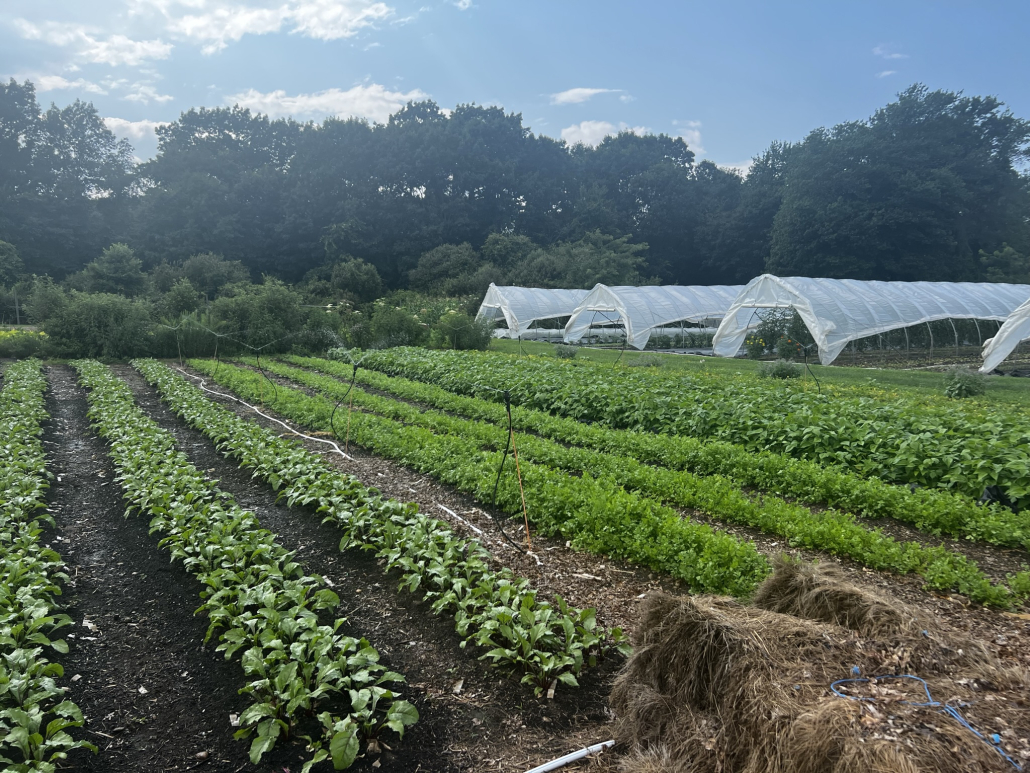
Cover crops and livestock are an option for reducing fertilizer and increasing soil tilth on vegetable farms. Photo: Lee Rinehart
Grazing Cover Crops, Foodborne Pathogens, and Vegetable Harvest
For many vegetable farmers, cover crops are an indispensable tool for cycling nutrients and controlling weeds. Some organic vegetable growers have significantly reduced or even eliminated the application of purchased fertilizers by using cover crops as green manures. For a deeper dive on green manures, see the ATTRA publication Overview of Cover Crops and Green Manures.
Cover crops provide benefits to the soil as well as the agronomic benefits already mentioned, but there can be potential for contamination of produce when grazed by livestock. Pathogens such as listeria and E. coli can be carried in animal manure.
Producers who graze livestock on cropland should develop a risk management plan to prevent foodborne illnesses that can result from contaminated produce. It is especially important to be careful when the crops’ edible parts come into contact with the soil; crops like carrots, lettuce, radishes, and herbs are most vulnerable to pathogens that may survive in the soil (Cooper, 2025).
The Food Safety Modernization Act (FSMA) Produce Safety Rule requires farms to apply raw manure in a way that prevents contact with produce during application and minimizes the risk of contamination. At this time, the Food and Drug Administration (FDA) has not established a specific minimum interval between application and harvest. However, the agency suggests following the National Organic Program’s 90- to 120-day standard, which requires Certified Organic producers to wait 120 days between manure application and harvest of crops whose edible portions contact the soil, and 90 days for crops whose edible portions do not contact the soil (FDA, No Date).
In 2024, The Organic Center published a report of research the USDA conducted with several research universities entitled Grazing Cover Crops in Organic Vegetable Crop Systems. The multi-state team determined there was minimal risk of transferring foodborne pathogens from manure into to produce after grazing when following the 90- to 120-day standard (The Organic Center, 2024). Farmers should also consider temperature and soil moisture when timing grazing with crop harvest. The research team found that “more rainfall and lower soil temperatures were associated with a greater risk of generic E. coli” in all the treatments in their study.
The study concluded that farmers can minimize risk by:
- Planning grazing around the weather patterns in your area
- Planning your crop planting and grazing schedule according to the 90- to 120-day standard
- Maintaining compliance with the FDA’s FSMA food safety rules and best practices.
For more information on food safety compliance, check the Produce Safety Alliance website.
ATTRA Cover Crop Grazing Producer Stories
No-Till Case Study, Miller Farm: Restoring Grazing Land with Cover Crops
Converting marginal cropland back to grazing land can be accomplished by planting several years of a diverse cover crop mixture containing radish, turnip, and sunflower. For Ken Miller of Mandan, North Dakota, a cover crop cocktail helps break up the old plow layer, increase nutrient cycling, and improve productivity.
No-Till Case Study, Richter Farm: Cover Crop Cocktails in a Forage-Based System
A forage-based cropping system routinely removes most plant biomass from the land by baling hay or chopping silage. This results in inadequate plant residue for healthy soil biology function and soil protection. One solution, used by Marlyn and Patrick Richter in North Dakota, is to grow a multispecies cover crop cocktail after an early forage harvest to add needed residue, organic matter, and available soil nutrients for the subsequent cash crop.
Conclusion
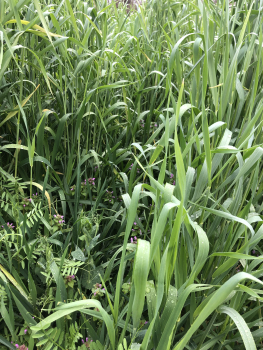
A cereal rye and hairy vetch cover crop is a highly nutritious forage for livestock. Photo: Jacob Gilley
Cover crops provide many benefits to the soil for long-term improvement in the land’s productivity, but they can seem expensive in the short term. Thoughtful grazing of the cover crop changes the economic picture, resulting in profits from livestock gains as well as the boost to soil health. Realizing the full benefit of grazing cover crops usually takes several years of consistent practice. It takes time and living microorganisms for the soil to digest organic matter and release the nutrients in crop-available forms. Especially for those new to cover cropping, it can be a steep learning curve to get the timing right for planting, grazing, and cover crop termination prior to planting the next cash crop. Learning how to select the cover crops that fill the niche needed in your system, then grazing those forages at the right time with the optimum number of animals, will require some trial and error as well as patience, but mastering these practices will lead to a successful, profitable, soil-building operation. More detailed information on grazing cover crops can be found in the Further Resources section below.
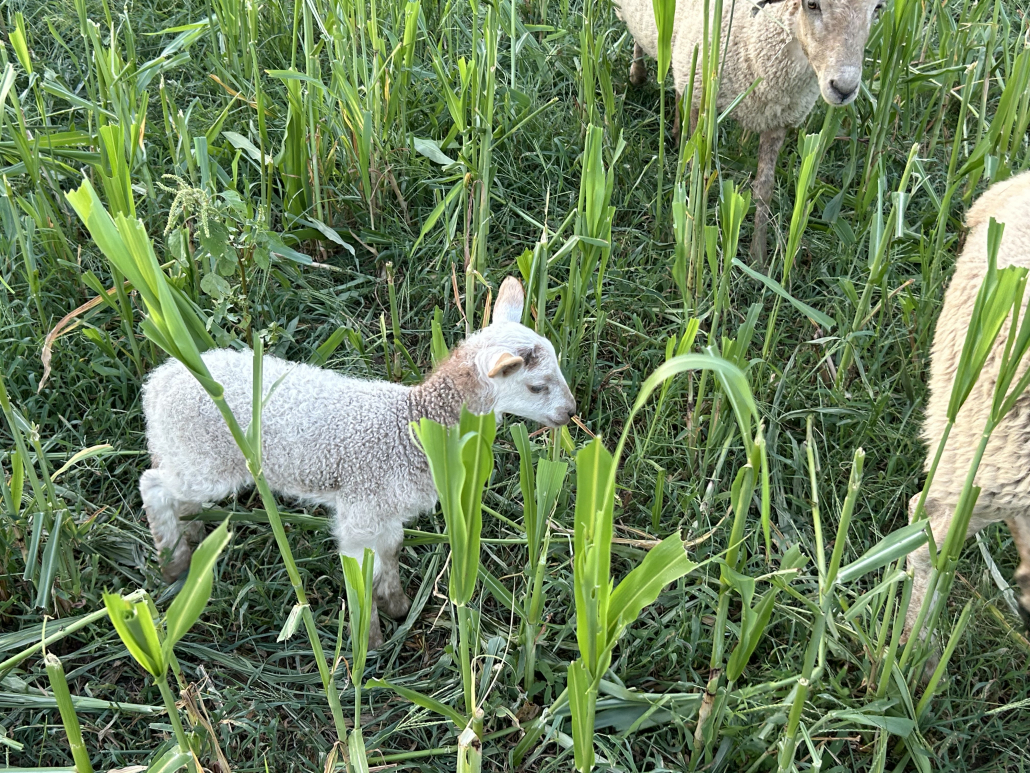
Photo: NCAT
References
Barrett, Richard and Nicholas McGhee. 2019. Considerations for Building Cover Crop Mixtures [PDF]. USDA-Natural Resources Conservation Service Americus, Georgia.
Blanco-Canqui, Humberto, Karla Wilke, Johnathon Holman, Cody F. Creech, Augustine K. Obour, and Lindsey Anderson. 2023. Grazing cover crops: How does it influence soils and crops? Agronomy Journal Volume 115, Issue 6.
Bowman, Maria, Maroua Afi, Aubree Beenken, Amy Boline, Mary Drewnoski, Fernanda Souza Krupek, Jay Parsons, Daren Redfearn, Steven Wallander, and Christine Whitt. 2024. Cover Crops on Livestock Operations: Potential for Expansion in the United States. USDA Economic Research Service.
Bowman, Maria and Maya Morales. 2024. 2022 Census of Agriculture: Cover crop use continues to be most common in eastern United States. USDA Economic Research Service.
Clark, Andy (ed). 2007. Managing Cover Crops Profitably. SARE Outreach.
Duiker, Sjoerd Willem. 2023. Grazing Cover Crops. Penn State Extension.
FDA. No date. Raw Manure under the FSMA Final Rule on Produce Safety. USDA.
Filbert, Meghan, Wesley Degner, Bill Frederick, and Mark Schleisman. 2017. Economic Impact of Grazing Cover Crops in Cow-Calf Operations. Practical Farmers of Iowa.
Gilley, Jacob. 2026. Virginia cattle rancher. Personal communication.
Hartschuh, Jason. 2023. Keep Forage Nitrate Toxicity in Mind This Year. OSU Extension.
LaRose, Joe, Rob Myers, Ashley Conway, and Harley Naumann. 2021. Grazing Cover Crops. University of Missouri Extension.
The Organic Center. 2024. Grazing Cover Crops in Organic Vegetable Crop Systems. organic-center.org/
news-updates-0
Williams, Allen, Meghan Filbert, Kent Solberg, Pete Huff, Elisabeth Spratt, and Kelsey Vergin. No date. Grazing Cover Crops: A How to Guide [PDF]. Pasture Project and Winrock International.
Further Resources
Accelerating Cover Crop Grazing. Wallace Center.
Cattle, Cover Crops, Hope. By Allen Williams. Pasture Project.
Cover Crop Economics [PDF]. SARE Technical Bulletin, 2019.
Grazing Cover Crops: A How to Guide [PDF]. By Allen Williams, Meghan Filbert, Kent Solberg, Pete Huff, Elisabeth Spratt, and Kelsey Vergin. Pasture Project and Winrock International.
Grazing Cover Crops Farmer Toolkit. Practical Farmers of Iowa.
Integrating Grazing into Cropping Systems: Cover Crop Species and Crop Rotations. By David Hartman. Penn State Extension, 2023.
Managing Cattle Health Issues When Grazing Cover Crops. By Chris Clark. Iowa State Extension, 2018.
Increasing Cover Crop Profitability with Livestock
By Lee Rinehard, NCAT Agriculture Specialist
April 2026 ©NCAT
IP676
 This publication is based upon work that is supported by the National Institute of Food and Agriculture, U.S. Department of Agriculture, under award number 20227042038269 to Sustainable Agriculture Research and Education (SARE). USDA is an equal opportunity employer and service provider. Any opinions, findings, conclusions, or recommendations expressed in this publication are those of the author(s) and do not necessarily reflect the view of the U.S. Department of Agriculture