Mushroom Cultivation
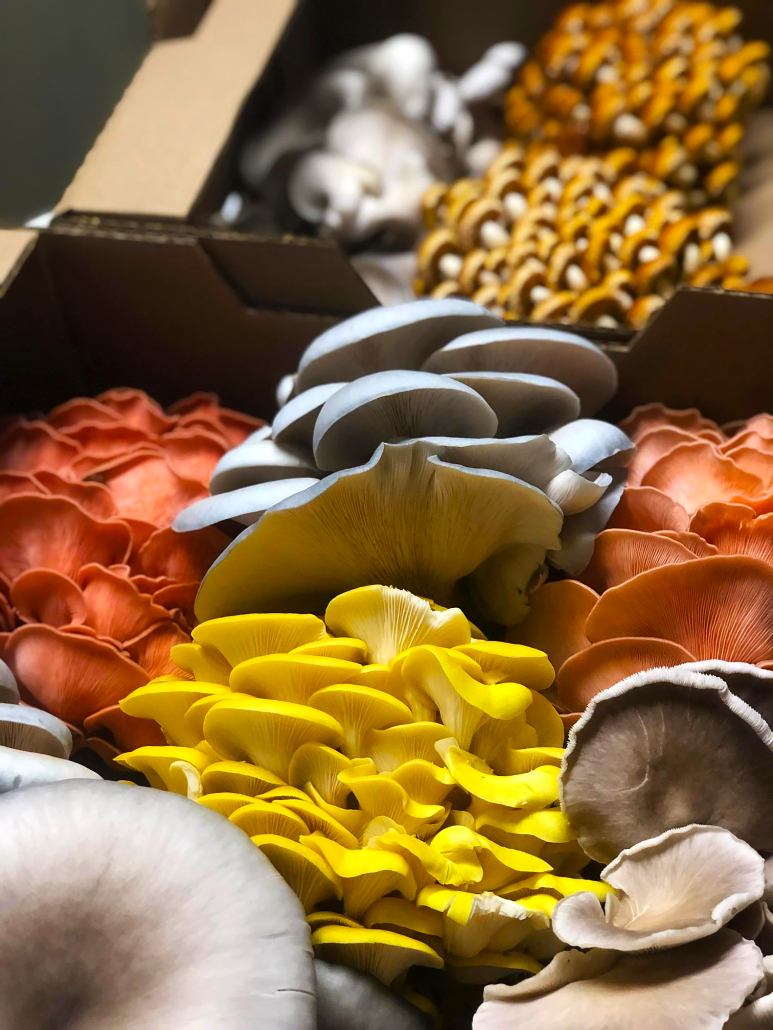
Gorgeous medley of pink, yellow, and blue oyster mushrooms from Artemis Gourmet Mushrooms.
Photo: Chris Richmond
By Gabriella Soto-Velez, NCAT Agriculture Specialist
Abstract
Mushroom cultivation can fit well into small farms and homesteads. This publication is an introduction to producing common species, explaining beginner-friendly production systems from spore to storage, and marketing considerations including cost analysis and pricing. We also show how cultivating mushrooms can build soil fertility, looking at current research pertaining to spent substrate and soil health.
Contents
Introduction
Understanding Fungi: What Makes Mushrooms Different
Getting Started: Choosing a System That Works for You
What to Grow: Beginner-Friendly Mushroom Species
The Cultivation Process: From Inoculation to Harvest
Postharvest Handling and Value-Added Opportunities
Food Safety and Compliance
Marketing Mushrooms
Integrating Mushrooms into Sustainable Farm Systems
Conclusion
References
Further Resources
Appendix: Mycoterra Mushroom Farm Case Study
Introduction
Mushroom cultivation has experienced a quiet revolution over the past two decades, sparked by increased popularity and demand.
Once viewed as a niche or specialty enterprise, it has since become an increasingly viable option for small-scale farmers, homesteaders, community gardeners, and regenerative agriculture practitioners alike. From urban basements to forest farms, mushrooms are now being grown in a wide variety of systems that reflect creativity, resourcefulness, and ecological awareness.
This guide is intended for beginning, low-capital growers who are interested in ecological or low-tech approaches to mushroom production. Mushrooms can be an opportunity for a supplemental income stream and a food security strategy, either as a stand-alone operation or as part of an integrated farm or garden system.
Mushrooms are not only a flavorful and nutritious addition to the plate, but they also offer powerful benefits to the farm ecosystem. They can transform agricultural and food waste into a valuable product that contributes to soil health, water filtration, and pathogen reduction (Sen et al., 2023). Their relatively short production cycles and high value per pound make them well-suited to small spaces and direct-to-consumer sales.
Beyond their culinary appeal, many mushroom species are valued for their health-supporting properties. Reishi (Ganoderma lucidum), lion’s mane (Hericium erinaceus), cordyceps (Cordyceps militaris), and turkey tail (Trametes versicolor) are just a few examples of fungi widely used in both traditional medicine and modern wellness products. These medicinal mushrooms are linked to immune support, cognitive function, anti-inflammatory effects, and stress resilience (Shabbir et al., 2025). This growing interest in functional fungi has opened new opportunities for growers to develop value-added products such as tinctures, powders, teas, and extracts that offer higher profit margins and year-round market potential.
However, mushroom production is not without challenges. It requires a different mindset and skill set than vegetable or fruit production. Understanding the life cycle of fungi, maintaining cleanliness, controlling environmental conditions, and responding to pest or contamination issues are all part of the learning curve.
Whether you are an experienced farmer exploring a new enterprise or a gardener intrigued by fungi’s role in sustainable systems, this publication is designed to give you a grounded, up-to-date starting point and inspiration for where mushrooms might fit into your operation.
Key Mushroom Terms to Know
Casing: A thin, non-nutritive layer placed on some crops to hold surface moisture and trigger pinning. Not needed for most wood lovers. Examples include peat moss, coco coir, and vermiculite.
Field capacity: The right moisture level in a substrate. A firm squeeze gives a few drops of water, not a stream
Flush: A harvest of mushrooms from the same substrate. Many systems give one to three flushes before the block or log is spent.
Fresh air exchange (FAE): Bringing in oxygen and removing carbon dioxide during fruiting. Too little FAE causes long stems and small or misshapen caps.
Fruiting: The production phase. Cooler temperatures, fresh air, high humidity, and gentle light signal the crop to make mushrooms.
Fruiting body: The mushroom you harvest and eat. It forms after the mycelium senses the right cues.
Incubation (colonization): The quiet growth phase after inoculation. Mycelium spreads through the substrate in warm, stable, low-airflow conditions.
Inoculation: Adding live mycelium, called spawn, to a prepared, clean substrate so the fungus can take hold and grow.
Mycelium: The living body of the fungus: A network of fine white threads that colonizes the substrate and feeds the crop.
Pasteurization: Heat or high pH treatment of substrate that reduces fungal competitors but leaves some helpful microbes. Common for straw.
Pinning (primordia): The first visible baby mushrooms. Tiny bumps that grow into full fruiting bodies when conditions stay right.
Relative humidity (RH): Moisture in the air. Fruiting usually needs high RH to keep pins and caps from drying.
Spawn: Carrier material colonized with mycelium, often grain or sawdust, used to start a new batch.
Spawn rate: The amount of spawn added to a substrate. Higher rates speed colonization and lower contamination risk but cost more.
Sterilization: High heat treatment that removes living organisms. Used for nutrient-rich mixes and requires cleaner technique afterward.
Strain: A selected line within a species. Warm, cool, and wide range strains help match fruiting to your room or season.
Substrate: The material the fungus grows on, such as straw, hardwood sawdust, wood chips, or a composted mix.
Understanding Fungi: What Makes Mushrooms Different
Before diving into cultivation techniques, it is important to understand how mushrooms differ from traditional crops. Unlike plants, fungi do not photosynthesize. Instead, they derive their energy by breaking down organic matter, making them critical decomposers in natural ecosystems and powerful recyclers on the farm.
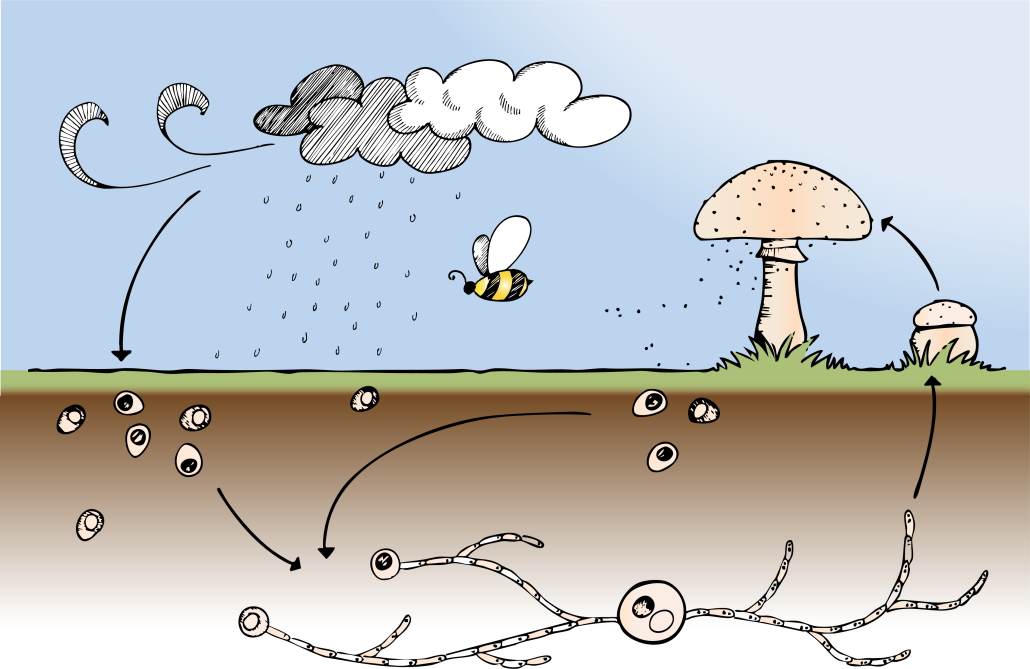
What we commonly call a “mushroom” is the fruiting body of a larger organism. The main structure, called mycelium, is a network of fine, thread-like structures (hyphae) that spread through a growing medium, which can be straw, sawdust, logs, or other organic materials. The mycelium absorbs nutrients and moisture from the substrate, and under the right conditions, produces fruiting bodies (mushrooms) to release spores and reproduce.
Each mushroom species has slightly different environmental needs to trigger each phase of this cycle. That is why success in mushroom cultivation often hinges on your ability to control temperature, humidity, light, and air exchange during the transition from colonization to fruiting.
Understanding the fungal life cycle will help you design your system, select the right species for your conditions, and troubleshoot issues like stalled growth, contamination, or low yields (Kemper, 2020).
Figure 1. The Fungal Life Cycle (simplified).
Source: NCAT
- Spore germination – Spores, released from mature mushrooms, land on a suitable substrate and germinate.
- Mycelial growth – Germinated spores form mycelium, which spreads through the substrate, digesting organic matter.
- Colonization – The mycelium colonizes the substrate.
- Primordia formation – Environmental cues (light, oxygen, temperature shifts) trigger the formation of small mushroom “pins.”
- Fruiting – Pins mature into full-sized mushrooms, which can then be harvested.
- Spore release – The cycle continues.
Getting Started: Choosing a System That Works for You
If you are just stepping into the world of mushroom cultivation, it’s easy to get overwhelmed by the variety of methods, tools, and opinions out there. But here is the good news: You don’t need a fancy setup or a lot of space to grow mushrooms. In fact, some of the most successful small-scale growers started with a few buckets in a closet, a shaded woodpile, or a handful of inoculated logs leaning against a fence.
The key is finding a system that works for your space, your budget, your time, and your goals.
Are you hoping to grow a few flushes for your family’s meals? Are you curious about selling at the local farmers market or to a chef friend? Maybe you’re already growing vegetables and want to integrate mushrooms into your rotation or compost system. Whatever your context, there is a method that can fit.
Be sure to choose a system that works with your location. If you are not using a climate-controlled room, the weather will determine your production cycle. In many northern states, cool nights make outdoor flushes easier for oysters, shiitake, and lion’s mane. In much of the South, long hot spells and warm nights can slow pinning and invite pests, so plan outdoor crops for fall, winter, and early spring, use shade and steady water, and move indoors in summer. Let’s look at a few common approaches that beginners often find approachable and fun.
Growing Outdoors with Logs and Woodchips
If you have access to a shady corner, a fence line, or a patch of woods, inoculating logs or building a mushroom bed might be the perfect place to start. Shiitakes thrive on hardwood logs, and while it takes a bit of patience—usually six to twelve months before the first harvest—once established, those logs can produce for up to five years with very little effort.
Wine cap mushrooms (also known as Stropharia or King Stropharia) thrive in garden beds, woodchip paths, or even around fruit trees. You can tuck them into areas where you are already mulching or composting and watch as the mycelium spreads and begins to fruit when conditions are right. It’s a beautiful way to cycle nutrients and build soil while producing food.
Buckets, Totes, and Bags: Bringing Mushrooms Indoors
Indoor growing offers control and consistency. If you are short on outdoor space or want a faster return, it opens many options. Many commercial growers work exclusively indoors because environmental controls enable steady production. Oyster mushrooms, lion’s mane, and chestnut mushrooms can thrive in five-gallon buckets or plastic totes filled with pasteurized straw or other clean agricultural waste. These setups are popular in cities where growers turn closets, basements, or spare rooms into small mushroom farms.
Grow bags (like the widely used Unicorn bags) are another popular tool. They are made to contain sterilized substrate, sealing in moisture and giving mushrooms a clean place to colonize and fruit. They work well on shelves or hanging in grow tents, and you can fruit directly from the bag once the mycelium is fully established.
These indoor methods allow for a quicker harvest—sometimes within three to five weeks—and are ideal for producing a consistent supply if you are thinking about selling to restaurants or local wholesale buyers.
Taking it a Step Further: Controlled Grow Rooms
Some growers eventually build dedicated fruiting chambers with controlled temperature, humidity, and airflow. These setups allow for reliable, year-round production and multiple flushes from a single batch. They require more investment, both financially and in terms of time and monitoring, but they open the door to small-scale commercial production, Community Supported Agriculture (CSA) subscription add-ons, or farm stand sales.
That said, this doesn’t have to be where you start. Many growers build up to this after a few successful smaller-scale harvests.
Start with what you have. Whether it is a shady garden bed, a couple of food-safe buckets, or a stack of cut logs from a fallen tree, there is a way to begin mushroom cultivation right where you are. As you gain experience, you will learn which systems you enjoy, which ones fit your space and climate, and which mushrooms match your goals. Do not get discouraged if your first try does not produce lush flushes. Dialing in moisture, temperature, airflow, and cleanliness can be challenging at first. Keep experimenting, talk with local growers or extension staff, and use trusted guides if you are serious about building a mushroom enterprise.
And remember, mushrooms don’t require perfection; they just need the right conditions, a bit of care, and a healthy dose of curiosity.
Sourcing Hardwood Sawdust and Pellets
Use only hardwood sawdust or pellets. Do not scoop mixed sawdust from a sawmill unless you know they only cut untreated hardwood. Bagged hardwood pellets are a reliable option; they arrive clean, handle easily, rehydrate quickly, and you can buy them by the pallet. Avoid “flavor” pellets or blends with oils or additives. Choose products labeled 100% hardwood with no additives.
If you plan to certify your mushroom operation as organic, keep documentation of your inputs. Get a supplier letter on company letterhead stating that the wood feedstock is 100% hardwood and has not been treated with any prohibited substances after harvest, and that pelletizing uses no prohibited binders or additives. List the pellets in your Organic System Plan and keep labels or spec sheets on file. These steps line up with the National Organic Program rules for mushroom substrate inputs and materials, at 7CFR § 205.210 (USDA AMS, 2025).
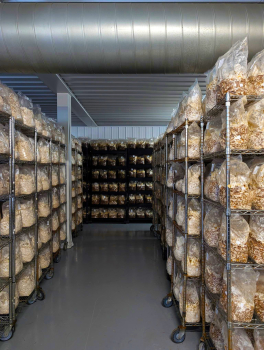
Expansive climate control incubation room at Mycoterra Farm. Photo: Gabriella Soto-Velez
What to Grow: Beginner-Friendly Mushroom Species
Choosing the right mushroom species is one of the most important decisions when you start. Each species has preferred growing conditions, substrate, fruiting rhythm, and market potential. Success often comes from selecting a beginner-friendly species and pairing it with the right substrate. Many growers streamline production by using one base mix across species (for example, hardwood pellets hydrated with water) plus a supplement such as soybean hulls.
Most cultivated mushrooms are saprotrophic fungi, meaning they grow by digesting dead organic matter. However, each species has its preferred substrate. For example, oyster mushrooms thrive on lignocellulosic agricultural waste like straw and sawdust, while lion’s mane performs best on hardwood-based materials.
In many cases, you can improve flush size and consistency by supplementing the base substrate with nutrient-rich additives such as wheat bran, oat bran, soybean meal, coffee grounds, or well-aged organic composts. These supplements increase nitrogen and nutrient availability, helping the mycelium colonize more efficiently and often resulting in higher yields. However, they may also increase the risk of contamination if the substrate is not properly pasteurized or sterilized.
The following mushroom species are reliable, widely cultivated, and well-suited to small-scale systems, making them excellent options for beginner growers.
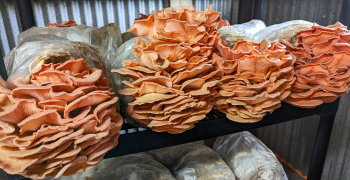
A gorgeous flush of pink oyster mushrooms from Growtopia Farms. Photo: growtopiafarmstx.com
Oyster Mushrooms (Pleurotus spp.)
Oyster mushrooms are widely considered the most accessible entry point into mushroom cultivation. They are fast-growing, forgiving, and highly productive. Oysters thrive on a broad range of lignocellulosic substrates, particularly agricultural and forestry by-products such as hardwood sawdust, rice straw, rice bran, wheat straw, and wheat bran. Their ability to grow on common farm waste makes them an ideal option for sustainable, low-cost systems (Jarial et al., 2024 and Nongthombam et al., 2021).
Oyster mushrooms also tolerate pasteurization rather than full sterilization, which simplifies the process for beginner growers and reduces the need for specialized equipment.
Several oyster varieties are available in different colors and temperature tolerances, including blue for cool weather, pink for warm climates, and golden for intermediate conditions. Their relatively short shelf life makes them difficult to distribute over long distances, giving local growers a competitive advantage in freshness and quality when selling directly to consumers.
It is important to note that oyster mushrooms can release high volumes of spores during fruiting, which may cause respiratory irritation in enclosed or poorly ventilated indoor environments. Proper ventilation or use of a respirator is recommended for indoor growers producing at scale.
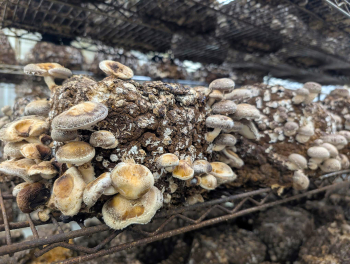
Shiitake mushroom block thriving in the fruiting chamber at Mycoterra Farm. Photo: Gabriella Soto-Velez
Shiitake Mushrooms (Lentinula edodes)
Shiitake mushrooms are prized for their rich, savory flavor and meaty texture. They are traditionally grown on hardwood logs, especially oak, which allows for a low input, seasonal production system that can yield for several years once established. Most growers inoculate logs in early spring, stack them in shady, humid spots, and let them fruit naturally or soak them to initiate fruiting. Additionally, the temperature dropping gently triggers them to fruit. The same species also performs on supplemented sawdust blocks indoors, which allows more precise scheduling.
Choosing the right shiitake strain is important because of how different strains respond to temperature. Warm weather strains fruit best in late spring and summer, often when daytime highs sit around 70 to 80°F. Cool weather strains prefer spring and fall, roughly 50 to 65°F and they often make thicker, darker caps with good shelf life. Wide range strains bridge the seasons and respond well to force fruiting, which can simplify planning for markets (Lyon et al., 2022).
Names of strains vary by supplier, so always check the seller’s temperature notes and match the strain to your season. A practical approach is to inoculate with a mix of cool, warm, and wide range strains, as this minimizes risk, extends the outdoor fruiting window, and helps you identify which strain pins most reliably on your site. These temperature preferences apply to logs and to sawdust blocks, so the same logic applies for indoor production.
Start small with two or three strains, keep simple notes on fruiting temperature, cap quality, and the number of days from soaking your substrate to the next flush, then scale up the winners that fit your climate and market.
Growers do cultivate shiitakes on supplemented sawdust blocks, which allow for faster production cycles in controlled environments. However, this method requires sterilization and greater attention to hygiene and fruiting conditions (Shults et al., 2025).
Log-grown shiitakes are often considered superior in texture, flavor, and shelf life compared to those grown on sawdust blocks. This quality difference can translate to higher market prices and a valuable niche for small-scale producers.
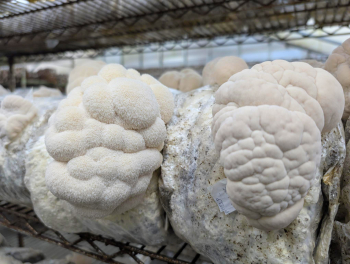
Lion’s mane mushrooms at Mycoterra Farm. Photo: Gabriella Soto-Velez
Lion’s Mane (Hericium erinaceus)
Lion’s mane is a distinctive mushroom with cascading spines and a mild flavor often compared to seafood. In addition to its culinary uses, it has gained significant attention in recent years for its potential cognitive and neurological health benefits. As a result, it is in high demand for both fresh consumption and value-added wellness products, including tinctures, teas, and dried powders.
Lion’s mane is best cultivated indoors on supplemented hardwood sawdust. Many small-scale growers use compressed hardwood pellets as a base substrate. These pellets are easy to hydrate, combine well with bran supplements, and support consistent yields when grown in bags or buckets under controlled conditions.
This species prefers steady humidity and good air exchange during fruiting. When environmental needs are met, lion’s mane produces dense, snowball-like clusters that are both visually striking and highly marketable to chefs and health-conscious consumers (Gonkhom et al., 2024).
Wine Cap (Stropharia rugosoannulata)
Wine cap mushrooms are an excellent option for outdoor cultivation. They thrive in woodchip beds, garden paths, and shaded areas, integrating beautifully into permaculture systems. Beyond their culinary value, meaty and mild in flavor, wine caps also improve soil health. Recent research suggests that growing wine caps in rotation with other crops can increase soil organic matter, stimulate beneficial microbial activity, and even contribute to long-term carbon sequestration. They are a low-maintenance option with both ecological and economic benefits (Dou et al., 2025).
Turkey Tail (Trametes versicolor)
Turkey tail is a colorful bracket fungus used primarily for its health-supporting properties. It grows on hardwood logs or sterilized sawdust and is most often dried for use in teas, capsules, or tinctures. Rich in polysaccharides, turkey tail may help support immune health, though more human clinical trials are needed. Turkey tail also produces enzymes with promising applications in biotechnology, such as waste remediation and sustainable manufacturing. Its medicinal and environmental value make it a unique and versatile species for the right grower (Camilleri et al., 2024).
There are many other species worth exploring as you gain experience, including reishi, enoki, maitake, pioppino, and
various other medicinal or functional fungi. However, the species discussed above offer an ideal combination of ease, adaptability, and market potential for beginning mushroom growers.
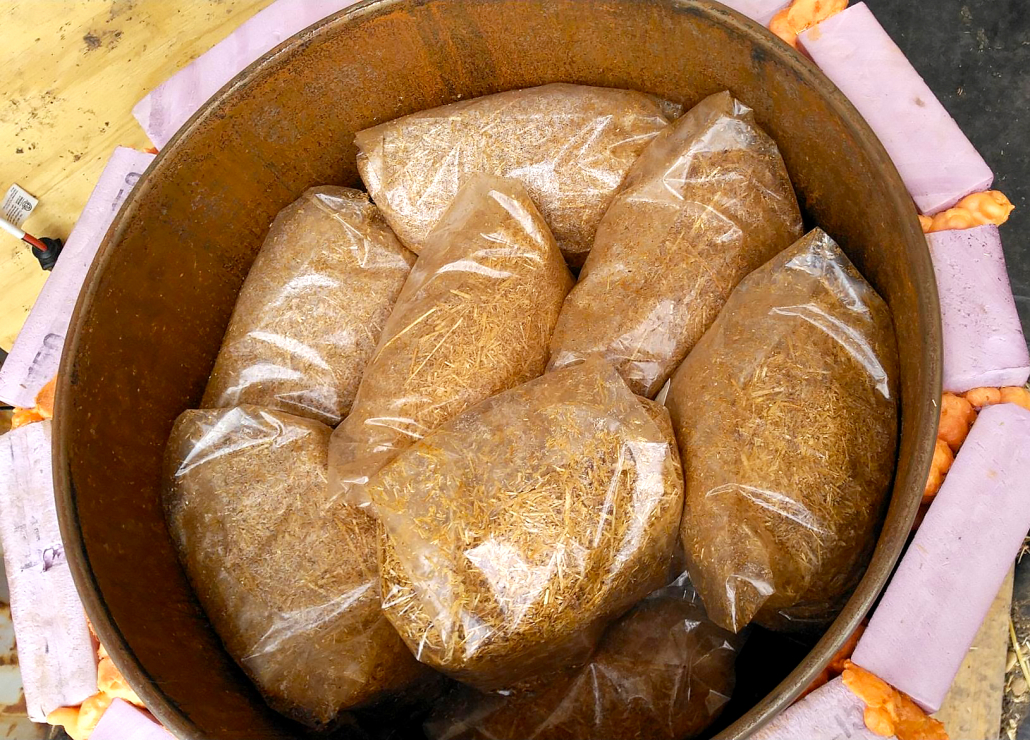
Mushroom sterilization. Photo: Growtopia Farms, Lockhart, Texas
The Cultivation Process: From Inoculation to Harvest
Growing mushrooms is a simple sequence. Prepare a clean, moist substrate, add spawn, let the mycelium colonize, shift the environment to trigger fruiting, harvest, and then reset. The details change by species and system, yet the core process stays the same. What matters most is pairing each step with the right conditions for light, humidity, temperature, and fresh air.
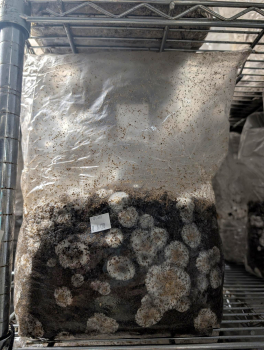
Substrate Preparation
Choose a substrate that fits the mushroom species and your workflow. Straw works well for oysters and other fast saprotrophs. Hardwood sawdust or pellets, often supplemented with wheat bran or soy hulls, support shiitake, lion’s mane, and chestnut. If you use coffee grounds, keep them very fresh and lean toward full sterilization, as coffee invites competitors such as harmful fungi or bacteria.
Moisten the substrate until it reaches field capacity, i.e., when a hard squeeze yields a few drops, not a stream. Clean the substrate with heat pasteurization for low nutrient materials like straw, or with full sterilization for supplemented sawdust and grains. Pasteurized substrates are more forgiving, whereas sterilized substrates demand cleaner technique later.
Inoculation
After the substrate has cooled (post-pasteurization) and reached the right moisture, it is time to inoculate with spawn. Inoculation means introducing live mushroom mycelium, called spawn, into a prepared substrate so the fungus can take hold and grow. Spawn is composed of a carrier material—usually grain, sawdust, or wooden plugs—that is already colonized by mycelium. The amount of spawn to use depends on the substrate, the method, the cleanliness of your workspace, and how quickly you want colonization. More spawn gives faster colonization and lowers contamination risk, but it raises input cost.
At commercial scale, handle inoculant in a clean environment. This is the step that is most likely to introduce contamination, so do the work under a laminar flow hood or a high efficiency particulate air (HEPA) filtered clean bench in a dedicated room. Wipe benches and tools with alcohol, let sterilized substrates cool fully to room temperature before opening, and stage all supplies so you can work quickly with minimal air exposure. Wear clean gloves, a mask, and a hair cover, sanitize gloved hands often, and avoid talking over open bags. Open the bag of inoculant, add spawn, mix as needed, press out excess air, then heat seal filter patch bags (like Unicorn bags) for the best seal and the lowest contamination risk. Label each unit with the date, batch, and species, and move it to incubation right away. If you are working with pasteurized straw rather than sterilized sawdust, cleanliness still matters. A simple still air box or a very calm, clean room helps keep results consistent.
Table 1: General Spawn Rate Guidelines.
| SUBSTRATE TYPE | CULTIVATION METHOD | RECOMMENDED SPAWN RATE (BY WEIGHT) |
|---|---|---|
| Sterilized sawdust or supplemented sawdust blocks | Indoor bags or bottles | 2-5% (minimum of 2% for sterile conditions) |
| Pasteurized straw or unsupplemented substrates | Buckets, bags, totes | 5-10% |
| Logs (hardwood) | Outdoor log cultivation | 1-2 spawn plugs per inch of log or 5-10% coverage |
| Outdoor beds (woodchips, straw mulch) | Wine caps, Stropharia, etc | 5-20%, depending on conditions and intended spread |
Incubation and Colonization
During colonization, the mycelium prefers steady warmth, high humidity, and limited air exchange. Keep bags, buckets, or bottles in low light, aim for the species’ colonization temperature band, and avoid drafts. The goal is to have even, white growth of mycelium through the substrate, which usually takes one to three weeks for bags and much longer for logs. Check indoor substrate units regularly for off-colors or odors and remove problem units promptly. Logs usually do not need such frequent inspection. The following target ranges help create conditions that support healthy mycelial growth during colonization:
- Temperature: Optimal range depends on species (e.g., 70 to 75°F for oysters, 65 to 70°F for shiitakes)
- Dark or low light
- High humidity (around 80 to 90%)
- Limited air exchange, especially early on, to retain CO2
Fruiting Initiation and Managing Conditions for Fruiting
Once the substrate is fully colonized, it is time to change the environment to signal fruiting. Lower the temperature slightly, introduce gentle light, increase fresh air, and keep humidity high. These cues mimic seasonal changes and help the mycelium form primordia, or pins, the earliest stage of mushroom development.
Light
Mushrooms do not photosynthesize, but they do use light as a signal. During fruiting, provide indirect natural light or a simple 12-hour light cycle using fluorescent or LED lights. Around 500 to 1,000 lux is sufficient for most species. Avoid hot, direct sun that dries the surface.
Oyster, lion’s mane, and enoki all benefit from consistent light exposure during the fruiting stage to ensure healthy morphology and color.
Humidity
Pins and young fruit bodies need high humidity to expand. Aim for roughly 85 to 95% relative humidity during fruiting. If caps crack, pins stall, or lion’s mane blobs instead of forming spines, humidity is likely too low. If you see yellow or slimy spots and persistent condensation, humidity is too high or airflow is too low. Use light, frequent misting for small setups or humidifiers and foggers for rooms, always paired with airflow so surfaces do not stay wet.
Temperature
Fruiting temperatures differ by species, so pick strains that match your season rather than fighting against ambient temperatures. Set the growing space for even, steady heat, use a thermometer to monitor the space, insulate small rooms or tents, keep air intakes shaded, and avoid direct sun on the enclosure. Electricity is often one of the largest expenses in mushroom production, so design for efficiency, condition the smallest volume you can, seal drafts, place heat producing equipment outside the fruiting space when possible, and let temperature, humidity, and airflow work together instead of against each other.
Troubleshooting Humidity
Humidity plays a central role in mushroom production, and when it is out of balance, your mushrooms will let you know. If the air is too dry, the caps may begin to crack or split, and pinheads can stall or wither before they have a chance to grow. Lion’s mane is especially sensitive to low humidity, and instead of developing into full, cascading clusters, it may form small, dense blobs that never mature properly.
Too much humidity brings its own set of problems. Mushrooms may develop yellow patches or slimy spots, a condition often linked to bacterial blotch. Excessive humidity can also cause the surfaces in your grow area to remain overly wet, creating ideal conditions for mold to develop.
Finding the right balance starts with good observation and small adjustments. If the air feels dry, adding or adjusting a humidifier or fogger, or even adding a simple tray of damp perlite, can help. Misting lightly several times a day is often more effective than soaking the room or blocks all at once, which can create uneven moisture. If you notice condensation dripping from above, it is a sign that the humidity is too high or that airflow is too low, and you should address both immediately. Improving circulation will help reduce standing moisture while keeping the air moist enough for fruiting. A simple hygrometer can be an invaluable tool for monitoring conditions, and aiming for a range of 85 to 95% relative humidity during fruiting will keep most species healthy and productive.
Table 2: Ideal Mushroom Species Temperatures
| SPECIES | IDEAL FRUITING TEMP |
|---|---|
| Oyster (blue) | 55–65°F (13–18°C) |
| Oyster (pink) | 70–85°F (21–29°C) |
| Shiitake | 60–70°F (15–21°C) |
| Lion’s Mane | 60–68°F (16–20°C) |
| Chestnut | 60–70°F (15–21°C) |
| Wine Cap (outdoor) | 55–75°F (13–24°C) |
| Enoki | 45–60°F (7–15°C) |
| Reishi | 75–85°F (24–29°C) |
Fresh Air
During fruiting, mushrooms need oxygen and the removal of carbon dioxide. If exchange is low, oysters grow long thin stems with small caps, lion’s mane turns fuzzy and misshapen, musty odors linger, and condensation builds on surfaces. Improve exchange by cracking bags, cutting small slits in fruiting blocks, or opening tent flaps during the day. Use a small oscillating fan for gentle movement, not a direct blast. In enclosed rooms, add simple passive vents and an exhaust fan with a filter so fresh air comes in low and stale air leaves high. Balance airflow with moisture. If fruit bodies dry after you boost airflow, increase misting or humidification.
-
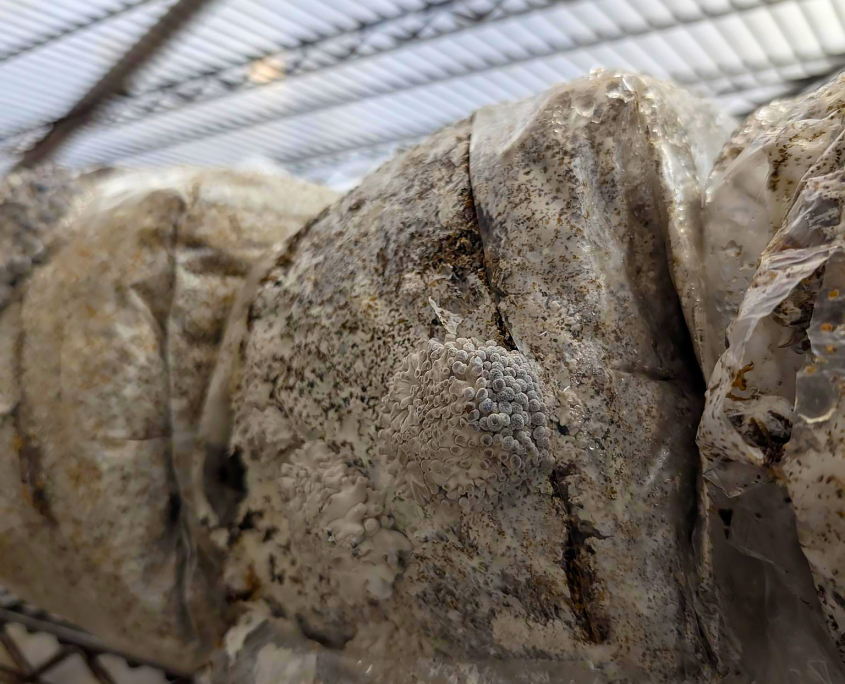
- Blue oyster mushrooms beginning to pin (left) and large slits cut on bags to initiate fruiting in blue oyster (right) at Mycoterra Farms. Photos: Gabriella Soto-Velez
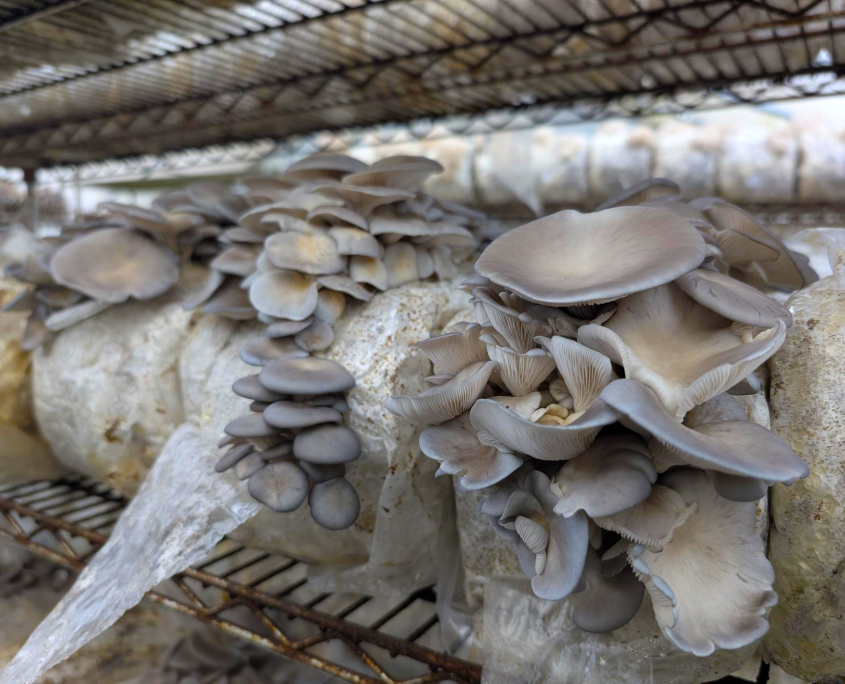
Harvest
Harvest at peak quality. For most species, this is just before caps fully flatten, or when clusters are full sized and still firm. Cut cleanly with a knife or twist gently to avoid damaging the block or loosening bark from the log. Harvest promptly to prevent caps from over-maturing and releasing heavy spore loads. This reduces spore buildup, helps keep surfaces cleaner, and may lower respiratory exposure. Frequent harvesting can support multiple flushes. On a commercial scale, many growers harvest only the first flush because starting a new bag often makes more sense than waiting for later flushes with diminishing returns. If you want a second or third flush, allow a rest period of roughly 7 to 14 days between flushes, depending on the species and conditions, and maintain adequate moisture and humidity to support regrowth.
Cleaning and Reset
Good hygiene in an indoor operation keeps problems small. Set a weekly cleaning routine in the grow space. Wipe benches and tools, empty trash, and avoid standing water. After the final flush, clean the container or bed thoroughly. Compost spent substrate blocks before using them in beds or around crops. Fresh blocks are carbon rich, and soil microbes will prioritize breaking them down, which can tie up nutrients and stress plants (Maher, 2000). Compost until the material is dark and crumbly with a clean smell, then use it as a mulch or blend it into other finished compost. Logs will decay fully over time in outdoor systems.
Research Highlight: Spent Mushroom Substrate Can Help Plants Grow and Fight Disease
A 2024 study found that composted spent mushroom blocks from white button or oyster mushroom production can do more than simply break down. When used in gardens or farms, these materials may:
- Support plant growth by adding organic matter, nutrients, and beneficial microbes to soil
- Help suppress some plant diseases through naturally occurring microbial communities
- Reduce reliance on synthetic fertilizers, pesticides, and peat-based materials
- Improve nutrient cycling through microbial activity and enzymes that help make nutrients more available to plants
The researchers found some differences between substrates. Composted material from white mushroom production showed somewhat greater potential benefits for plant health, while composted oyster substrate showed stronger microbial activity related to decomposition. In practical terms, that may mean oyster-based material is particularly active in helping break down residual organic materials during composting or after application to soil. Composting the material first helps stabilize it, making it more consistent and less likely to cause problems associated with fresh, unfinished substrate, such as excess heating, unstable nutrient release, or poor plant performance. Although more research is needed to clarify the full benefits and limitations, the study suggests that spent mushroom substrate has real potential as a sustainable soil amendment in home gardens and horticultural systems (Khalil et al., 2024).
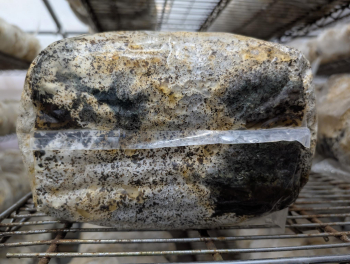
A grow bag contaminated with Trichoderma, which competes with the spawn. Photo: Chris Richmond
Staying Ahead of Contamination
Even with careful management, contamination can sneak into any mushroom-growing setup. Mold, bacterial blotch, and pests are all common issues that can affect yields or ruin entire batches. But with a few simple habits, you can prevent most problems before they start.
Think of your grow space, whether it is a closet, greenhouse, or container farm, as a living system that needs a bit of order. Keep surfaces clean, and get in the habit of sanitizing tools, trays, and your hands before handling spawn or bags. A quick wipe-down with alcohol or soap and water can go a long way.
Standing water is an invitation for trouble, so make sure your space drains well and doesn’t have puddles collecting on floors or shelves. If you are using bags or tubs, check them regularly and remove any uncolonized or off-smelling substrate as soon as you spot it. Contamination spreads quickly.
In more controlled environments, like tents or sealed rooms, consider using filtered air and maintaining good airflow. Fresh, clean air helps prevent spore buildup and discourages unwanted molds. Even something as simple as wearing gloves or spraying your hands with alcohol before working with colonized material can help keep your mycelium healthy and clean.
Creating a successful fruiting environment doesn’t require expensive equipment. It just requires a little awareness and a willingness to observe. Mushrooms thrive when their environment mimics nature. By tuning into these signals and responding with care, you can grow healthy, abundant mushrooms in almost any space.
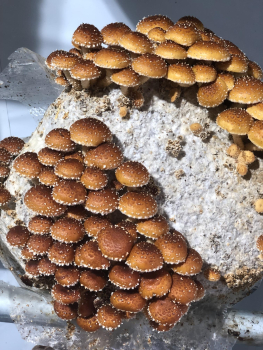
Chestnut mushrooms at Mycoterra Farms. Photo: Gabriella Soto-Velez
Post-Harvest Handling and Value-Added Opportunities
Harvesting mushrooms at the right moment is just the beginning of ensuring a high-quality product. Each variety has a short window when it is at its best, and learning to recognize this stage is one of the most valuable skills a grower can develop. For most species, this is just before the caps have fully opened, while for lion’s mane or chestnut mushrooms it is when the texture is firm and the form is well-developed. Cutting at the right time helps preserve flavor, texture, and shelf life.
Once harvested, mushrooms should be cooled quickly to slow deterioration. Bringing the temperature down to between 34°F and 38°F helps maintain firmness and reduces moisture loss. Storing them in breathable containers such as paper bags or vented clamshells allows excess humidity to escape, which helps prevent the caps from becoming slimy. Sealing fresh mushrooms in plastic is not recommended unless they are sold and consumed within a day, as trapped moisture will cause them to spoil more quickly. Under ideal conditions, most fresh mushrooms will last between five and seven days, although lion’s mane and chestnut can sometimes store for a little longer.
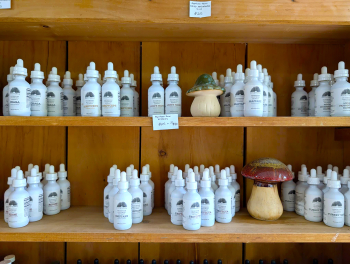
Medicinal tinctures add value to surplus harvests at Mycoterra Farm. Photo: Gabriella Soto-Velez
Value-Added Mushroom Products
There will be times when the harvest outpaces demand, and this is where preservation methods open new possibilities. Drying is one of the simplest and most effective techniques, especially for shiitake, oyster, lion’s mane, reishi, and turkey tail. Dry mushroom in a dehydrator or a low-temperature oven until the mushrooms are completely crisp, at which point they can be stored for many months in airtight containers. Drying not only extends the shelf life but also concentrates the flavor, making the product ideal for soups, sauces, and seasoning blends. Freezing is another option, though it is best to sauté mushrooms first to help maintain texture after thawing.
Medicinal mushrooms such as reishi, lion’s mane, and turkey tail can be processed into tinctures and extracts, which require careful preparation and, in some cases, compliance with food safety or labeling regulations.
For growers who want to diversify, value-added products can significantly increase profit margins and create new market opportunities. Dried mushroom mixes for soup or risotto, powdered mushrooms for cooking or supplements, and shelf-stable sauces or spreads can all make use of mushrooms that may not be visually perfect for fresh sales. Medicinal mushroom tinctures, teas, and capsules appeal to wellness-focused customers, while specialty products like mushroom jerky or pickled mushrooms can attract chefs and food enthusiasts. These products allow growers to sell year-round and to add variety to CSA shares, market stalls, and online shops.
Beyond extending shelf life and boosting income, value-added processing gives you the opportunity to tell your farm’s story. Sharing how you grow sustainably, reduce waste, and create products that are both delicious and functional can help build a loyal customer base. By thinking beyond the fresh mushroom, you create a more resilient and adaptable enterprise that can thrive.
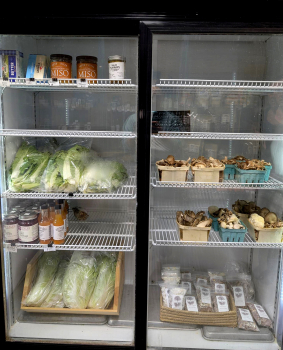
Cooler at Mycoterra Farm. Photo: Gabriella Soto-Velez
Food Safety and Compliance
Good handling protects your customers, your farm, and your brand. Harvest cleanly, cool mushrooms quickly, and keep them cold through delivery. Store mushrooms in breathable packaging so condensation does not collect on caps, and maintain high relative humidity without leaving surfaces wet. These basic postharvest practices help slow quality loss and reduce microbial problems in a highly perishable crop like mushrooms (Dawadi et al., 2022).
Inspection is not automatically part of every mushroom sale. It usually becomes relevant when mushrooms are sold through regulated retail, food-service, or processing channels, or when a farm is covered by the Food Safety Modernization Act (FSMA) Produce Safety Rule. Under Food and Drug Administration (FDA) guidance, mushrooms are generally included in the produce category, and covered farms may be subject to Produce Safety Rule requirements for the growing, harvesting, packing, and holding of produce (FDA, 2024).
If you are selling fresh mushrooms to consumers, restaurants, or stores, check the requirements that apply in your state or local jurisdiction. The FDA Food Code is a model code that many state, local, tribal, and territorial agencies use when developing or updating retail and food-service food-safety rules, so it often shapes what local inspectors look for in areas such as cold holding, sanitation, and safe handling (FDA, 2022).
Traceability is also important. Label each harvest with the harvest date, a simple lot code, and the species, and keep records that link each lot to its substrate and inoculation date. Even when detailed federal traceability requirements do not apply, simple lot records can help you manage quality problems and respond more effectively if a buyer has a question or complaint (FDA, 2025).
Once you move beyond fresh sales, the rules often become more specific. Shelf-stable, canned, pickled, acidified, or other processed mushroom products may fall under additional food-processing requirements. ATTRA has a page dedicated to articles on food safety to ensure you are always in compliance when producing and handling food (ncat.org/subtopic/food-safety). State cottage food laws may allow for the sale of some home-produced foods, but they vary widely and often do not cover all mushroom products, especially those that require refrigeration or specialized processing. Before selling a value-added product, check with your state department of agriculture, health department, or Extension office to confirm which rules apply (FDA, 2025).
Wild-harvested mushrooms bring added responsibility. In food-service and retail settings, wild mushrooms may require approval or other oversight from the regulatory authority, depending on the jurisdiction and how the product is offered for sale (FDA, 2022).
Worker safety matters, too. Oyster mushrooms can release heavy spore loads in enclosed rooms, and repeated exposure may irritate the respiratory system in some growers (Satoh and Yamada, 2022).
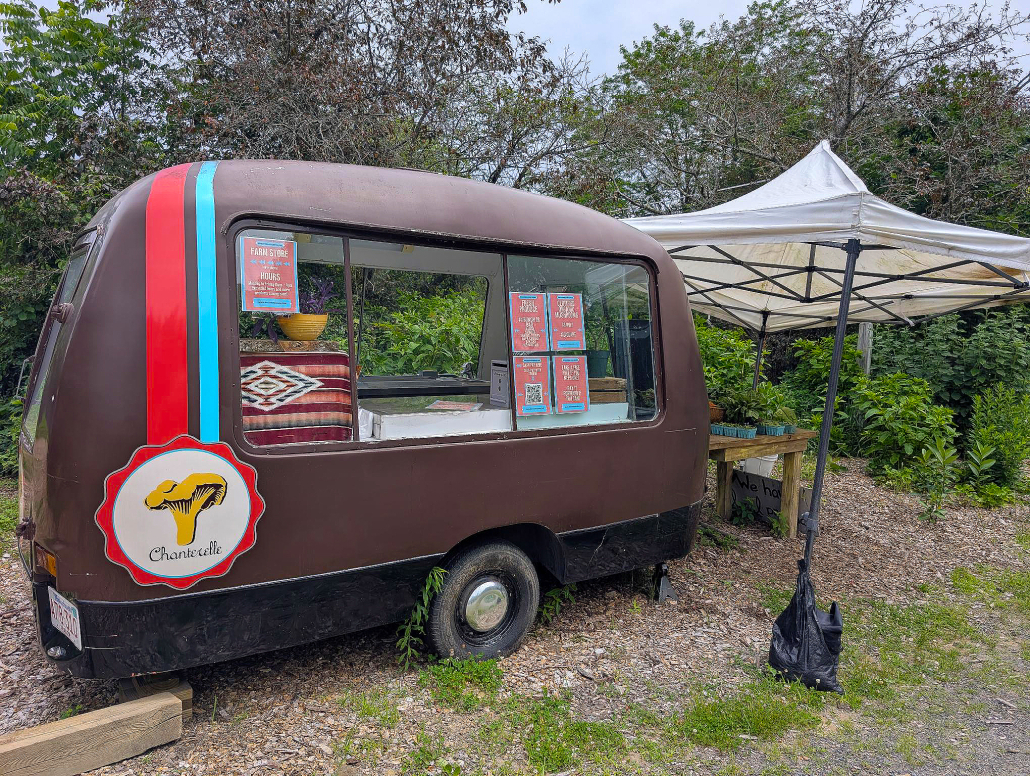
The ‘Spore’ roadside farmstand at Mycoterra Farm. Photo: Gabriella Soto-Velez
Marketing Mushrooms
For many growers, producing mushrooms is the easy part. The bigger challenge is finding the right buyers and making sure your products stand out in a competitive market. Whether you are selling fresh oyster mushrooms at a farmers market, offering shiitake in CSA subscription boxes, or creating specialty items like lion’s mane tinctures, a good marketing strategy starts with understanding your customers and what they value.
The first step is to decide who you want to reach. Chefs at high-end restaurants may want a consistent supply of pristine, unique varieties such as chestnut or pioppino, while a health-conscious audience at a wellness fair might be more interested in reishi powders or turkey tail teas. Farmers market shoppers often respond to freshness, local production, and the chance to talk directly with the person who grew their food. Each audience values different qualities, so tailoring your message and your product selection will help you build loyal customers.
Consistency is key. Restaurants and grocery stores will want to know that you can deliver the same quality and quantity week after week. This may mean planning your production cycles carefully so that you can meet demand year-round or during agreed-upon seasons. Even at a small scale, having a reliable supply helps build trust and repeat business.
Storytelling can be a powerful tool in mushroom marketing. Share your growing practices, whether you are recycling agricultural waste into oyster mushroom substrate, cultivating shiitake on sustainably harvested logs, or integrating wine caps into a permaculture system. Explain the health benefits of the varieties you grow, while being careful to stick to language that is accurate and compliant with regulations. Photos of your farm, behind-the-scenes shots of your fruiting room, or recipes using your mushrooms can help customers connect to your work on a personal level.
Packaging and presentation also influence buying decisions. Mushrooms should be clean, fresh, and attractively arranged, whether they are in a paper bag for market sales or a labeled clamshell for a retail shelf. For value-added products, clear labeling that explains what the product is, how to use it, and why it is special will help it stand out. Branding that reflects your farm’s personality can turn an occasional buyer into a loyal supporter.
Diversifying your sales channels can help you reach more people and spread out your risk. In addition to farmers markets and restaurant sales, consider selling through online platforms, local grocery stores, co-ops, food hubs, or subscription boxes. Workshops or farm tours can also generate income while strengthening your reputation as a local expert.
Finally, remember that marketing is not just about selling a product—it is about building relationships. Follow up with buyers, ask for feedback, and be willing to adjust. Over time, a good product combined with genuine connection will draw in a customer base that supports you season after season.
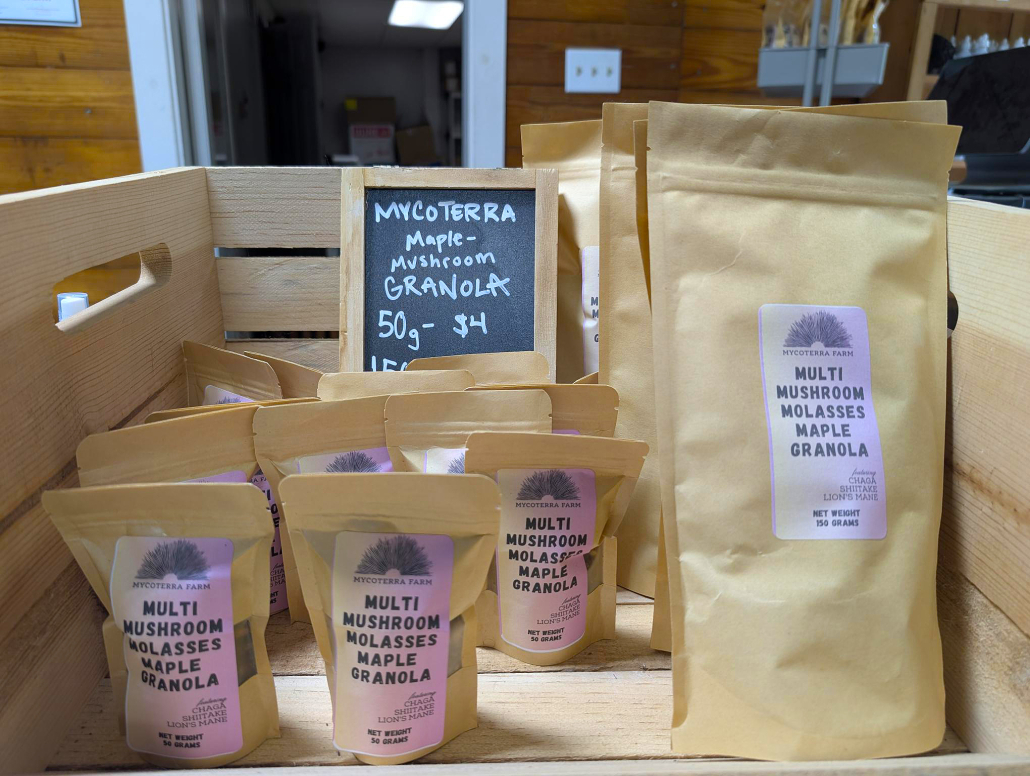
Adding value to your products is a fantastic way to diversify income. Mycoterra is incorporating their mushrooms into this homemade granola infused with adaptogenic mushrooms. Photo: Gabriella Soto-Velez
Costs, Pricing, and Scaling
Mushroom enterprises come in many sizes, from a few buckets in a spare room to a small commercial growing operation in a shipping container or outbuilding. The right scale is the one that fits your time, your market, and your cash flow.
Start with a simple plan for what you will sell each week, then work backward to the equipment and inputs that support that volume. A small indoor setup might target 20 to 40 pounds of fresh mushrooms per week, which is a comfortable amount for a farmers market stall or a couple of restaurant accounts. For an outdoor wine cap bed, you might aim for steady harvests during the warm season, while shiitake logs can add seasonal spikes. The point is to choose a weekly target that you can handle given your space and time constraints, then buy only what you need to hit that number.
For one-time costs, keep it lean. Shelving, a cleanable tent or small room, a humidifier that can hold your space at high relative humidity, a small exhaust fan, a basic hygrometer and thermometer, and a way to sterilize or pasteurize substrates are all that is needed. Many growers begin with a pressure cooker, a folding rack, and a used wire shelf, and only add specialized gear after they prove their weekly sales. Outdoor production costs are lower. Wine caps need woodchips, spawn, and irrigation during establishment. Shiitake logs need clean hardwood, plug or sawdust spawn, a drill, and food grade wax.
Recurring inputs, including substrate materials, supplements, spawn, bags or buckets, alcohol for sanitation, labels, and packaging, are the predictable purchases that determine your cost of goods. Track them per batch so you can tie them to a lot code and a harvest weight. Utilities matter too. Humidifiers, fans, and lights do not use as much power as climate control, so stable room temperatures help. If you need cooling, consider a small, well-insulated fruiting space rather than trying to condition a whole building.
Labor is where many small farms lose the thread, because owner time feels free—until it does not. Put a time value on mixing, inoculation, cleaning, harvest, packing, and delivery. Even a modest hourly rate will push you to design a smoother workflow that earns more per hour with the same equipment.
Pricing should flow from your costs and your market. Add up the cost of inputs for a batch, then add the labor time that went into that batch, then divide by the usable pounds of mushrooms that batch produced. That is your real cost per pound. Your price floor must sit above that number with room for profit. Fresh mushrooms usually command better prices in direct markets than in wholesale channels, which is why many small growers pair a farmers market with a handful of chefs, and only add wholesale when volume and process control are dialed in. If your cost per pound is still high in the early months, do not rush to underprice to move product. Instead, focus on reducing losses, improving efficiency through cleaner handling and better environmental control, and use value-added outlets for surplus.
Scaling is mostly about repeatability. Once you can hit a weekly target with clean product and on-time delivery, you can add a second fruiting space and stagger blocks so harvests are even from week to week. Standard operating procedures keep quality steady. Write down the room targets for humidity, temperature, light, and air exchange. Write down your inoculation and cleaning steps, and post them in the work area so anyone helping you can follow the same routine.
You should take seasonality and risk into consideration when laying out your plans. Outdoor systems will slow in heat or cold as the logs will flush in waves. Indoor rooms will have off weeks if contamination gets ahead of you. Keep a small cash buffer for unanticipated costs like replacement spawn and extra bags, and have a plan for channeling surplus into drying, powders, or preserved products (that meet your local food processing rules and requirements) to avoid waste. A steady relationship with a few buyers who understand your season will be worth more than a long list of contacts that only buy when prices are low.
The best time to grow is when you already have a buyer. The second best time is when you can turn surplus into shelf stable products without losing money. If you make decisions with those two concepts in mind, your costs will stay proportionate to your sales, your prices will pay for your time, and scaling up will feel like the next step rather than a leap.
Integrating Mushrooms into Sustainable Farm Systems
Mushrooms fit naturally into diversified farms because they turn low-value residues into food, and the “waste” from mushroom production can become a steady stream of organic matter for the soil. When you design with mushrooms in mind, you begin to see every bale of straw, pile of wood chips, or stack of prunings as potential substrate, and every spent block or bed as tomorrow’s mulch. The goal is to set up simple loops; you feed clean plant waste to the fungi, the fungi feed you, and the leftovers feed the soil.
On mixed vegetable farms, oyster or lion’s mane blocks grown in bags or buckets can be timed to fruit in early spring or late autumn, when your vegetable production is slow. Then the spent substrate can be crumbled into aisles or added to compost to improve soil structure and water-holding capacity. Field research shows that using spent mushroom substrate as mulch increased soil moisture by around 6 to 17% in orchard soils, and it also smoothed out day-to-day swings in moisture, while increasing soil nutrients and enzyme activity (Ma et al., 2021). Wine caps thrive in places that are often ignored, like woodchip paths, the edges of hoophouses, or the shaded strips under fruit trees. As they grow, they build organic matter and help form a living mulch. In orchards or windbreaks, inoculated log stacks can produce seasonal shiitake harvests with very little daily attention, and the logs can eventually retire to the wood line as wildlife habitat, slowly releasing carbon to the soil.
Spent mushroom blocks can be a valuable on-farm resource. Recent studies show that spent mushroom substrates can increase soil microbial abundance and boost key soil enzymes involved in nutrient cycling, both signs of greater biological activity and a more active soil food web (Pintarič and Langerholc, 2024). Research also suggests that applying spent mushroom substrate can build both readily available and longer-lasting forms of soil organic matter, while supporting microbial groups that help break down crop residues and cycle nutrients over time (Yang et al., 2024). In practical terms, that means it may help improve soil fertility, support residue decomposition, and contribute to longer-term soil building. If you are applying large amounts of spent mushroom substrate, especially fresh or only partially decomposed material, introduce it gradually. Watch for heating and keep records of where it was applied so you can track changes in fertility, moisture, weed pressure, and soil structure over time.
Conclusion
Mushroom production is a versatile endeavor that can fit into almost any operation. You can start with a few straw bags in a garage, stack shiitake logs in the shade, or run a small indoor room. Each path adds resilience and can bring in extra income. Some keys to success are matching species and strains to your location, keeping your workflow clean, harvesting on time, and having diverse marketing channels. Compost spent substrate before using it, letting it feed the soil to close the nutrient loop. Turn surplus into simple, value-added products where rules allow; dried and powdered mushrooms are easy wins. Keep notes, change one thing at a time, and learn by doing. Above all, experiment, share what you learn, and have fun.
References
Camilleri, Emma, Renald Blundell, Bikash Baral, Tomasz M. Karpiński, Edlira Aruci, and Omar M. Atrooz. 2024. A comprehensive review on the health benefits, phytochemicals, and enzymatic constituents for potential therapeutic and industrial applications of turkey tail mushrooms. Discover Applied Sciences 6 (5): 257.
Dawadi, Ebha, Prem Bahadur Magar, Sagar Bhandari, Subash Subedi, Suraj Shrestha, and Jiban Shrestha. 2022. Nutritional and post-harvest quality preservation of mushrooms: A review. Heliyon 8 (12).
Dou, Tingting, Kaixuan Zhang, Xiaofei Shi, Wei Liu, Fuqiang Yu, and Dong Liu. 2025. Crop–mushroom rotation: A comprehensive review of its multifaceted impacts on soil quality, agricultural sustainability, and ecosystem health. Agronomy 15 (3): 563.
Gonkhom, D., T. Luangharn, M. Stadler, and N. Thongklang. 2024. Cultivation and nutrient compositions of medicinal mushroom, Hericium erinaceus, in Thailand. Chiang Mai Journal of Science 51 (2).
Kemper, Kathi. 2020. Growing mushrooms for food and health [PowerPoint slides]. Ohio State University Extension, Franklin County. July 28, 2020.
Khalil, Samar, Preeti Panda, Farideh Ghadamgahi, Ana Barreiro, Anna Karin Rosberg, Maria Karlsson, and Ramesh R. Vetukuri. 2024. Microbial potential of spent mushroom compost and oyster substrate in horticulture: Diversity, function, and sustainable plant growth solutions. Journal of Environmental Management 357: 120654.
Lyon, Erika, Marc Amante, Andrew Londo, and Kaylee Toland. 2022. Shiitake mushroom production: Fruiting, harvesting, and storage (F-0042). Ohioline, Ohio State University Extension. October 13, 2022.
Ma, Zhong, Yun-Qi Zhang, Lu-Jun Wang, Guang-Long Hu, Xiao-Qiang Gong, Qian Bai, Shu-Chai Su, and Jian-Xun Qi. 2021. Short-term effects of spent mushroom substrate mulching thickness on the soil environment, weed suppression, leaf nutrients, and nut characteristics in a hazelnut orchard. Agronomy 11 (6).
Maher, M., J. William, L. Magette, S. Smyth, J. Duggan, V.A. Dodd, M.J. Hennerty, and T. McCabe. 2000. Managing spent mushroom compost. Teagasc. Accessed September 10, 2025.
Mayerhofer, Werner, Arno Schintlmeister, Marlies Dietrich, and colleagues. 2021. Recently photoassimilated carbon and fungus-delivered nitrogen are spatially correlated in the ectomycorrhizal tissue of Fagus sylvatica. New Phytologist 232 (6): 2457–2474.
Nongthombam, J., A. Kumar, B. G. V. V. S. N. Ladli, M. Madhushekhar, and S. Patidar. 2021. A review on study of growth and cultivation of oyster mushroom. Plant Cell Biotechnology and Molecular Biology 22 (5&6): 55–65.
Pal, Joginder, Ranjna Sharma, Manohar Lal, and B. C. Suman. 2017. Effect of different spawn rates and substrate supplementation on yield of Indian oyster mushroom, Pleurotus pulmonarius (Fr.) Quél. Journal of Applied and Natural Science 9 (3).
Pintarič, Maja, and Tomaž Langerholc. 2024. Spent mushroom substrate improves microbial quantities and enzymatic activity in soils of different farming systems. Microorganisms 12 (8): 1521.
Satoh, Hironobu, and Hiroshi Yamada. 2022. Hypersensitivity pneumonitis associated with mushroom cultivation. Journal of Postgraduate Medicine 68 (4): 243–244.
Sen, Keya, et al. 2023. Mechanism of fungal remediation of wetland water: Stropharia rugosoannulata as promising fungal species for the development of biofilters to remove clinically important pathogenic and antibiotic-resistant bacteria in contaminated water. Frontiers in Microbiology 14:1234586.
Shabbir, Javeria, et al. 2025. Neuroprotective and Cognitive Benefits of Mushrooms: A Biochemical Perspective. Mushroom Bioactives: Bridging Food, Biotechnology, and Nanotechnology for Health and Innovation. Cham: Springer Nature Switzerland. 249-272.
Shults, P., J. O’Dea, K.W. Zobrist, and E. Jones. 2025. A hobbyist guide to growing shiitake mushrooms on logs for woodland owners. Washington State University Extension.
United States. Code of Federal Regulations. 2025. 7 C.F.R. § 205.210. Mushroom production practice standard. Electronic Code of Federal Regulations. Accessed September 10, 2025.
Yang, Guiting, Yan Ma, Xiaochi Ma, Xuanqing Wang, Chao Lu, Wenyi Xu, Jia Luo, and Dejie Guo. 2024. Changes in soil organic carbon components and microbial community following spent mushroom substrate application. Frontiers in Microbiology 15: 1351921.
Further Resources
Acidified and Low-Acid Canned Foods, Guidance Documents and Regulatory Information
FDA hub for definitions, registration, and process filing requirements for shelf-stable acidified and low-acid canned foods.
Penn State Extension overview of FSMA Produce Safety Rule requirements, trainings, and what farms need to know.
Wild Mushroom State Regulatory Guidance
AFDO’s living directory of state rules and model guidance for retail sale of wild mushrooms.
Model code many states adopt for retail and foodservice sanitation, handling, and inspections.
Black Truffle Production in North America [PDF]
University of Missouri Center for Agroforestry’s step-by-step grower guide to establishing and managing truffle orchards.
Mushroom, Postharvest Produce Facts
UC Davis Postharvest factsheet with storage temperature, humidity, packaging guidance, and common disorders for fresh mushrooms.
Appendix: Mycoterra Mushroom Farm Case Study
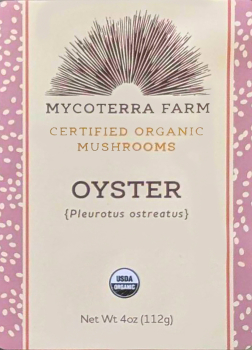
Mycoterra’s label has details and colors that represent the art of growing mushrooms. Photo: Julia Coffey
“I started the farm in the closet in the basement in my house in Westhampton,” says founder Julia Coffey. Those first bags of sawdust substrate, prepared eight at a time in a single pressure cooker, sold so fast that two weeks later she doubled capacity, and soon ten countertop cookers were running day and night. Output reached 500 to 600 pounds a month, fruited in two backyard greenhouses and sold at one or two local farmers markets.
The markets became her classroom. Coffey recalls “fifteen-minute conversations” just convincing shoppers that lion’s mane was edible. Those conversations built a brand before the packaging did. Once she could no longer stand behind every stall, “the label had to do the talking.” A Community Involved in Sustainable Agriculture (CISA)-funded brand-development grant paired her with a local designer: “Aesthetic is not my strongest skill set, but I know it’s important. We went for a clean look with a subtle spore-print border, most people don’t even notice it’s spores.”
The name Mycoterra nods to her soil-science roots; growing mushrooms, she likes to say, is “feeding my soil-building aspirations.”
By 2016, Coffey had outgrown the basement and bought a vacant equestrian center whose riding arena perfectly fit a 33-foot autoclave she’d just purchased for $12,000, sight-unseen. Today hardwood sawdust, wheat bran (for shiitake) or soy hulls (for oysters and lion’s mane) are mixed, bagged, sterilized four hours at 20 psi, and inoculated in a purpose-built lab; surplus blocks are sold to other farms because, she says, “sterilization is the bottleneck, [and] our autoclave lets us do more than we need.”
Networking rather than cold-calling landed grocery accounts. Through the local-food nonprofit CISA, Coffey met Big Y (a popular Northeastern grocery store chain) executives at a press event: “They said, ‘We’d love to have you in our stores.’ I wasn’t ready yet, but I kept the relationship alive.” When production caught up, Mycoterra entered 52 Big Y produce departments. Lion’s mane, once a hard sell, is now a top product without in-store hand-selling.
The COVID-19 pandemic closed the farmers markets that once generated 80% of revenue, so Coffey launched Mass Food Delivery, aggregating her mushrooms and neighboring farms’ goods for home delivery across Massachusetts. When normal outlets reopened, she exited the service, having shifted to roughly 80% wholesale via regional distributors and co-ops, plus a single Somerville farmers market and a self-service roadside farm stand she named “Spore.”
Nothing goes to waste at Mycoterra. Spent substrate blocks become high-carbon compost. Since opening, she has sequestered more than 90 tons of carbon on just over half an acre, soil organic matter levels have reached 10 to 12%, fueling a no-till market garden where veggies and birds alike flourish.
From closet to regional supplier, Mycoterra’s trajectory shows how disciplined growth, strong branding, and a closed nutrient loop can turn a basement hobby into a resilient, soil-nurturing enterprise.
Mushroom Cultivation
By Gabriella Soto-Velez, NCAT Agriculture Specialist
April 2026 ©NCAT
IP677
This publication is produced by NCAT through the ATTRA Sustainable Agriculture program, under a cooperative agreement with USDA Rural Development.