
Insect Farming for Chicken Feed: Stewardship, Resilience, and Practical Protein
 Print This Post
By Mike Lewis, NCAT Agriculture Specialist
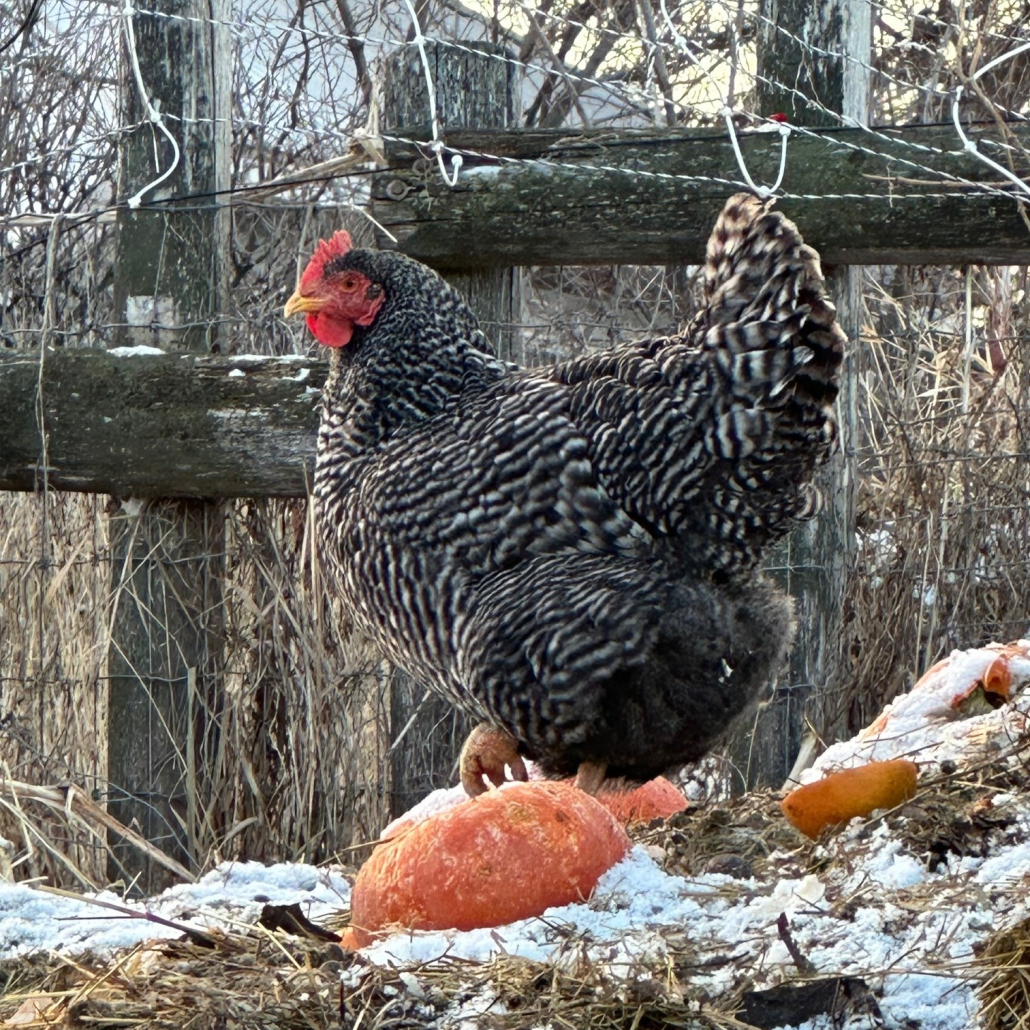
You can learn a lot by watching chickens on a cold morning when the ground is frozen and the grass has stopped growing. They don’t pace the edge of the run. They hunt—scratching, pecking, flipping leaves and mulch like they’re turning pages in a book only they can read. If they find a grub, it’s gone in a flash. If they uncover a cluster of larvae, the flock converges like a small storm.
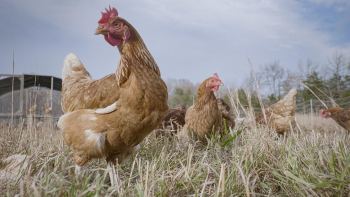
Free range laying hens standing in dormant grass. Photo: USDA
That behavior isn’t a hobby. It’s biology. Chickens are omnivorous foragers, and insects have always been a meaningful part of their diet, especially when protein is tight and conditions are stressful. With rising feed costs, fragile supply chains, and growing climate uncertainty, insect production offers a practical way to turn on-farm byproducts into usable protein while feeding birds what they are built to eat.
From a nutritional standpoint, insects are a dense and useful package. On a dry matter basis, black soldier fly larvae typically contain 35% to 45% crude protein and 25% to 35% fat, with meaningful levels of lysine and methionine—two amino acids Their calcium content can range from 5% to 8%, depending on substrate and processing, which can be particularly useful for laying hens. Insects also provide digestible fats that support energy needs and feather quality, along with chitin, a structural fiber scientists are studying for potential gut health and immune benefits.
Insect systems also help keep nutrients cycling close to home. Many conventional protein sources rely on distant cropland, heavy water use, and complex processing. Insects operate differently: they convert low-value materials into concentrated nutrition, and it can be done on-site.
Spent grain from a local brewery, surplus produce, or plant residues that might otherwise be composted can become feed for black soldier fly larvae. Those larvae are then fed to chickens. The chickens produce manure, returning nutrients to the soil and supporting forage and crops that feed the next cycle.
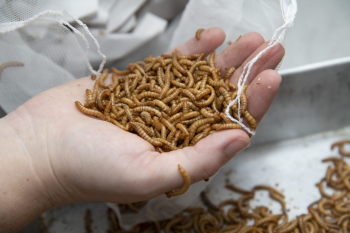
Mealworms are a common insect for on-farm production. Photo: USDA
Different insect species fit different operations. Producers often favor black soldier fly larvae for their ability to convert organic byproducts and for their naturally high calcium content. They thrive in warm conditions and work well where food waste streams already exist. Mealworms perform well in controlled indoor spaces and tolerate cooler temperatures, offering higher fat levels that can be helpful during the stress of winter. Crickets provide excellent nutrition but require more infrastructure and daily management. The best system is not whichever is the most productive on paper—it’s the one that matches your climate, labor, space, and skills.
Insects work best as a strategic supplement rather than a complete feed replacement. Research indicates that moderate inclusion levels—in the range of 5% to 15% of the ration—can maintain performance when diets are balanced correctly. Many producers use insects during molting, peak lay, brooding, or periods of environmental stress. Live feeding during confinement also encourages natural foraging behavior and reduces boredom.
Of course, not every farmer is going to raise insects. On-farm production requires daily oversight and management. For those who do not want to venture into insect production, purchased insect meal can provide that nutrition with less labor.
Just like any type of farming, there is a learning curve. Systems can fail if temperatures fluctuate widely, if you mismanage moisture, if your substrates are inconsistent, or if the insects’ feedstock is improperly balanced. The best approach is to start small, observe bird response, track performance, and adjust gradually while leaning on extension guidance and peer experience.
Insect farming for poultry feed reflects a practical commitment to biological alignment, nutrient cycling, and reduced reliance on fragile supply chains. It strengthens resilience, one decision at a time.
References and Resources
FAO, 2013. Edible Insects: Future Prospects for Food and Feed Security.
North American Coalition for Insect Agriculture
This blog is produced by the National Center for Appropriate Technology through the ATTRA Sustainable Agriculture program, under a cooperative agreement with USDA Rural Development. ATTRA.NCAT.ORG.

 USDA
USDA
 (NMSU photo by Josh Bachman)